如何在无人机时代保护联合部队
报告深入探讨了美国国防部(DoD)应对无人机威胁的挑战与进展。报告强调,由于无人机的广泛扩散和中国等对手的先进能力,美国军事力量面临着严峻的挑战,特别是在成本效益比方面,因为通常需要用昂贵的导弹来拦截廉价无人机。文章详细分析了主动和被动防御措施,包括雷达、电子战、火炮和定向能武器,并指出必须部署分层防御系统来应对不同类型的威胁。此外,报告还回顾了美军在中东和红海的实际作战经验,指出了在传感、威胁识别自动化和新兴技术部署方面的不足。
在经历了数十年的空中优势和几乎垄断的精确打击能力之后,随着廉价无人机的扩散使大规模精确火力实现了“民主化”,美国如今面临一个截然不同、更为敌对的世界。在未来的任何冲突中,无人机都很可能对美军构成不可避免的威胁。
正如本报告对美国国防开支的分析所揭示的,美国国防部(DoD)近十年来一直在投资传统和新兴的反无人机系统(C-UAS)能力。然而,这些努力因规模不足和紧迫性不够而受阻。尽管五角大楼在采购专用反无人机能力方面存在不足,但美军在中东地区的反无人机作战仍然表现突出。
美国将中国视为首要战略威胁,而中国人民解放军(PLA)正在迅速推进其无人机能力的发展,不仅开发更加自主化的系统,还在大规模获取这些装备。如果缺乏大量显著增强的反无人机能力,美国的分布式作战战略可能会被中国大规模的无人机攻击所压倒,美国甚至可能在台海战争中失败。这是一个复杂的挑战,没有单一的“灵丹妙药”可以解决。国防部必须迅速采取行动。风险并非理论上的——如果没有足够的防御,即使是最先进的系统和战术,在压倒性的无人机攻击面前也将变得无关紧要。
对国防部的总体建议
优先发展反无人机防御,并将能力扩展到空防部队之外。 无人机防御不能局限于专门的防空部队。每个作战单元都需要具备对抗小型无人机系统(UAS)的自卫能力。
在全军范围内扩大反无人机训练。 五角大楼需要制定并共享最佳战术、技术和程序,确保所有部队都接受无人机自我防护训练。
提高反无人机原型测试的严格性和真实性。 当前的测试与评估过程往往会对反无人机原型系统产生虚假的信心,因为这些测试通常使用不现实的敌方无人机仿制品以及低保真的电磁武器测试。
为应对当今的无人机威胁,国防部必须投资于经过验证的能力
通过分层主动防御和被动对抗措施构建韧性防御。 美军必须具备作战韧性,即能够在击败或承受无人机攻击的同时继续执行其他任务。韧性需要由多种不同类型的传感器和效应器组成的分层主动防御系统。
鉴于没有任何防空系统能够在所有时间提供完全保护,整合被动防御措施对于实现作战韧性至关重要。
强化机动部队的反无人机能力与战术。 美国尚未为机动编队开发合适的机动防御能力,也未为徒步步兵配备足够的便携式反无人机装备。
采购大量高密度、近程动能拦截器。 高密度防空方案包括高功率微波(HPM)和定向能系统等新兴技术,这些技术不依赖拦截器。然而,还需要扩大现有可立即使用的基于火炮的系统和低成本火箭拦截器(如先进精确打击武器系统)的应用。
为应对未来的无人机威胁,国防部还必须投资于新兴能力
投资于人工智能驱动的传感器处理与人工智能指挥控制,加速反无人机作战链。 将多样化的反无人机系统指挥控制进行整合,并利用人工智能(AI)加速威胁识别与打击,对于提升防御效能,同时推动五角大楼的“全域联合指挥与控制”(JADC2)愿景至关重要。
将快速涌现的有前景技术,尤其是高功率微波,转入正式项目。 高功率微波是最有能力对抗蜂群和大规模攻击的技术。
投资于高分辨率被动传感器。 远程高分辨率被动传感器为发现无人机提供了一种可生存的主动雷达替代方案,并有潜力提升防御方的优势。
引言
2023年10月17日,伊朗支持的民兵武装向伊拉克西部的阿萨德空军基地发射了两架单向攻击无人机——通常被称为“自杀式无人机”。美军迅速击落了一架,另一架虽被击伤,但仍突破防御并造成多名美军受伤。\({ }^{1}\) 与此同时,伊拉克北部的哈里尔空军基地也遭到武装分子无人机袭击,但在造成破坏之前被美军成功拦截。\({ }^{2}\) 次日,美军在叙利亚阿坦夫驻地拦截了一架来袭无人机,但另一架突破防御后命中目标,造成轻伤。\({ }^{3}\) 10月19日,也门胡塞武装对以色列发动无人机袭击,迫使美国海军“卡尼”号驱逐舰(DDG-64)进行了一场长达10小时的战斗,这被称为“二战以来美海军舰艇最激烈的作战交战”。\({ }^{4}\) 这些无人机袭击令美军措手不及,并被一位专家称为一种新的游击战形式的开端。\({ }^{5}\)
在每一次事件中,单独的袭击都算不上显著——通常仅有一两架无人机或导弹——而且大多数都被美军熟练的操作人员依靠先进的防空系统成功拦截。然而,自2023年10月以来,无人机袭击的频率和规模是美军此前未曾经历过的。尽管美军在火力下表现极为出色,但持续攻击的累积效应依然显著:造成人员受伤,消耗美军防空拦截弹药储备,并削弱战备水平。
自2004年以来,伊朗向德黑兰支持的代理武装扩散无人机,使这些袭击成为可能,并深刻改变了中东战场。\({ }^{6}\) 伊朗的无人机价格低廉,可以大规模采购,同时性能足以在数百英里外打击目标。过去代理人通常依赖精度较低的导弹、火箭和迫击炮,而伊朗的无人机却是可批量获取的精确武器。这些“廉价的精确打击群体”无人机使美军陷入风险,侵蚀了长期以来的美军精确打击优势,并使对手能够对美国施加不成比例的高昂成本。\({ }^{7}\)
由于无人机的广泛可得性和已被证明的有效性,美国的敌人——无论是国家、恐怖分子还是犯罪组织——都会利用无人机精确打击美军。\({ }^{8}\) 无人机战争正在快速演变,威胁将会加剧。它的范围遍及全球,包括美国本土,正如近年来美军国内基地上空无人机闯入事件显著增加所表明的那样。\({ }^{9}\) 在乌克兰战争中,俄乌双方不断以创新方式使用无人机,使其成为前线的关键武器以及实施纵深打击的重要工具。\({ }^{10}\) 随着美国对手在任务规划上的日益娴熟,齐射规模将不断增加,攻击将更加复杂,拦截难度加大。与此同时,人工智能(AI)快速发展,不久后真正自主的无人机蜂群将成为现实。反无人机防御需求巨大但供给不足,这从2025年6月美国将一批原本用于乌克兰的无人机拦截火箭转供中东美军的事实中可见一斑。\({ }^{11}\)
为了使无人机问题更具可操作性,本报告的分析仅聚焦于海外行动,在这些环境中,美军可以使用多种手段干扰或摧毁敌方无人机。美国本土的反无人机作战则涉及不同的政策挑战,因为牵涉的机构更多,而且存在各种限制美军在美国空域对无人机采取行动的法律权限。此外,本报告仅考虑属于美国1至3类的无人机或无人航空系统(UAS)。\({ }^{12}\) 这些是扩散最广泛的小型无人机,对传统防空体系构成新型挑战。\({ }^{13}\)
本报告试图回答三个核心问题:五角大楼是否采购了足够且正确类型的反无人机能力?从最近的中东反无人机行动中应吸取哪些经验教训?美国是否为未来无人机威胁做好准备,尤其是来自中国的威胁?
为回答这些问题,作者评估了不同类型反无人机防御的优劣势,审查了五角大楼采购的反无人机武器,分析了两个案例研究,并开展了一次兵棋推演(TTX),探讨中国在台海战争中可能如何使用无人机。
本报告的结论是,没有一种“万能”的能力可以击败所有无人机。相反,美军需要一个分层的主动防御体系。当多种不同类型的传感器和效应器被整合在一起时,可以弥补单一系统的不足,并协同完成发现、跟踪、识别和击败无人机的任务。五角大楼已经开始采购一些专门设计用于对抗小型无人机的防御系统,但远远不够。需要更多这样的系统来保护重点固定设施,并建立大规模的低成本拦截器储备。此外,为应对未来无人机威胁,美国还必须将新兴技术纳入分层防御体系。在与中国的战争中,解放军可能会向美军发射大规模的异构无人机与导弹齐射,以及自主无人机蜂群,美军将需要人工智能驱动的战场管理和高功率微波(HPM)来应对。
无人机在现代战场上无处不在;即便是美军也无法击落每一架敌方无人机。虽然摧毁或干扰敌方无人机仍然是反无人机防御的核心,但需要一种以作战韧性为中心的更全面方法。韧性不仅通过对无人机采取进攻性措施(如击落或干扰导航系统)实现,还需要通过健全的被动防御层来限制无人机攻击的效能。\({ }^{14}\) 有韧性的部队能够承受攻击、调整行动并完成核心任务。\({ }^{15}\) 为实现韧性,所有美军部队必须能够自我防护以抵御小型无人机,并熟练掌握防御战术。\({ }^{16}\)
反无人机任务远不止于单纯的防空,不能被局限于传统、孤立的防空编制。
本报告分为六章。第一章概述反无人机作战,并描述可用于击败无人机的各种能力。第二章评估美国国防部在反无人机技术上的投资。第三章和第四章分别呈现了美军陆军在中东的作战案例,以及美军海军与空军在红海之战中的作战案例。第五章基于兵棋推演提供了在持久冲突背景下如何击败中国无人机的见解。最后一章综合投资情况、案例研究与兵棋推演成果,提出结论与建议。
第1章 完成反无人机作战链
美军长期具备击落战斗机和导弹的能力,这就引出了一个问题:为什么无人机会成为挑战?本报告关注的1至3类无人机通常比载人飞机更小、更慢,使得现有的防空雷达(优化用于识别快速高空飞行的战机)难以探测到它们。\({ }^{17}\) 此外,由于无人机价格低廉,其数量极为庞大。对手可以同时使用多架无人机,或通过分批次、波状攻击来压垮防御。最后,无人机威胁的多样化特征意味着美军必须做好准备,在大规模情况下应对不同类型的无人机,而这些无人机可能需要采取不同的对抗措施。
要击落无人机,防御方必须在极端时间压力下完成一系列步骤,以闭合击杀链。无人机可以通过多种方式被击败,但首先防御方需要传感器来探测无人机入侵。一旦发现可能的敌对无人机,防御方必须定位、跟踪并识别它。如果确认构成威胁,部队接着必须决定使用何种武器,攻击敌对无人机,评估目标是否被成功摧毁或干扰,并判断是否需要再次攻击。\({ }^{18}\) 所有这些决策通常都必须在几分钟内完成。寻找、定位、识别、跟踪、击败和评估无人机威胁的各个步骤,需要在不同阶段具备不同的感知和击败能力。没有单一能力能够让防御方自信地击败所有无人机。每种防御技术都有其优势和局限,因此当以集成、多层的方式部署时,其效能最为显著,以最大限度地弥补单一技术的不足。为了构建具韧性且稳健的无人机防御体系,美国需要建立一个由多模态传感器、多层主动防御以及防护措施或被动防御组成的分层系统。
用于发现、固定、识别、跟踪和评估的传感器
反无人机(C-UAS)防御系统的基石,也是作战链中最困难的步骤之一,就是探测。帮助发现无人机的传感器种类多样,大致可分为主动和被动两类。主动传感器(如许多雷达、声呐和光学测距系统)通过发射能量并探测其反射信号来工作。相比之下,被动传感器(如光学摄像机、麦克风和红外传感器)则仅探测物体自身发出的自然能量。主动传感器通常能提供更高分辨率的目标位置数据,但显眼且容易受到攻击;被动传感器由于没有辐射信号而更隐蔽,但往往只能提供较低分辨率或不够准确的位置数据。两类传感器都可以安装在地面、海上或空中平台上,其中,机载传感器探测范围更远,且因不受地形阻挡而能实现全向探测。\({ }^{19}\) 理想情况下,传感器应尽可能远距离识别来袭无人机,以确保部队有充足时间采取反制措施并进入掩体。最终,多域的主动与被动传感器应结合使用,以便发现、固定、识别和跟踪无人机。
雷达是反无人机作战中最重要的主动传感器。主动雷达广泛用于防空与火控系统,因其能在远距离准确追踪多个目标并将数据传递给拦截器。\({ }^{20}\) 然而,主动雷达发射无线电信号会暴露其位置,从而容易遭到敌方攻击。\({ }^{21}\) 此外,主动雷达价格昂贵,采购数量受到限制。被动雷达通过比较背景电磁辐射反射与既有的电磁勘测结果来识别目标,但需要大量计算机处理,且通常只能提供低分辨率回波。\({ }^{22}\)
多数被动传感器则更简单、更廉价,且更易于扩散。例如,乌克兰使用布设在手机信号塔上的大量麦克风监听伊朗“沙赫德”单向攻击无人机特有的声音,从而进行跟踪,并引导机动反无人机小组进行拦截。\({ }^{24}\) 被动传感器能够在不发射信号的情况下探测目标,因此更容易隐蔽。例如,射频(RF)分析仪利用天线捕捉无人机与操控者之间的无线电信号。\({ }^{25}\) 大多数俄乌士兵都携带商用射频分析仪用于无人机探测。这些廉价、轻便的系统广受青睐,因为它们不会干扰友军行动,也不会因发射可探测信号而增加暴露风险。\({ }^{26}\) 然而,射频分析仪对预编程或自主无人机(如“沙赫德”)无效,且常常无法提供准确的位置与跟踪信息。简单的射频分析仪只能提示无人机在附近,更先进的系统则可通过软件处理无线电信号来精确定位无人机及其操控者——但这需要获取最新的无人机射频特征数据库。\({ }^{27}\)
表1 | 无人机探测传感器的优缺点 \({ }^{23}\)
| 探测方式 | 传感器类型 | 优势 | 劣势 | 示例系统 |
|---|---|---|---|---|
| 预警雷达 | 被动 | 远程探测与火力引导 | 需要先前电磁频谱勘测 | 陆军远程持续监视系统(ALPS) |
| 扫描大范围并识别潜在目标 | 难以确定雷达位置 | 需要足够的背景电磁活动 | ||
| 火控雷达 | 主动 | 精确 | 受尺寸、重量和功耗限制,机动性差 | AN/TPS-80 地空任务定向雷达(G/ATOR) |
| 发射无线电波进行目标探测与跟踪 | 多目标跟踪 | 难以探测低空、低速、小目标(如无人机) | ||
| 全天候、全天时运行 | 小型威胁仅能在近距离发现 | |||
| 抗干扰能力强 | 易受杂波干扰,产生误报 | |||
| 声学 | 被动 | 廉价 | 探测范围短 | Doscoviar G2 |
| 利用麦克风探测无人机马达产生的声波 | 功耗低 | 声音质量差,易受噪声污染 | ||
| 难以探测 | 需要声纹数据库 | |||
| 可通过多点测向提供二维方位跟踪 | ||||
| 射频 | 被动 | 难以被探测 | 对不发射信号(自主)系统无效 | Tsukorok |
| 天线识别无线电控制信号 | 可对无人机与操控者位置进行测向 | X-MADIS | ||
| 可同时跟踪多个目标 | ||||
| 光学 | 被动 | 难以被探测 | 探测范围短 | Night Hawk HD |
| 各类摄像机(可见光、红外、热成像) | 功耗低 | 依赖视距 | ||
| 具备测距能力 | 在弱光或恶劣天气下效能下降 | |||
| 可进行视觉目标识别 | 需要计算机处理以排除误报 | |||
| 可提供火控支持 |
确认来袭无人机是否构成威胁,即敌我识别(IFF),是作战链中另一项依赖传感器的关键步骤。在攻击一架疑似无人机之前,防御方必须首先确认其为敌对目标。\({ }^{28}\) 光学传感器或摄像机通过可见光、红外和热成像生成图像,特别有助于辨识无人机型号。但光学传感器会受恶劣天气影响,尤其是雾、雨和云层。\({ }^{29}\) 除了摄像机进行视觉识别外,雷达也能用于判定来袭目标的方位、高度、距离和速度,并与已知无人机特征进行比对。
任何类型的传感器都可以用来建立无人机特征库,以辅助敌我识别。然而,当双方都使用商用无人机时(如在乌克兰战场),IFF问题尤为突出。一些先进的反无人机系统使用人工智能驱动的计算机视觉软件来评估、综合并比对多种传感器数据,从而快速识别目标。\({ }^{30}\) 识别过程是作战链中的关键环节之一,可以通过引入AI来加速。
归根结底,最有效的无人机防御是结合使用被动与主动传感器。例如,一个低分辨率的被动声学或射频传感器可以初步发现可疑目标,然后引导高分辨率摄像机与激光测距仪或主动雷达来确认其是否为敌对无人机,并获取高质量的目标数据以便实施拦截。\({ }^{31}\) 融合来自不同类型传感器的数据有助于减少盲区,确保无人机被发现、固定、跟踪并识别。在完成这些步骤后,遭无人机攻击的人员有两种选择:主动尝试击败来袭无人机,或进入掩体,依靠工事与其他被动防御手段来降低无人机命中后的损害。
主动防御:摧毁与干扰
当防御方探测并识别出一架来袭无人机是威胁后,该如何阻止它?探测、定位、跟踪和识别是关键的第一步,但这些措施并不能阻止无人机完成其任务。未武装的无人机可能在进行侦察或向其他部队传递目标信息,而武装无人机则可能对人员、装备和设施构成直接威胁。因此,摧毁无人机,或者至少阻止其完成任务,是必要的。针对无人机有多种主动反制方式,而选择最有效的方案通常取决于具体情况和攻击无人机的特性。成本也必须纳入击败方案的考量——尤其是针对廉价无人机,因为在许多情况下,最谨慎的击败方法可能是使用昂贵的远程拦截器。虽然在保护人员或难以替换的高价值资产(如舰船或飞机)时,这种做法可能合理,但在对手拥有大量廉价无人机或在高强度大规模冲突的情况下,这种方式并不可持续。因此,需要更经济的击败手段,以避免消耗高端导弹库存,并将最强的防空能力保留用于应对更复杂的威胁,如弹道导弹或巡航导弹。
动能防御手段,如火炮、火箭和导弹,其射程直接与成本相关。火炮射程相对较短,但数量充足、射速高、弹药成本相对低廉,使其成为击败无人机的可行且有效的短程选择。\({ }^{32}\) 配合激光测距仪或火控雷达进行瞄准,并使用近炸引信破片弹增强破坏小型机动无人机的可能性,火炮能够成为一种高效且经济的短程防御手段。
火箭作为带有自身燃料(如火箭发动机)的弹药,射程比子弹更远,但也更昂贵。然而,其单发成本低于 2 万美元,远低于短程空空或地空导弹(单枚价格 45 万至 100 万美元)。\({ }^{33}\) 搭配激光测距仪的托盘式火箭可以安装在多种车辆上,形成一个自给自足的机动短程防御系统。机动性使防御系统能够轻松重新部署,以规避反炮火,覆盖不断变化的优先防护目标,并保护机动作战部队。因此,机动性是一个重要组成部分,因为防御系统的需求通常超过供应。
导弹由火箭推进,射程最远,并携带复杂传感器以实现精准拦截。\({ }^{34}\) 然而,导弹是最昂贵的无人机防御方式。远程地空导弹(SAM),无论是由驱逐舰发射的标准导弹(SM-2、SM-3 或 SM-6),还是地基发射的末段高空区域防御系统(THAAD),都能在数百英里外拦截无人机。便携式防空导弹(MANPADS)常用的红外制导导弹则效果有限,因为许多无人机,尤其是小型无人机,采用电动引擎,其热信号远弱于火箭或喷气发动机。
由于火炮、火箭和导弹均可搭载于地面车辆、舰艇或飞机,扩大拦截范围的一种方法是前出部署携带拦截弹的平台以应对来袭无人机。通常,战斗机和导弹驱逐舰是最外层的无人机防御力量。战斗机执行战斗空中巡逻时,可前出拦截无人机,使用机炮、火箭或空空导弹在数百英里外将其击落。\({ }^{35}\) 同样,导弹驱逐舰装备有多类地空导弹、5 英寸舰炮以及近程舰炮武器系统(CIWS)。
另一种不完全属于动能拦截手段的方式是“无人机反无人机”。这种方法的优势在于无人机可以提前部署,在空中待机,随时准备撞击来袭敌机。然而,它们必须比目标无人机更快,并且具备足够续航能力才能长时间执行巡逻。这类系统的成本通常高于火箭,但低于大多数导弹。乌克兰军队已经使用第一人称视角(FPV)无人机撞击更大型的俄罗斯侦察无人机,并开发了至少五种专用拦截无人机。\({ }^{36}\)
非动能反无人机武器则不依赖弹药推进,单次使用成本较低,但研发与采购费用昂贵。比如定向能武器(DE),主要包括高能激光(HEL)和高功率微波(HPM),通过光束和电磁能量摧毁或损坏无人机。\({ }^{37}\) 由于不依赖昂贵拦截弹库存,定向能武器理论上拥有“无限弹药”,更难被大规模饱和攻击压垮,同时无需补给。然而,激光一次只能攻击一个目标。高能激光在对抗蜂群和大规模齐射时受制于“驻留时间”——即光束需要持续照射目标的时间,以及重新指向新目标所需的时间。尽管前景广阔,将 HEL 转化为真正可部署的作战能力仍面临挑战,例如光束受恶劣天气和大气环境(尘埃、湿度)影响。此外,虽然 HEL 不需弹药补给,但需要大量电力和冷却,这限制了机动性。\({ }^{38}\) 激光还可以用于致盲或暂时干扰无人机传感器,使其无法执行侦察或精确打击。这种“炫目”任务对激光功率要求较低,但仍需光束精确指向传感器。\({ }^{39}\)
相比之下,高功率微波(HPM)似乎是唯一能够同时摧毁 1 类和 2 类无人机蜂群的技术。其能量脉冲可损毁或瘫痪来袭无人机的电子设备。然而,HPM 属于短程系统,类似“最后一道防护罩”,可在近距离成片击落无人机。\({ }^{40}\) 由于射程仅有数公里,HPM 只能作为最后一道防线,用于拦截突破前几层防御的“漏网之鱼”。若 HPM 失效,无人机已近在咫尺,几乎没有其他反制机会。此外,HPM 可能对友军电子设备造成严重附带损害。
表 2 | 主动反无人机防御的优缺点 \({ }^{41}\)
| 任务 | 域 | 反制机制 | 模式 | 优势 | 劣势 |
|---|---|---|---|---|---|
| 干扰 | 地面 | 干扰无线电信号 | 电子战 | 迫使无人机返航或坠毁 | 可能造成附带损害 |
| 商用软件定义系统可用于战术用途 | 易遭敌方测向 | ||||
| 易被跳频规避 | |||||
| 空中 | 干扰或欺骗 GPS | 电子战 | 使无人机偏离航向 | 仅针对单一导航形式有效 | |
| 海上 | 致盲光学系统 | 激光 | 可对抗 ISR 无人机 | 需要足够功率才能对无人机摄像头造成永久性损坏,否则仅会使其暂时失灵 | |
| 功率需求低于摧毁性激光 | |||||
| 摧毁 | 地面 | 火炮 | 动能 | 弹药廉价且数量充足 | 射程有限 |
| 射速快 | 动能效应有限 | ||||
| 火力密度高 | 弹药消耗大 | ||||
| 导弹与火箭 | 动能 | 精确度高 | 成本昂贵 | ||
| 弹头载荷大 | 库存有限 | ||||
| 有效对抗 3 类及以上无人机 | 热寻的能力对热信号较低的电动无人机系统效果较差 | ||||
| 空中 | 高能激光 | 定向能 | 无限弹药 | 前期成本高 | |
| 单次使用成本低 | 功率需求大 | ||||
| 机动性差 | |||||
| 射程有限 | |||||
| 海上 | 高功率微波 | 定向能 | 可消灭蜂群与大规模齐射 | 前期成本高 | |
| 无限弹药 | 射程有限 | ||||
| 存在附带损害风险 | |||||
| 空中 | 反无人机无人机 | 动能/电子战 | 可提前部署 | 成本较高 | |
| 长续航 | 速度低于导弹 | ||||
| 潜在可重复使用 | 射程较短 | ||||
| 战斗机 | 动能/电子战 | 可在数百英里外拦截来袭目标 | 成本昂贵 | ||
| 可携带多种武器 | 可能优先被用于更高价值任务 | ||||
| 速度快 |
对抗商用无人机最有效的方法之一是电子攻击,它能够使无人机失效但并不将其摧毁。\({ }^{42}\) 当今大多数无人机都由操作员远程操控,这正是可被利用的漏洞。干扰器会干扰控制无人机的无线电信号,迫使其返回基站或直接坠落。然而,干扰器射程有限,而且会发射信号,使其容易被敌方定位。为规避干扰,俄乌部队正在前线使用光纤电缆操控自杀式无人机。但光纤无人机的射程较短,且电缆容易被植被或其他障碍物缠绕,因此只在有限条件下有用。\({ }^{43}\) 此外,具备自主末端制导的无人机,或配备能够跳频的更先进无线电系统(军用无人机中常见),也能克服干扰。
防御方还可以干扰导航信号,将无人机推离航线,远离预定目标。在乌克兰,大多数美制无人机因俄方的全球定位系统(GPS)干扰而无法有效运作。\({ }^{44}\) 更复杂的欺骗攻击则会向无人机发送虚假GPS信号,引导其飞往错误位置,但这类攻击较少见。如果无人机具备冗余导航方式(如惯性导航或地形匹配导航),它依然可能在GPS受限环境中飞抵目标。但这将显著提高成本,使干扰成为对付常见类型无人机的有效手段之一。
被动防御:隐蔽与保护
在采取主动措施干扰或摧毁无人机的同时,应实施被动防御来隐蔽目标并减轻损害。\({ }^{45}\) 与发动攻击的主动防御系统不同,被动防御提供保护,但并不拦截或摧毁敌对系统。大多数被动防御对各种形式的空袭以及火箭、炮弹或迫击炮火都有帮助,但在防御携带小载荷的1类和2类无人机时尤其有效。
一种被动防御方式是通过伪装或隐藏目标来避免敌方攻击,手段从廉价简单的烟雾弹(临时遮蔽传感器)到昂贵复杂的多光谱伪装网和涂料(可掩盖可见光、热信号和雷达特征)不等。\({ }^{46}\) 基本的伪装技术,如将部队部署在树下或使用彩色伪装网与背景融为一体,会让配备基础光学传感器的无人机更难识别目标,这类技术在乌克兰已被证明行之有效。\({ }^{47}\) 伪装还可能迷惑依赖人工智能计算机视觉算法进行目标识别的更复杂无人机。
然而,伪装、隐蔽和欺骗并非万无一失,因此必须针对无人机所携带的武器进行防御。由钢材、木材、岩石、土壤、混凝土或砖石建造的防御工事能够提供不同程度的防护(取决于坚固性),既可作为士兵的作战阵地,也可为关键装备提供庇护。掩体和防护墙可帮助抵御破片、爆炸或次生爆炸,但在对抗无人机时,上方防护尤为关键,至少能降低其攻击效果。车辆也可加装额外装甲以抵御小型无人机攻击。然而,额外装甲会增加车辆重量、降低机动性,且车辆依旧存在脆弱性。俄军甚至用铁皮将坦克包裹起来,但所谓“乌龟坦克”依旧容易被携带破甲弹头的无人机和反坦克武器击毁。\({ }^{48}\) 相比之下,轻型防护措施如防护网和笼罩装置已被乌克兰和俄罗斯部队成功使用,用于在自杀式无人机引爆前将其拦下,但对抗重力炸弹或定时引信武器时保护效果有限。\({ }^{50}\)
**图1: ** 用于反无人机的被动防御 \({ }^{49}\)
被动防御(如掩体、防护网、笼罩装置、飞机掩体和装甲)通过让目标更难被发现并减轻攻击造成的损害,从而保护目标免受无人机攻击。
(自上而下:Jason Scott/美国陆军工程兵团,Florent Vergen/法新社-Getty Images,Kyle Cope/美国空军,Alina Smutko/路透社)

掩体、爆炸墙与掩体堤
固定防御设施如掩体、爆炸墙和掩体堤可防御破片和次生爆炸,但需要大量资源,其中只有掩体能够提供上方防护。
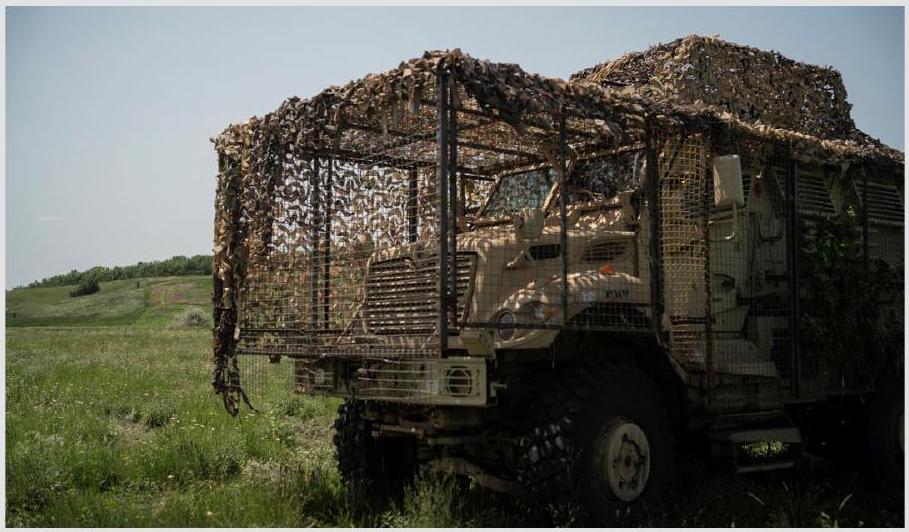
防护网与笼罩装置
轻便且多功能的防护网或笼罩装置可为无人机提供上方防护,同时还能兼作机动或固定防御的伪装手段。
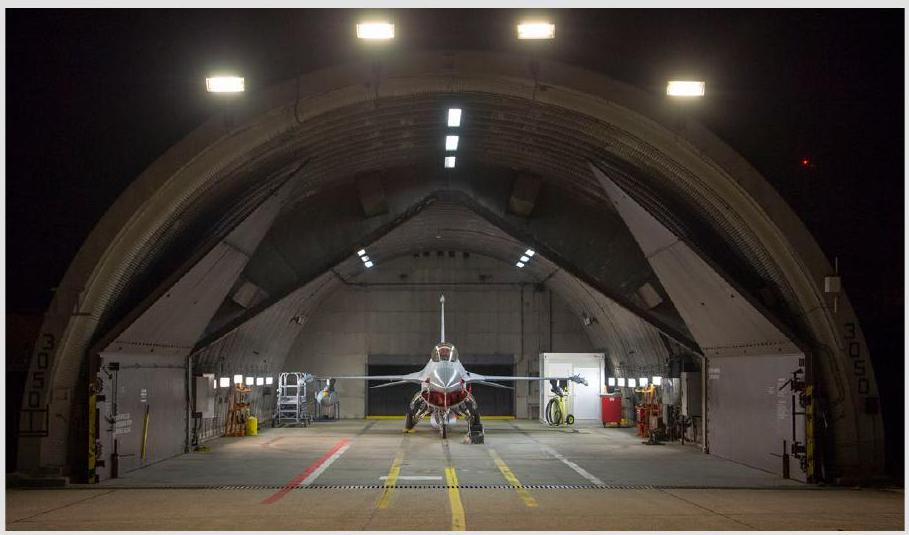
机库
机库能保护装备、物资和人员免受无人机的直接打击和大规模爆炸,但在面对蜂群攻击时可能失效。

装甲
装甲能够为车辆提供抵御小型爆炸的机动防护,但会增加重量,降低机动性,并容易受到大型武器的威胁。
欺骗是另一种成功规避敌方无人机的方法,已在乌克兰得到应用。\({ }^{51}\) 诱饵是虚假的军事装备,如坦克、榴弹炮或飞机,用于引诱敌方在无关紧要的目标上浪费资源、时间和精力。\({ }^{52}\) 大量低仿真度诱饵可以延缓敌方的目标锁定进程,并消耗其有限的高端弹药库存。乌克兰军队广泛使用木制诱饵,以提高部队生存能力并消耗俄罗斯的高端弹药。\({ }^{53}\) 然而,随着战场上传感器数量和复杂性的增加,诱饵往往必须不仅仅是“看起来像真的”,才能有效。为了进一步伪装仿制系统,高仿真度诱饵必须具备热信号、雷达信号和无线电信号,这使得它们更加昂贵且难以普及。\({ }^{54}\)
将不同类型的传感器和击败机制结合使用,可以弥补单一系统的局限性,并使敌方更难突破各层防御。
在缺乏分层无人机防御或欺骗技术的情况下,部队依赖机动和分散来增加被打击的难度。这两种方法都会限制进攻作战的节奏,并带来后勤负担,但在充斥无人机的战场上,这可能是生存的代价。\({ }^{55}\) 火炮和地空导弹(SAM)部队通常使用“打了就跑”的战术:开火后迅速转移到新位置,以躲避反炮兵火力。\({ }^{56}\) 此外,分散部署意味着将部队分开,以减少整体脆弱性,而这往往依赖机动能力。\({ }^{57}\) 频繁转移部队位置使敌人更难找到目标,并限制了一次攻击可能造成的损害。\({ }^{58}\)
结论
通过比较所提出的各种反无人机方法,可以清楚地看出采用分层防空体系以弥补单一防御措施缺陷的重要性。没有一种能力能够最佳地应对所有类型的无人机,当其单独使用时,每种能力都有优缺点。结合使用不同类型的传感器和拦截手段可以弥补单一系统的局限性,使对手更难突破所有不同层级的防御。
虽然存在许多主动和被动能力来防御无人机,但并非所有能力都能被美军随时获得。这部分是由于采购不均衡,以及高能激光(HEL)和高功率微波(HPM)等下一代反无人机武器研发周期较长。下一章将探讨美国国防部(DoD)的反无人机投资与采购,研究当前正在采购的反无人机能力类型,以及这些反无人机举措是否与日益增长的威胁相匹配。
第2章 为部队配备无人机防御装备
为了有效应对1至3类无人机的多样威胁,美军需要多种类型的传感器、分层主动防御系统以及被动防御措施。自从伊拉克和叙利亚伊斯兰国(ISIS)在2016年开始使用无人机攻击美军以来,国防部(DoD)已将反无人机任务列为首要任务。尽管为了应对这些紧迫的作战需求,已采购了少量反无人机系统,但真正进入大规模量产和部署的系统很少。五角大楼一直落后于无人机威胁,继续采购昂贵的高端空中和导弹防御系统,以及老旧的短程防空系统。尽管在高能激光(HEL)和高功率微波(HPM)等下一代技术上投入巨大,但很少有原型机转入正式采购计划,并以满足现代无人机威胁的规模进行采购。本章概述了过去十年美军在反无人机系统上的开支情况。反无人机任务预算分析中所涵盖的技术范围广泛,从弹道导弹和远程防空,到反火箭、炮兵和迫击炮系统(C-RAM)以及专用反无人机平台。数据尽量涵盖与反无人机击杀链相关的全部能力。\({ }^{59}\)
如图2所示,2015年至2025年间,五角大楼持续投资于可用于击败和防御无人机的武器和技术的研发与采购。然而,支出具有一定的被动性,2018年和2023年的支出激增,分别是为了应对“固有决心行动”和乌克兰战争中出现的意外无人机威胁。2015年,联合部队在可用于对抗无人机的能力采购上预计花费约48亿美元,主要由成熟的防空与导弹防御技术组成,如爱国者导弹系统和传统火控雷达。\({ }^{60}\) 十年后,支出已翻倍以上,预计2025年国防部将在反无人机系统上花费约74亿美元。\({ }^{61}\)
五角大楼反无人机支出,2015-2025
美军首次大规模投资反无人机能力,是由ISIS在“固有决心行动”中使用商用四旋翼无人机攻击美军部队所推动的。\({ }^{62}\) 应国防部的请求,2016年6月拨款2000万美元给联合简易爆炸装置(IED)防御组织(JIEDDO),以填补美军中央司令部(CENTCOM)提交的联合紧急作战需求中小型战术无人机探测和击败能力的“意外关键能力缺口”。\({ }^{63}\) 尽管ISIS已尝试使用DJI四旋翼无人机数年,但其首次大规模使用是在2016年10月解放摩苏尔战役期间,两天内发动了超过120次无人机攻击。\({ }^{64}\) 除了无人机轰炸,ISIS还使用无人机进行情报收集和目标识别,并指挥迫击炮火和引导车载简易爆炸装置(IED)攻击目标。\({ }^{66}\) 前CENTCOM司令约瑟夫·沃特尔(Joseph L. Votel)在2017年3月向参议院军委会作证时表示,美军需要能够“击败所有类别UAS”的有效防御,并称这是作战司令部的“首要任务”。\({ }^{67}\) 到2018年,反无人机支出激增至超过110亿美元,其中82亿美元用于采购,30亿美元用于研发(见图2)。\({ }^{68}\)
**图2: ** 联合反无人机支出,2015-2025 \({ }^{65}\)

美军在“固有决心行动”期间以及2022年俄罗斯入侵乌克兰后,反无人机系统支出激增。
2018年的支出激增主要由美陆军和海军采购高端防空与导弹防御系统推动。陆军支出42亿美元,海军支出32亿美元,共占2018年C-UAS总支出的65%以上。\({ }^{69}\) 陆军在2018年的采购中,20亿美元用于MIM-104爱国者导弹及其配套PAC-3拦截器。\({ }^{70}\) 同样,海军支出13亿美元采购SM-3导弹,这是舰载宙斯盾弹道导弹防御系统的一部分拦截器。\({ }^{71}\)
然而,美陆军也增加资金采购可立即部署的传统防空系统,这些系统与反无人机作战具有一定的相关性。例如,2016至2017年间,陆军将陆基方阵武器系统(LPWS)和AN/TPQ-50反火力雷达的支出翻倍。\({ }^{72}\) 两套系统原本用于拦截火箭、炮兵和迫击炮,但也能对抗小型无人机。\({ }^{73}\) 同样,陆军原计划逐步减少对AN/TWQ-1复仇者系统和FIM-92响尾蛇导弹等短程防空系统的投资,但在2017至2018年间增加了资金投入。\({ }^{74}\)
同时,陆军开始研发专用反无人机防御系统。2017年7月,陆军签订首个1600万美元合同开发低空、低速、小型无人机集成击败系统(LIDS),该系统已成为陆军的主要反无人机平台。\({ }^{76}\) 同年,陆军使用5780万美元海外紧急作战补充资金开发并采购了Coyote拦截器,这是LIDS的动能击杀选项,自2017年以来部署于中东地区。\({ }^{77}\) 然而,如图4所示,即便在乌克兰相关支出激增后,Coyote的采购数量仍相对有限。
**图3: ** 美陆军空中与无人机防御支出,2015-2025 \({ }^{75}\)
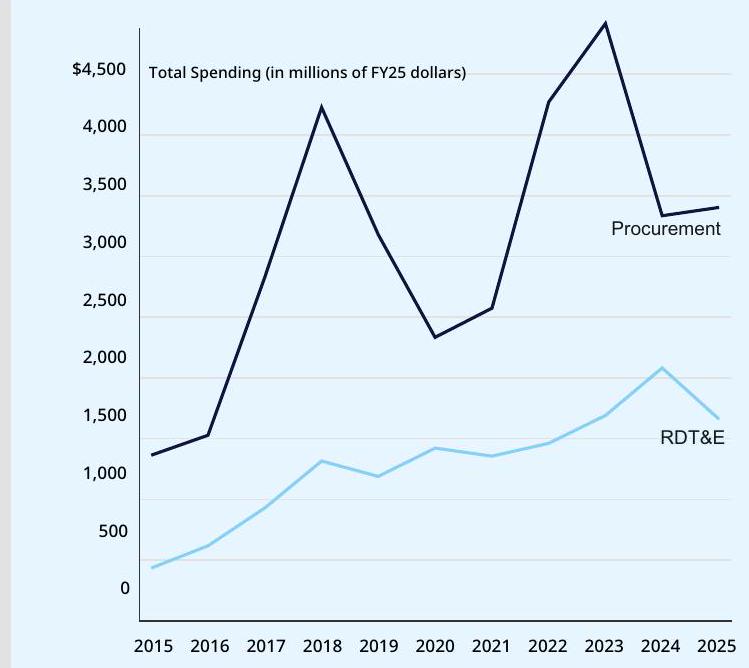
美陆军对反无人机技术的研发支出稳步增加,但采购量波动较大。
反无人机任务是短程防空(SHORAD)更广泛任务的一部分,涵盖击败短程威胁(如火箭、迫击炮、炮兵和1类无人机)以及对长程威胁(如巡航导弹和2类、3类无人机)的点防御。2000年代初,陆军曾削减SHORAD能力,如今用于重建SHORAD的新技术投资占据了陆军C-UAS支出的重要比例。\({ }^{78}\) 然而,所选SHORAD项目并非专为无人机威胁设计,尽管任务存在重叠。2018年,陆军开始开发移动SHORAD增量1系统(M-SHORAD Increment 1):基于M-1126斯崔克战车改装,配备Longbow地狱火导弹、响尾蛇导弹、30毫米布什大师机关炮、7.62毫米机枪、车载IFF、软件定义雷达及电光/红外传感器。\({ }^{79}\) 虽然M-SHORAD弥补了短程防空空白,但其武器并非为C-UAS优化。例如,30毫米机关炮射速为每分钟200发,远低于击落小型无人机所需的弹幕密度。\({ }^{80}\) 相比之下,LPWS的射速为每分钟3000至4500发。\({ }^{81}\)
同样,老旧的热寻导弹技术在对低特征电动无人机时表现不佳,即使配备升级近炸引信。\({ }^{82}\) 除M-SHORAD平台外,响尾蛇导弹还用于陆军移动LIDS(M-LIDS)及海军陆战队航空防御集成系统(MADIS)。\({ }^{83}\) 陆军已启动两项开发计划,计划用现代化导弹最终取代响尾蛇,但预计要到2028至2030年才能开始生产,这使得美军士兵和海军陆战队员在反无人机武器套件中仍 heavily依赖过时的响尾蛇。\({ }^{84}\)
与陆军不同,海军在水面舰艇上保持了强大的分层防空系统,包括SHORAD系统,并持续资助现有项目,同时开发下一代技术。海军在定向能和电子攻击系统上进行了可观投资,并能提前部署部分系统,如联合反无线控制简易爆炸装置电子战(JCREW)。最初设计用于应对伊拉克和阿富汗IED的JCREW干扰器,经过改装用于干扰无人机指挥信号。\({ }^{85}\) 空军在基地防护方面对传感器和定向能系统投资约8000万美元,而海军陆战队于2018年开始开发MADIS C-UAS系列系统。\({ }^{86}\)
即便在乌克兰相关C-UAS支出激增后,Coyote拦截器的采购数量仍相对有限。
到2019年,国防部已对无人机威胁担忧多年,但仍缺乏统一、流畅的投资与采购策略。许多C-UAS投资重复且系统间不兼容。\({ }^{87}\) 虽然“固有决心行动”和随后中东冲突中暴露的紧急战斗需求解锁了额外资金和资源,但大部分资金用于短期解决方案,主要是传统防空和尚未量产的原型。数十种新型反无人机技术已开发和原型化,但无人系统性评估或选择应转为正式采购计划。
为集中联合部队的反无人机努力,2019年国防部长指定陆军为反无人机任务执行机构,负责“学说、需求、物资及训练标准和能力”,确保各军种采购的系统可互操作。\({ }^{88}\) 2020年2月,陆军成立联合小型无人机系统办公室(JCO),进一步简化工作流程。\({ }^{89}\) 为消除重复并促进从研发到生产的过渡,JCO评估了40种不同C-UAS技术,并推荐最优的八种进行采购。\({ }^{90}\)
尽管JCO提供了领导力,2020至2021年C-UAS支出下降,因为中东紧急需求减弱。尽管无人机在其他冲突中发挥重要作用,美军已不再每日作战,其他军种优先事项占据首位。\({ }^{91}\) 2020及2021年陆军在小型无人机防御上的采购约7000万美元,低于2019年的3.02亿美元。\({ }^{92}\) 2022年,俄罗斯入侵乌克兰后,无人机成为主要武器系统之一,美陆军反小型无人机支出激增至7.6亿美元。\({ }^{93}\) 尽管五角大楼增加了对传统防空和武器研发的支出,战争重新推动了C-UAS任务投资,因为现代无人机作战规模变得清晰可见。\({ }^{95}\)
此外,到2022年,JCO在2020年选定的一些C-UAS武器,如LIDS和MADIS,进入量产。\({ }^{96}\) 然而,采购速度和部署数量仍不足。如图4所示,陆军在2022和2023年Coyote拦截器采购量仅为172和203枚,而未维持2021年水平。\({ }^{97}\) 海军和空军在采购专用分层C-UAS防御方面尤为滞后。\({ }^{98}\) 到2023年,空军在重点空军基地部署了99套非国家联合飞行器反制(NINJA)系统,但该系统仅由传感器和非动能干扰器组成,无法应对全部无人机威胁。\({ }^{99}\) NINJA主要用于保护空军基地免受小型商用无人机入侵,对3类系统的击败和偏转能力有限,无法提供有效空防所需的分层防护。同样,海军在电子战能力和部分定向能项目上有投资,但未采购针对无人机设计的动能拦截器。
图4: 美陆军Coyote拦截器采购 \({ }^{94}\)
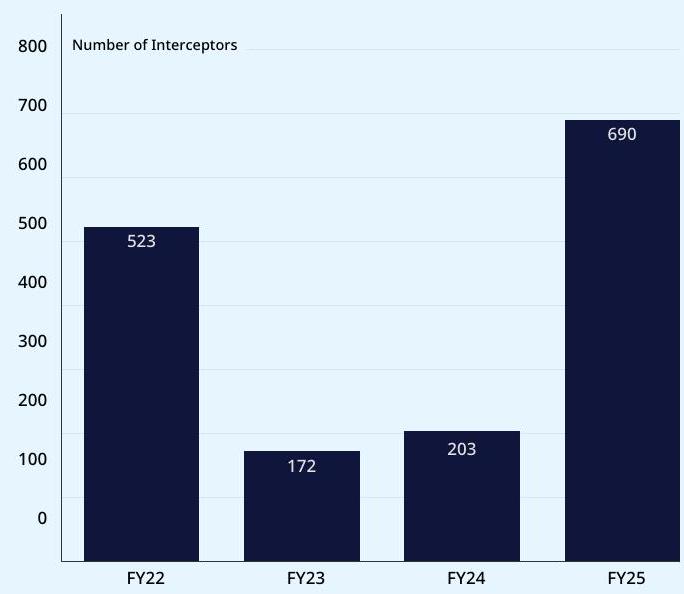
Coyote拦截器在2023-2024年美军基地遭受攻击期间,是最有效的反无人机武器,但陆军一直未能持续采购足够数量。
2024年,陆军宣布计划在间接火力防护能力(IFPC)和师级防空营中建立九个新的反无人机营。\({ }^{100}\) 每个C-UAS单位将配备15至20个Coyote发射器,每个发射器可装载四枚导弹。\({ }^{101}\) 考虑到一个师需覆盖近20英里的防线,这样的反无人机防护极为有限。\({ }^{102}\) 此外,陆军计划中的几乎所有C-UAS发射器均为固定部署,而非机动型。\({ }^{103}\) 这些采购将有助于基地防护,但无法为步兵或机动美军部队提供防护。\({ }^{104}\)
C-UAS 武器单发成本
也许最重要的是,各军种采购的大多数反无人机武器的单发成本比不利,即拦截器的成本远高于无人机。例如,一架DJI Mavic 3单价约为2000美元,而伊朗Shahed-136无人机的估计成本在2万至5万美元之间。\({ }^{105}\) 美军常常使用价值数十万甚至数百万美元的高精度制导导弹来摧毁廉价无人机。\({ }^{106}\) Coyote拦截器单价约12.65万美元,虽比美军大多数其他C-UAS武器便宜,但火箭和基于枪械的防御手段成本更低,潜力巨大。低成本弹药还允许储备更多库存。拥有大量廉价拦截器可节约昂贵弹药,用于高端威胁。\({ }^{107}\) 美国需要采购更多具有成本优势的动能C-UAS武器。
各军种采购的大多数反无人机武器的单发成本比不利,即拦截器的成本远高于无人机。
经过近十年的努力,国防部扩大了联合部队击败无人机的能力,尽管起点极低。仍需采购适当的分层防御系统以保护基地、舰艇和机动部队。例如,定向能是最有前景的反无人机能力之一,各军种在其研发上投入巨大。然而,尽管10年间投入33亿美元,美国尚未实现定向能系统的全面作战部署。\({ }^{109}\)
**表3: ** C-UAS 动能拦截器单发成本 \({ }^{108}\)
| 拦截器 | 单价(FY25美元) |
|---|---|
| M940 20 mm | $80 |
| 30 mm XM1198 | $203 |
| APKWS II | $24,900 |
| Coyote | $126,500 |
| AGM-114L Hellfire II Longbow | $150,000 |
| Tamir/SkyHunter | $180,800 |
| FIM-92 Stinger | $480,000 |
| Roadrunner* | $500,000 |
| IFPC 2 AIM-9X | $762,000 |
| AMRAAM | $1,370,000 |
| ESSM | $1,492,000 |
| PAC-3 | $4,187,000 |
| SM-6 | $5,950,000 |
*表示估算成本
定向能武器未兑现的承诺
定向能武器(包括高能激光和高功率微波)被誉为能为美军战士提供对无人机决定性防御优势的技术。定向能有潜力成为有效的击败能力,即使面对无人机蜂群,同时提供低单发成本和潜在无限弹药。\({ }^{110}\) 尽管前景可期,且HEL与HPM投入巨大,但各军种尚未将任何DE研发项目转化为全面作战能力。\({ }^{111}\) 部分原因在于将DE集成到现有武器平台上的固有挑战。HEL和HPM系统都需要大量电源和冷却系统,这增加了承载车辆的体积和重量。\({ }^{112}\) 因此,大多数DE系统体积庞大,主要用于固定防御位置。
海军、空军和陆军正在开发多种HEL和HPM系统,海军陆战队据称对陆军的HPM系统感兴趣。\({ }^{113}\) 过去十年,海军在研究低功率激光致盲无人机方面投入了2.61亿美元,该系统最终于2025年进入低速量产。\({ }^{114}\) 自2015年以来,陆军在定向能研发上投入约17亿美元,资金主要集中在激光方面。\({ }^{115}\) 此外,仅过去两年,就有超过2亿美元用于IFPC HEL和DE M-SHORAD能力。\({ }^{116}\) 然而,两种激光在测试中表现不佳。2024年,四套DE M-SHORAD 50千瓦激光部署至CENTCOM防御基地,但士兵发现武器笨重且效果有限。\({ }^{117}\) 这可能是部署前测试不足所致,而测试受到对天空中物体(包括卫星)意外损害的担忧限制。\({ }^{118}\) 陆军领导声称,该军种仍投资于300千瓦IFPC-HEL,但在2025年预算中,计划削减该项目48亿美元资金。\({ }^{119}\)
陆军此前资助并接收了四套IFPC-HPM反无人机系统,这些系统在近期应用中可能比正在开发的激光更有前景。\({ }^{120}\) 高功率微波系统是唯一能够同时锁定和打击多架无人机的能力。\({ }^{121}\) 然而,陆军直到2022年才开始投资HPM,截至出版时对该项目投入约8000万美元。2025年5月,菲律宾Balikatan演习成功测试了一套IFPC-HPM系统。\({ }^{122}\) 仍需更多实际测试以确定HPM是否具备量产条件;若系统持续表现良好,陆军应考虑将定向能投资从HEL转向HPM。
结论
美军反无人机支出的演变显示了两次主要投资高潮:一次是在2010年代中期ISIS使用无人机后的即时作战响应,另一次是近期由乌克兰高强度无人机作战经验推动的投资激增。这些资金浪潮支持了对LPWS等传统系统的再利用,以及Coyote拦截器和定向能武器等专门反无人机技术的开发。然而,尽管投入了数十亿美元,国防部仍优先部署高精尖的效能武器,而非可扩展、经济高效的解决方案,经常使用昂贵导弹去击落廉价无人机。当2023年10月以色列与哈马斯爆发战争后,美军在中东遭遇大量无人机攻击时,这种成本差异尤为明显。
尽管投入了数十亿美元,国防部仍优先部署高精尖的效能武器,而非可扩展、经济高效的解决方案,经常使用昂贵导弹去击落廉价无人机。
然而,重要的是在考察反无人机技术时,不仅要从预算投资的角度出发,还要考虑美军如何利用五角大楼采购的能力。对美军在中东陆地和海上应对无人机攻击的分析,展示了反无人机任务的复杂性,并凸显了将恰当的战术、技术和程序与多层主动及被动防御相结合的重要性。
第3章 陆军遭受袭击,2023年10月—2024年2月
在2023年10月7日哈马斯-以色列战争爆发后,美军在中东的地面部队遭到持续攻击,伊朗支持的民兵组织在叙利亚、伊拉克和约旦的13处美军基地发动了超过170次袭击——造成3名美军士兵死亡,150人受伤。\({ }^{123}\) 激进分子发射了迫击炮、火箭和短程导弹,但他们首选的武器是固定翼一次性攻击无人机(见表4)。\({ }^{124}\) 这些专用固定翼无人机携带40至100磅的弹头,能够自主飞行数百英里,利用了美国防空的漏洞:它们对便携式系统来说过大,难以可靠拦截;但又因体型小、成本低,不值得使用昂贵的防空导弹。\({ }^{125}\)
2023年10月18日的首次无人机交战对美军来说并不顺利。在伊拉克西部的阿萨德空军基地,一架无人机被击毁,但另一架仅受损并撞击了飞机机库。\({ }^{126}\) 当天在叙利亚南部,al-Tanf驻军也遭遇了两架单向攻击无人机袭击。基地防御作战中心(BDOC)对第一架无人机的反应“缓慢且犹豫不决”,因为标准操作程序要求在开火前进行视觉正面识别,这在袭击中“耗时过长”,导致无人机撞击基地。\({ }^{127}\) BDOC随后以更高的紧迫性行动,成功摧毁了第二架无人机。
幸运的是,美军很快提升了击落无人机的能力。这在很大程度上归功于一个陆军单位——第10山地师第2旅作战队(2/10),其负责防御该地区超过一半的美军基地。在为期九个月的部署期间,2/10几乎拦截了所有来袭无人机;测试了新技术和战术;并根据所学经验,识别出美军需要改进的领域。
**表4: ** 2023-2024年美军中央司令部责任区对美军发射的最常见伊朗制造无人机 \({ }^{128}\)
| 无人机 | 航程(英里) | 速度(英里/小时) | 弹头重量(磅) |
|---|---|---|---|
| Shahed-101/ Murad-5 | 870 | 75 | 18 |
| Shahed-131 | 560 | 未知 | 20-40 |
| Shahed-136 | 1,600 | 115 | 40-90 |
| Quasef/Ababil-2/T | 75-125 | 230 | 70 |
实战中的转型:2/10旅的反无人机成功经验
在2023年10月18日至2024年2月7日——无人机袭击最频繁的时期——2/10旅在其负责防御的八个基地中,击落了大约115架来袭无人机中的93架,成功率达到令人印象深刻的80%。\({ }^{129}\) 2/10旅成功的关键在于其领导层,他们认真对待无人机威胁,赋权给初级军官,并在部署期间积极尝试和学习。2/10旅的表现尤为出色,尤其考虑到负责击落来袭无人机的士兵并非防空专业人员。此外,每个基地配备的反无人机系统种类多样、非标准化。尽管令人印象深刻,2/10旅的成功是在相对温和的无人机威胁下实现的。这些袭击规模较小,即使累积统计,几乎每日的袭击也未对美军防御造成耗尽压力。
部署在2/10旅之前的陆军单位仅遭遇过少量自杀式无人机。\({ }^{130}\) 尽管如此,2/10旅前指挥官Scott Wence上校在部署初期便采取了积极措施,以增强单位的反无人机能力。首先,Wence上校赋予负责应对来袭无人机的初级军官更多决策权,并通过额外的反无人机培训,为他们的任务做好准备。\({ }^{131}\) 其次,他在阿萨德空军基地发起了不同反无人机设备和战术的实验性项目,被称为“CENTCOM融合项目”。\({ }^{132}\) 通过这些措施,2/10旅能够实时学习,并适应不断变化的威胁。
值得注意的是,检测无人机、识别其为敌方目标并进行拦截的整个过程完全手动操作,必须在最短30秒、最长两分钟内完成。\({ }^{133}\) 大多数拦截无人机的士兵并非防空专业人员,而是来自其他职业领域,包括2/10旅的三名士官,他们共击落28架无人机,因而获得“王牌”称号。\({ }^{134}\)
2/10旅面临的一个挑战是每个基地的独特地形以及各基地可用反无人机设备的多样性,这使得制定全司令部范围的反无人机识别和操作最佳实践变得复杂。八个基地中,反无人机系统组合各不相同,包括固定站点低慢小型无人机综合拦截系统(FS-LIDS)、高能激光、LPWS,以及两种由英国开发的动能拦截器。\({ }^{135}\) 这些防御系统能力不一,处于不同开发阶段,因此在实际使用中性能表现各异。尽管2/10旅测试了多种技术,但许多原型未能达到预期性能,迫使士兵依赖已投入大规模生产的可靠动能拦截器。
检测无人机、识别其为敌方目标并进行拦截的整个过程完全手动操作,必须在最短 \(\mathbf{30}\) 秒、最长两分钟内完成。
雷达是最大的短板之一,大多数雷达仅有四英里的探测范围,使防御者在不到一分钟的时间内完成击杀链。\({ }^{136}\) Ku波段射频传感器(KuRFS)雷达的探测范围是大多数雷达的三倍,在检测自杀式无人机和过滤杂波方面表现优越,而老旧雷达则产生大量虚假轨迹。\({ }^{137}\) 由于能力和地形差异,有些基地比其他基地更容易防御。例如,阿萨德空军基地地势相对平坦,配备了KuRFS雷达,能够在12英里范围内探测无人机,这部分解释了该基地连续拦截39架无人机的原因。\({ }^{138}\)
袭击强度和规模相对温和,也有助于2/10旅取得成绩。美军士兵未面临复杂的异构无人机齐射,也没有同时遭遇巡航导弹和弹道导弹。在无人机袭击最密集的时期,主要是Shahed-101和Quasef无人机,以一至两架的群组持续袭击,数量虽稳定但不大。\({ }^{139}\) 2/10旅部署期间最大规模的一次无人机袭击由五架Shahed-136组成,相隔15分钟到达。\({ }^{140}\)
经验教训:提升陆军反无人机任务能力
在部署期间,2/10旅获得了前所未有的美国反无人机设备和战术经验,并已将其最佳实践推广给联合部队。\({ }^{141}\) 其经验还凸显了美军反无人机防御亟需改进的几个方面:提升传感能力以增加无人机攻击预警时间、加快识别友我(IFF)流程、通过更高程度的自动化加速决策、建立分层主动与被动防御体系、进行逼真原型测试,以及为分散基地制定防御计划并配备相应装备。
提升传感能力
士兵们报告称,反无人机的最大障碍是早期探测,这凸显了陆军对针对无人机优化的远程传感器的需求。\({ }^{142}\) 通常,自杀式无人机从数百英里外发射,飞行数小时后才接近目标。美军基地缺乏能够在如此远距离探测的传感器,使得在无人机发射前进行打击成为不可能。
此外,伊斯兰激进分子精心策划和执行无人机袭击,以规避美军传感器。伊朗制造的无人机采用惯性导航沿预设路线飞行,不发射任何电子信号,因此对干扰无法感知。\({ }^{143}\) 激进分子识别了美军指定的空中通道,并将无人机编程使用这些路线以规避基地防空。\({ }^{144}\) 无人机飞行高度极低,有时低于地面100英尺,远低于大多数雷达的视线范围。此外,激进分子通常掌握美军雷达位置,这可能来自人力情报或通过商用四旋翼无人机收集的情报。\({ }^{145}\) 这使敌方无人机能够利用雷达盲区并借助地形隐藏航迹。\({ }^{146}\) 增加远程雷达数量不仅可减少可被利用的空白区域,还能提供额外的预警时间,让美军士兵有机会拦截无人机或寻求掩护。
加快威胁识别
为了弥补预警时间的不足,2/10旅的士兵努力加速反无人机击杀链中的决策环节。起初,2/10旅基地防御作战中心(BDOC)因标准作业程序(SOP)而受阻,该程序要求在进行动能或非动能拦截之前,必须通过视觉或电子特征对来袭无人机进行正面威胁识别。\({ }^{147}\) 正如一名士兵调侃的那样,如果“等着通过摄像头看到无人机”,你将“看到它一路坠毁”。\({ }^{148}\) 为加快识别过程,基地防御人员将正面识别标准改为基于位置、方位、高度、距离和速度的程序化IFF(识别友我)。\({ }^{149}\) 简而言之,如果在美军飞机不应出现的空域中发现物体,且其速度和高度与已知敌方无人机相同,飞行方向指向基地,则被视为敌方,可进行拦截。\({ }^{150}\) 这一无人机“鸭子测试”使IFF流程加快,为2/10旅基地防御人员赢得更多时间进行拦截决策。
自动化提速
2/10部队的士兵们认识到现代化和自动化指挥控制(C2)系统的迫切需求,以加快决策周期。\({ }^{151}\) 陆军当前的防空指挥控制系统仍需手动识别目标并进行攻击。基地防御人员发现,1990年代的雷达软件操作笨重,发射拦截器之前需要导航多达14个下拉菜单和点击操作。\({ }^{152}\) 此外,不同防御系统的C2架构是分散的。因此,士兵们不得不监控多个界面,而不是通过单一“玻璃窗”查看信息,这使得他们难以快速理解信息并迅速执行操作,从而进一步延缓了击杀链。\({ }^{153}\) 展望未来,陆军应将反无人机系统整合到更简化的界面下,并引入人工智能以加快击杀链。\({ }^{154}\) 当前使用的顺序、手动、一次处理一个目标的过程,将在面对大规模攻击时失效,更不用说那些自主协作的复杂无人机蜂群了。\({ }^{155}\)
当前使用的顺序、手动、一次处理一个目标的过程,将在面对大规模攻击时失效,更不用说那些自主协作的复杂无人机蜂群了。
弹性与分层防御
针对美军基地的攻击凸显了作战弹性以及分层主动和被动防御的重要性。无人机轻易规避了一些偏远基地的薄弱防御,而像阿萨德(al-Asad)等拥有更强分层防御的基地则更难被突破。主动防御可能会被饱和,因此并非百分之百有效。结果,需要被动防御来尽量减轻无人机突破时造成的损害。在2/10旅的中东部署期间,当发现来袭无人机并有足够预警时,士兵可以躲入加固掩体。\({ }^{156}\) 然而,许多美军基地并未加固,可能无法提供同样的防爆保护。
真实环境测试
2/10旅经常发现,许多C-UAS原型系统在真实战斗环境中首次使用时表现不佳,这与陆军在美国本土进行的过于理想化的测试与评估流程有关。在美国,这些原型系统是针对模拟敌方无人机进行测试,容易取胜。但在中东,所有原型系统在面对伊朗制造的无人机时都失败了。\({ }^{157}\) 2/10旅成功拦截的所有无人机均使用已成熟的动能击杀武器,包括LPWS和英国研制的系统。\({ }^{158}\) 最可靠、最常用的武器是动能Coyote Block 2+,即陆军主要C-UAS平台FS-LIDS的拦截器。\({ }^{159}\) 最终,陆军必须提高测试的严格性和真实性,以更好地评估其正在开发的反无人机系统。\({ }^{160}\)
分散防御的规划
最后,2/10旅的经验凸显了在部队分布在广阔区域时防御无人机的挑战。由于大多数C-UAS主动防御系统射程较短,它们必须部署在每个需要保护的位置。因此,每个基地都需要不同类型主动和被动防御的分层保护,以及充足的拦截器库存。2/10旅几乎每天都必须调动有限的Coyote拦截器,以确保八个基地都得到保护。\({ }^{161}\) 这种后勤方式之所以可行,是因为环境相对宽松,且无人机攻击的节奏可控、规模较小。陆军需要制定后勤计划,以支持在高度受挑战的环境下的分布式作战,并为分散部署地点配备足够的反无人机防御系统。
结论
2024年1月28日凌晨,一架伊朗制造的Shahed-101自杀式无人机撞入位于约旦与叙利亚边境的Tower 22军事前哨的集装箱式住房结构。对Tower 22的攻击凸显了如果美军未做好击败无人机的准备,其可能造成的致命后果。这次单架无人机攻击造成40人受伤,3名美军士兵死亡,是2023年10月至2024年2月期间美军遭遇的唯一致命无人机攻击。\({ }^{162}\) 与媒体共享的初步军事评估显示,这架敌方无人机可能被误判为友军或完全未被发现,因为在攻击发生时,一架美军监视无人机正在降落。\({ }^{163}\) 然而,最终调查报告确认Tower 22的雷达确实探测到了Shahed-101,但BDOC操作员未能“询问或评估未知飞行器”,并将雷达回波忽视为“距离太远”、“移动过慢”或“可能是鸟类或垃圾”。\({ }^{164}\)
为防止类似悲剧再次发生,2/10旅在中东作战中的经验教训需要纳入陆军及联合部队的作战条令,并在海外基地广泛部署分层反无人机防御系统。此外,随着无人机作战的发展,联合部队必须持续学习并根据对手的适应不断进行变革。
第四章 红海战役,2023年11月—2025年5月
为了回应以色列在2023年10月对加沙的入侵,由伊朗支持的胡塞武装——控制着也门部分地区——开始攻击经过红海的与以色列相关的船只。红海是连接欧洲、中东和亚洲的主要海上贸易通道。\({ }^{165}\) 2023年11月15日,阿利·伯克级驱逐舰“托马斯·哈德纳”号(USS Thomas Hudner, DDG-116)击落了一架敌对的也门无人机,标志着美军保护国际航运免受胡塞袭击的为期18个月行动的开始。\({ }^{166}\) 根据国际战略研究所收集的数据,胡塞武装在2023年11月15日至2024年12月期间,对红海的船只发起了315次攻击。\({ }^{167}\) 2025年5月6日,在特朗普政府对胡塞目标进行了为期七周、代号“粗犷骑士行动”(Operation Rough Rider)的空袭、炸毁超过1000个目标后,美国与胡塞武装达成停火协议。\({ }^{168}\)
尽管美军海空力量击落了大部分胡塞袭击,但保护海上公域付出了巨大代价,高强度的作战节奏消耗了美军部队。\({ }^{169}\) 美国在红海战役中的成功可归因于其分层且整合的多域防御体系、部队实时学习与适应的能力,以及特朗普政府通过大规模进攻行动削弱胡塞能力的决策。然而,美军在红海的反无人机行动的财政成本使这一方法难以持续。美军需要开发更低成本的方式来击落廉价无人机,这可能需要对现有射击作战原则进行调整。此外,如果联合部队希望击败即将出现、规模将超过本次战斗的多样化大规模攻击,就必须采用能够实现快速信息共享的技术。
为航行自由而战:美军海军与空军对抗胡塞武装的行动
在2023年11月至2025年1月期间,美军海空力量估计击落了480架胡塞无人机,维护了红海的航行自由。\({ }^{170}\) 如图5所示,胡塞武装的攻击在2024年6月达到峰值,当月尝试进行50次反舰攻击,随后迅速下降。\({ }^{171}\) 冲突初期,武装分子偶尔对船只发射一到两架自杀式无人机。然而,随着时间推移,攻击规模和复杂性不断增加。\({ }^{172}\) 美军海面作战部队司令布伦丹·麦克莱恩副海军上将指出,到2024年初,胡塞的炮击逐渐包括“反舰弹道导弹和在预定击杀区内搜索目标的单向无人机”,显示出“敌方技术和能力在规模与复杂性上的显著升级”。\({ }^{173}\) 尽管如此,胡塞袭击的成功率很低,只有18%造成了损害,主要针对商业船只。\({ }^{174}\) 此外,尽管胡塞直接用弹道导弹、巡航导弹和自杀无人机攻击美军军舰,美军损失极少,并且在此期间没有船只直接受到攻击。\({ }^{175}\)
美军出色的表现可归功于海军舰队稳健的分层防御、协调良好的联合多域防御行动以及海军所推崇的学习文化。同时,也应承认针对胡塞无人机的进攻性反制行动以及对也门胡塞力量的广泛打击,为2025年5月的停火作出了贡献。
美军海军水面舰队的分层防御在红海证明了其价值。海军驱逐舰和巡洋舰整合在宙斯盾作战系统中,配备远程防空导弹(包括SM-3、SM-2和SM-6)以及近程导弹(如进化海麻雀导弹ESSM和RIM-116滚转空气框架导弹RAM),同时配备5英寸舰炮和20毫米近防炮。这种纵深防御为舰船提供了在极短时间内多次拦截来袭威胁的机会。USS Carney号指挥官杰里米·罗伯逊指出,从“开始到结束”,许多交战过程“持续9到20秒不等”。\({ }^{177}\) 鉴于交战窗口极短,不难理解,有至少一次胡塞反舰巡航导弹穿透美军驱逐舰外层防御,却在距离舰船一英里内被近防炮击落——这是最后一道防线。\({ }^{178}\) 虽然动能拦截器是最常用且最有效的反无人机手段,但据报道,多艘舰船还使用了电子战系统来抵御胡塞袭击。\({ }^{179}\)
中央司令部副司令布拉德·库珀副海军上将在USS Stockdale号(DDG-106)上经历红海通航时,描述了“曲折航线、熄灯”情况下的紧张与惊险经历,部队需保持高度警觉,并在数百英里的范围内快速协调行动。\({ }^{180}\) 库珀副上将回忆道,“在完全没有任何预警的情况下”,胡塞向Stockdale号发射了四枚弹道导弹,迫使舰艇进行机动、调整速度并发射SM-6导弹。\({ }^{181}\) 驱逐舰拦截了其中三枚导弹,第四枚偏离航道,“于是放任其飞行”。\({ }^{182}\) 十一分钟后,舰船雷达发现一枚移动速度较慢的威胁,很可能是巡航导弹,由距离500多英里的航空母舰上的F-35C在E-2预警机引导下拦截。\({ }^{183}\) 几小时内,第二波主要由无人机和巡航导弹组成的袭击被探测到,另一艘驱逐舰引导空军F-16将其击落。\({ }^{184}\)
**图5: ** 胡塞红海袭击,2023年11月—2024年12月\({ }^{176}\)

胡塞对红海船只的攻击在2024年6月达到顶峰,但尝试的攻击中成功率极低。
海军高级官员指出,快速学习和更快的训练是他们在红海取得成功的关键。\({ }^{185}\) 宙斯盾武器系统收集的数据有助于这一过程。海军将数字化雷达数据传回美国,并分析每一次交战,识别最佳战术和改进点。\({ }^{186}\) 起初,这一过程几乎需要40天;到行动结束时,海军能够在48小时内常规分析交战情况。\({ }^{187}\)
2024年1月,美国与英国开始实施“发射前打击”,在胡塞无人机和导弹发射前摧毁其在也门的设施。2025年3月15日,特朗普政府显著加大了在也门的打击力度,一个月内,中央司令部报告弹道导弹发射量下降69%,无人机攻击减少55%。\({ }^{188}\) 在对也门超过1000个目标的为期两个月的高强度行动后,美国与胡塞达成停火协议。\({ }^{189}\)
美军在红海战役中并非全身而退。在战斗最后六个月中,海军损失了三架F/A-18战斗机:一架被友军误击,一架在USS Harry S. Truman号(CVN-75)为规避胡塞无人机执行急转机动时从甲板滑落,第三架坠毁。\({ }^{190}\) 此外,至少有12架在也门执行情报任务的MQ-9“死神”无人机被胡塞防空系统击落。\({ }^{191}\)
经验教训:提升海军反无人机任务能力
尽管在击败胡塞袭击方面总体取得了成功,红海战役仍暴露出若干不足,以及美军需要加强反无人机行动的领域,包括部署成本更低的反无人机武器、扩大拦截器储备、可能修订射击作战原则,以及部署能够自动区分友军与敌军航迹并共享信息的指挥控制系统。
建立可承担的库存
针对来袭武器的防御行动取得了巨大成功,但资源消耗也非常高。海军已发射120枚SM-2导弹、80枚SM-6导弹、20枚ESSM、20枚SM-3,以及160发5英寸舰炮炮弹,用于防空拦截的成本超过十亿美元,库存“处于危险低位”,海军部长约翰·费兰指出。\({ }^{192}\) 海军领导层强调,当舰船和水手面临风险时,防空导弹与廉价无人机之间的成本换算比是次要的。\({ }^{193}\) 然而,胡塞采取了费边战略,意图消耗和削弱美军力量,以便最终利用拦截器库存低或美军力量枯竭,成功打击美舰。\({ }^{194}\)
在红海战役中,美军寻求以更低成本击败廉价伊朗制造的无人机,而非使用数百万美元的导弹。最早的尝试起源于USS Mason号(DDG-87)的一名列兵,他尝试使用驱逐舰的5英寸舰炮击落胡塞无人机。\({ }^{195}\) 每艘驱逐舰配备600发炮弹,射速为每分钟16-20发,使5英寸舰炮成为对慢速无人机的有效近程防空系统。\({ }^{196}\) 值得注意的是,海军已投资于精确制导套件和近炸引信,以提升5英寸炮弹作为防空武器的性能。\({ }^{197}\)
海军还增加了F/A-18E/F“超级大黄蜂”携带九枚空空导弹的能力,将携带该载荷的战机称为“杀人蜂”。\({ }^{198}\) 虽然F/A-18仍发射导弹,但其武器成本远低于舰船用于防空的标准导弹。相比之下,空军试图减少对高达百万美元的空空导弹依赖,转而使用激光制导火箭进行无人机空空作战。\({ }^{199}\) 高级精确杀伤武器系统II(APKWS II),即Hydra 70火箭的精确制导改造版本,成本不足4万美元,已被F-16有效用于保卫红海美军舰队。\({ }^{200}\) 尽管谨慎,这些措施可能在未来引发两难:是装备成本更低、针对无人机打击优化的火箭或导弹,还是携带更复杂的空空导弹以应对敌方战机。
因此,确保水面舰艇拥有廉价且充足的反无人机防御选项显得尤为重要。提升舰炮发射弹药的效能是一种有效方法。此外,海军计划在明年为驱逐舰增加陆军使用的Roadrunner和Coyote反无人机拦截器。\({ }^{201}\) Roadrunner和Coyote喷气动力无人机的成本远低于海军防空导弹,并且射程与5英寸舰炮相当。然而,这些无人机可以在空中盘旋并自动拦截敌方无人机,可能减少武器官需做出的决策。\({ }^{202}\)
调整射击作战原则以应对资源限制
除了整合成本更低的反无人机武器和建立拦截器库存之外,美军海军还应考虑修订其射击作战原则,将最昂贵、最稀缺的防空导弹保留用于高端威胁,并对无人机使用成本更低、射程更短的拦截器。这将从根本上改变当前的分层防御概念。海军退役少将、前海军水面作战部主任弗雷德·派尔解释道,根据现行作战原则,“你希望在尽可能远的距离开火,以为自己争取决策空间”,并防范任何一层防御失效。\({ }^{203}\) 换言之,海军会先使用最远程武器开火,如果失败,再依次使用下一个射程最长的武器,尽可能增加舰艇击败来袭威胁的机会。
这种方法有效,但极其保守,并未考虑到弹药有限的舰船在面对大规模廉价无人机和导弹齐射时的劣势。在海上,舰船无法快速或轻松地重新装填导弹发射管。因此,可能需要一种更智能的方法,根据威胁级别选择最合适的防御武器。此外,海军平均每枚来袭导弹发射约两发拦截弹。这种策略可以防范单枚拦截器失效,但会迅速消耗有限的防空导弹库存。\({ }^{204}\) 在与俄罗斯的战争中,乌克兰部队出于必要已调整了射击作战原则。乌克兰军队使用机动炮车作为对抗俄罗斯Shahed无人机的第一道防线,并保留远程防空导弹(如爱国者导弹和先进中程空对空导弹AMRAAM)作为最后手段,用于拦截针对关键民用或军事基础设施的来袭无人机,以及击落俄罗斯巡航导弹和弹道导弹。\({ }^{205}\) 需要进行更多分析,以确定美军海军是否应采取类似做法。然而,鉴于无人机和导弹威胁的规模,可能需要一种更能接受风险的射击作战原则。
美军海军应考虑修订其射击作战原则,将最昂贵、最稀缺的防空导弹保留用于高端威胁。
自动化提升作战速度
最后,联合海军-空军的反无人机行动凸显了快速处理和共享传感器数据的重要性,尤其是在广泛分布的部队之间。红海的部队能够使用AI驱动的Maven智能系统(MSS)协助执行任务。MSS从各种传感器收集目标数据,如舰载SPY相控阵雷达和E-2预警机,并将其综合为一个带有时间延迟的通用作战图,供中央司令部总部及各作战分支共享。\({ }^{206}\) 然而,还需要进一步整合联合部队各领域的传感器与作战单位。基本的数据融合能力在不同作战司令部之间尚未广泛可用,MSS也无法生成实时通用作战图。美军必须具备在极端时间压力下发现、跟踪并指派部队拦截多重同步威胁的能力。处理可能出现和消失的虚假雷达目标、区分友军与敌军尤为困难,需消耗大量操作人员的注意力和时间。\({ }^{207}\) 自动化指挥控制系统可减轻操作负担并提升响应速度。
结论
尽管胡塞在红海的无人机行动未能对美军造成重大损失,但此次战役揭示了关键的成本压力,并暴露出更高效整合数据处理的需求。然而,美军海军能够加快学习周期,积极推动向适应和迭代的文化转变,并在分层、成本有效的防御系统上进行切实投资。红海战役也可被视为未来冲突的预警:成功的战术适应无法完全抵消长期防御行动对低成本、适应性敌人的战略压力,这在反无人机作战中得到了充分体现。\({ }^{208}\) 因此,红海不仅是反无人机战争的案例研究,也为未来大规模作战行动所需的作战与制度适应能力提供了指导。
第5章 未来威胁:防御中国无人机攻击
中东地区的伊朗制造无人机威胁虽然严重且致命,但与中国先进的攻击性无人机能力相比,其规模较小且技术相对粗糙。中国人民解放军长期以来将无人机视为“世界一流军队”的核心组成部分,并优先生产和整合无人机入其作战力量。\({ }^{209}\) 2024年,解放军下令到2026年前交付一百万架自杀式无人机,并继续研究和开发自主无人机蜂群,以推动其向“智能化”军队的转型。\({ }^{210}\) 在可能发生的台湾冲突中,美军必须准备应对的不仅是中国的导弹和有人驾驶飞机,还包括迅速扩张的无人机舰队,这些无人机可能威胁美军基地和分散部署的行动。尽管无人机的效能低于先进导弹,但中国庞大的无人机库存可能在印太地区的长期冲突中被用来压制和摧毁美军力量。
尽管解放军在台湾及东海、南海周边常规使用许多第四代和第五代无人机,但它已开始多样化其无人机舰队。\({ }^{211}\) 与美国类似,中国正在从乌克兰战争及其他近期冲突中吸取教训。因此,解放军加大了无人机研发力度,并在2024年11月珠海航展上展示了36种不同无人机,从大型高精尖系统到仅重两磅的微型无人机。\({ }^{212}\) 由于不同尺寸的自杀式无人机在乌克兰战场上已成为重要的战略和战术火力形式,解放军也在扩充其单向攻击无人机舰队。解放军强调“批量生产”“价格适中”的无人机,以通过“数量”和“创新”战术“压倒对手”。\({ }^{213}\) 例如,一名解放军士兵可以同时操控多架可携带最多三枚手榴弹的微型无人机,从而增加战场上的武器数量。\({ }^{214}\) 解放军部队还将第一视角(FPV)无人机整合入编队,用于反坦克和反人员任务。\({ }^{215}\) 部分FPV无人机通过光纤控制,以避免受到干扰。\({ }^{216}\) 此外,至少有两种隐形无人机正在研发中,即CH-7“彩虹”和GJ-11“利剑”,用于敌对空域的远程高空侦察与打击任务。\({ }^{217}\) 总之,解放军正在快速生产高端和低端无人机,很快可能拥有世界上最大、最先进的无人机舰队。
随着美国考虑在印太地区可能的军事对抗,理解中国军队如何利用现有及未来无人机技术至关重要。解放军对人工智能和先进无人机技术的广泛应用几乎可以确定,美军必须防御复杂的无人机攻击。如果战争明天爆发,美军准备好了吗?
模拟中国无人机战争
为探讨这一问题,CNAS国防团队开展了一次桌面演练(TTX),研究美军在台湾长期战争中如何防御中国无人机攻击。演练设定在重大冲突发生后的第42天,并假设美国(蓝方)和中国(红方)都已耗尽其先进远程导弹和远程防空拦截器库存。在该情境下,中国使用无人机试图压制并摧毁在第一岛链内部作战的美军力量。
鉴于研究重点在于美军反无人机能力,该TTX被设计为单方面规划演练。红方攻击针对三个独立的蓝方团队进行脚本化设置,这些团队代表美军军事规划人员,负责部署部队并制定防空计划。演练设定在一个未明确的近期未来,中国在远程军事无人机和小型商用自杀式无人机方面进行了大量投资,而美国部署了分层无人机防御系统,包括有限数量的激光武器、使用增强弹药的舰炮、高功率微波、反无人机无人机以及干扰器。TTX旨在了解这些系统在特定印太战术场景中的协同表现,并帮助识别美军反无人机作战中的差距与挑战。
蓝方团队面临两个独立战术场景:(1) 美军海军陆战队近岸团(MLR)在日本南琉球的与那国岛执行远征前进基地作战,(2) 美军空军战斗机在美陆军防空支援下,在菲律宾棉兰老岛分布式空军基地执行敏捷作战部署(ACE)行动。\({ }^{218}\) TTX展示了六次不同的中国无人机对美军的攻击。这些攻击有意设计为难度各异,涵盖现有无人机技术和未来自主蜂群能力。各场景中红方攻击的具体细节见表5和表6。
桌面演练场景1 :日本与那国岛海军陆战队近岸团
表5: 场景1 中国无人机攻击概览
| 红方攻击 | 攻击描述 | 发射方式与地点 | 目标对象 |
|---|---|---|---|
| 攻击1 | 3波,每波6架远程螺旋桨自杀式无人机,飞行路径预编程,间隔2分钟 | 中国大陆卡车发射 | 固定燃料点 |
| 供应点 | |||
| 发射车(TEL)隐蔽位置 | |||
| 攻击2 | 1艘无人水面艇(USV),携带小型空中无人机,包括军用留守武器(第2类无人机)和第一视角(FPV)自杀无人机 | 中国大陆USV发射 | 装载军用无人机的雷达和TEL |
| FPV追击美军部队 | |||
| 攻击3 | 自主、自愈、异构蜂群约220架FPV无人机: | 无人艇发射武装FPV无人机,母舰多旋翼飞机携带FPV无人机 | 雷达和TEL |
| - 5架较大型“母舰”多旋翼飞机,每架可携带4架FPV | |||
| - 200架高速FPV无人机,携带3磅炸弹 |
图6 I TTX 场景1:美军海军陆战队反无人机作战关键能力 \({ }^{219}\)
在日本与那国岛执行南琉球群岛远征前进基地作战的美军陆战队距离台湾和中国很近,容易受到多种无人机攻击。然而,该岛面积较小,使得反无人机系统(C-UAS)作战相对容易。
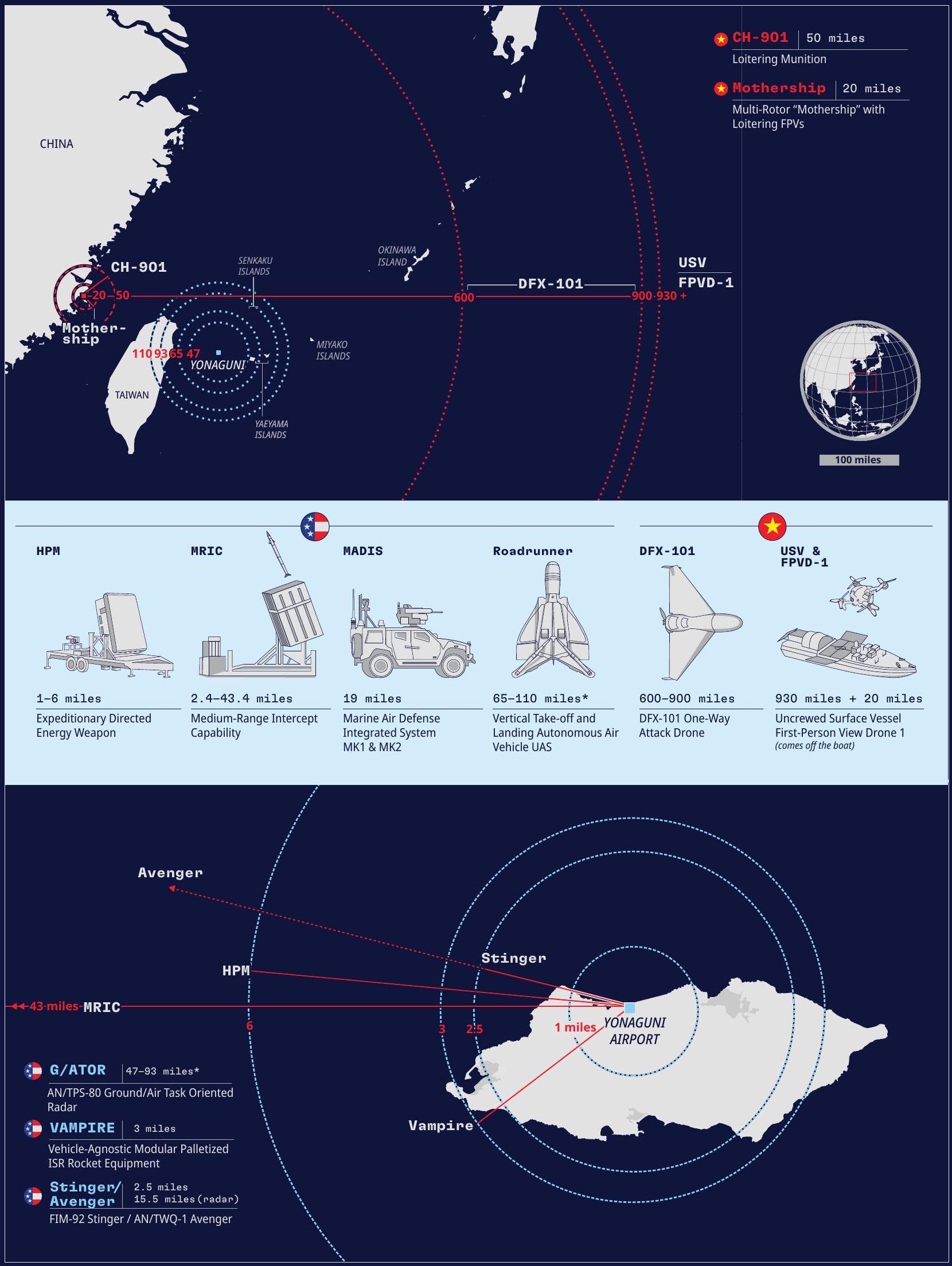
*表示作者估算的射程。桌面演练中设想的中国无人机射程由作者估算。
桌面演练关键发现
最终,TTX清楚地表明,未来无人机威胁将与目前中东及乌克兰战场所见有显著不同。这不仅因为解放军无人机的规模和技术复杂性,还因为印太地区的群岛地理特性及岛屿之间的巨大距离,这将对美军反无人机行动造成极大压力。
中国无人机可能破坏美军行动、压倒防御并增加后勤难度
凭借廉价无人机,中国具备持续攻击第一岛链内美军力量的能力。远程军用自杀式无人机可用于远程打击,而较小的无人机可通过远程航空器或水面舰艇投放。此外,由“母舰”无人机或无人水面艇(USV)投放的FPV和自杀式无人机的机动性,形成了360度威胁向量。
虽然大多数无人机攻击可能更多是压制美军而非摧毁,但仍会迫使美军采取防御姿态,从而干扰美军的进攻行动。反复无人机攻击的累积影响可能耗尽美军拦截器库存,进一步限制作战行动,最终导致美军暴露。总体而言,中国无人机威胁的规模将超过美军现有主动防御能力。
由于主动反无人机防御和拦截器可能遭受大规模消耗,美国在印太无人机战斗中还必须重视被动防御。干扰器、导弹拦截器、舰炮和高功率微波等主动防御措施虽然必要,但不足以应对日益增长的无人机威胁。第一类和第二类无人机的普遍性和数量规模意味着“漏网之鱼”——穿透防空的无人机——不可避免。因此,美军需要在固定地点(如空军基地)建立强大的被动防御体系,以应对各种空中威胁,包括无人机。结合主动与被动防御,美军能够吸收和减轻无人机攻击的部分影响,并继续执行进攻行动。
桌面演练场景2:菲律宾棉兰老岛敏捷作战部署(ACE)行动
表6: 场景2 中国无人机攻击概览
| 红方攻击 | 攻击描述 | 发射方式与地点 | 目标对象 |
|---|---|---|---|
| 攻击1 | 4波,每波5架喷气无人机,间隔1分钟 | 中国海南岛卡车发射 | 燃料库或跑道 |
| 攻击2 | 复杂攻击,包括35架涡扇自杀无人机、4枚巡航导弹和1枚空射弹道导弹 | 海南岛卡车发射无人机 | 优先攻击F-35位置 |
| 中国控制空域H-6发射弹道导弹 | CJ-10导向燃料库或卸载点 | ||
| 船舰发射CJ-10巡航导弹 | |||
| 攻击3 | 30架自主涡扇自杀无人机,具有自愈网络,同时发射 | 海南岛卡车发射 | F-35战机 |
图7 I TTX 场景2:美军陆军和空军反无人机作战关键能力 \({ }^{220}\)
菲律宾棉兰老岛的美军空军基地分散在数百英里范围内,使得有效的反无人机防御十分困难。
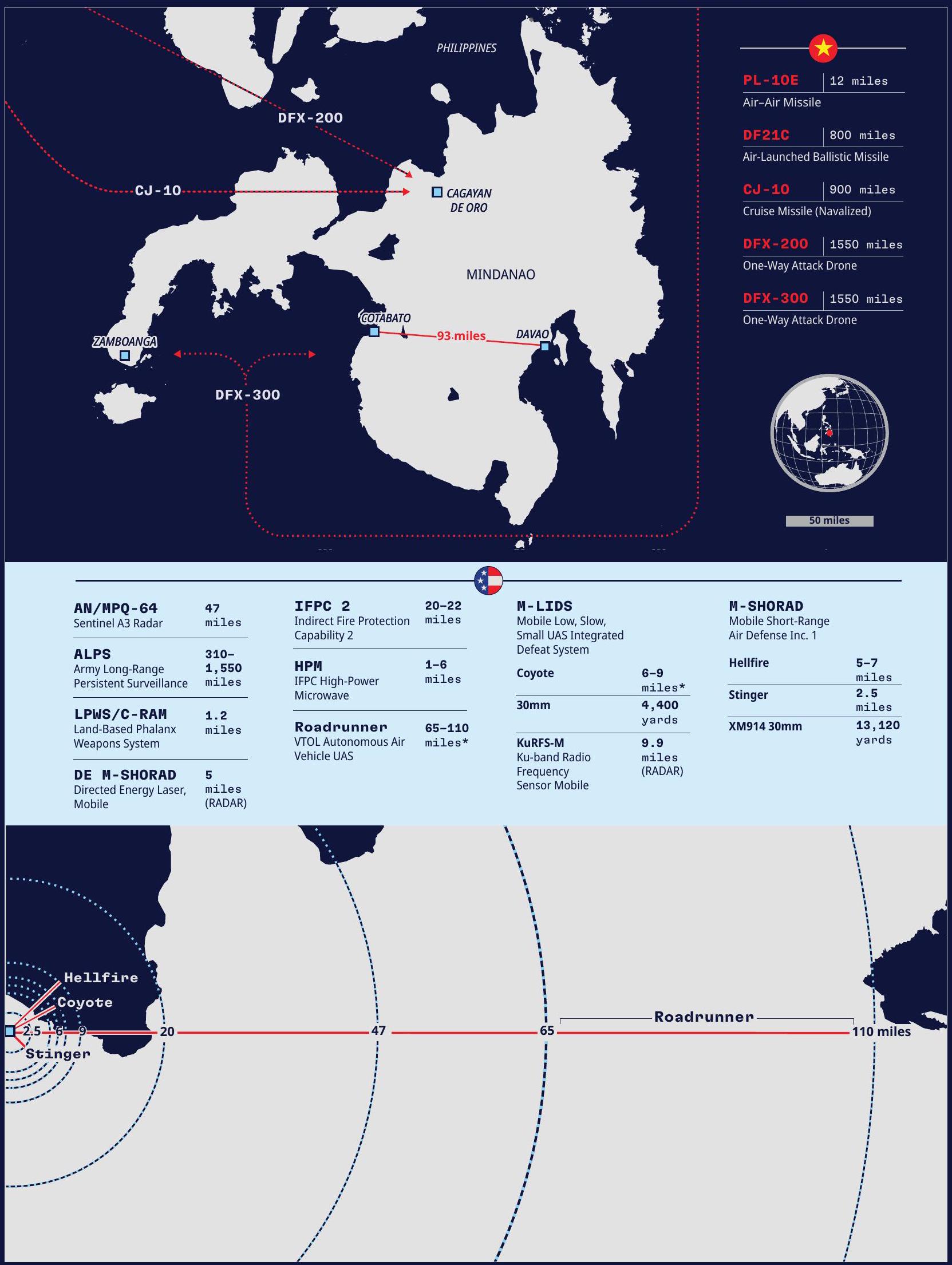
*表示作者估算的射程。桌面演练中设想的中国无人机射程由作者根据现有类似系统估算。
美国需要大量经过验证的反无人机能力库存,以保护分散部署的部队免受中国攻击
在印太地区,美军将跨越多个群岛国家作战,基地之间相隔数百至数千英里。分散部署美军部队可以提高生存能力,但如果位置间距足够远,对点防御——能够保护有限区域或重点目标的短程系统——的需求也会增加。大多数专用C-UAS系统为短程,因此每个美军希望防御无人机攻击的位置都需要其自身的一套分层整合传感器和效应器。因此,可以合理假设,在印太冲突中,对短程反无人机系统的需求将显著增加。
在场景1中,由于地理距离较短,MLR拥有充足防御以应对前两次红方攻击。与那国岛面积不足11平方英里,使得分散阵地能够实现相互防御。相比之下,场景2中棉兰老岛的地理环境意味着ACE基地相隔约100英里,防御不足以覆盖所有目标。美军针对台湾防御的作战概念以分布式联合行动为前提;如果分布式部队无法防御无人机攻击,美军将面临失败。\({ }^{221}\)
保护分布式部队免受无人机攻击的关键在于大量短程动能拦截器库存以及完善的补给计划,这是美国应对受争夺物流的战略的一部分。为分布式部队提供足够的拦截器以维持持续的反无人机作战将具有挑战性,而中国拥有足够无人机发起TTX中假设类型的数百波攻击。在中东地区,后勤不受争夺,美军士兵在Coyote导弹库存耗尽后,紧急向基地补充拦截器。而在与中国的冲突中,拦截器必须在受攻击情况下运输数百英里至分散基地。由于库存有限且后勤受争夺,美军需要更多高容量短程防御系统。这些系统应包括用于对抗蜂群的高功率微波等新兴技术,同时对现有大量装备如舰炮弹药进行适度升级。制造可选电力近炸引信炮弹提供了一种经济且经过验证的方式,确保拥有广泛可用、弹药充足的短程防空能力,同时利用现有武器上几乎无处不在的枪炮资源。
机动反无人机传感器和拦截器可提高固定和移动反无人机作战的生存能力
分布式部队不等同于机动部队。在两个场景中,蓝方部队配备的C-UAS在机动性上有所不同。对于在与那国岛的MLR,蓝方玩家能够轻松重新部署MADIS车载C-UAS拦截平台,使其能够在岛上进行机动作战。然而,在棉兰老岛,代表美陆军的玩家将其机动C-UAS平台M-LIDS用作可移动的Coyote发射器,可在防御的空军基地不同位置重新部署,从而在固定点防御作战中实现机动。在两个场景中,蓝方玩家利用C-UAS技术的机动性,采用“射击-撤退”战术,以规避反击并提高生存能力。然而,管理反无人机系统发射信号(主要依赖雷达进行探测和火控)在现有系统下仍具有挑战性。虽然AN/TPS-80地/空任务导向雷达(G/ATOR)和AN/MPQ-64 Sentinel \(\mathrm{A}_{3}\)雷达可以移动和重新部署,但速度可能无法满足未来无人机作战的需求。最终,为提高移动和固定分布式部队的生存能力,国防部应更多投资于机动C-UAS能力。
美国需要部署新兴技术以应对先进无人机威胁
即使进行计划中的改进,美军在面对大规模脉冲齐射、复杂攻击以及自主蜂群时,仍可能难以取胜,除非采用诸如高功率微波和人工智能等新技术。在某个阶段,逐一拦截来袭无人机的防御手段将达到饱和状态,要么耗尽拦截器,要么因无法快速重新瞄准而在无人机撞击前未能拦截成功而失败。
为了击败大规模和复杂攻击,美军的传感器和拦截器必须无缝整合入自动化、人工智能驱动的指挥控制(C2)系统。随着无人机攻击规模从几架增加到数十或数百架,美方防御者必须能够在越来越短的时间内快速应对多重威胁。鉴于拦截无人机时的决策速度,美军需要AI驱动系统来优化开火选择,并协调不同防御平台的响应。此外,对抗包含多种空中威胁的复杂攻击(如慢速无人机、高速弹道或高超音速导弹、中速超音速巡航导弹)需要多种效应器同时、最优地运用。在异构攻击中,武器从不同方位、不同速度接近,意在迫使防御者做出防御选择,从而暴露出可被其他武器利用的区域。需要将AI决策支持算法纳入,以自动化并优化交战过程。
即便配备AI增强的指挥控制系统,逐一拦截来袭无人机的防御在某个阶段仍会达到饱和。拦截器可能耗尽,或者因无法足够快速重新瞄准而未能在无人机撞击前拦截成功。高功率微波(HPM)是唯一能够有效对抗大规模小型无人机蜂群的手段。然而,HPM仅在极短距离内有效,因此不应单独使用,而应作为防御的最后一道屏障。此外,中国可能会对部分无人机进行抗HPM防护。其他定向能武器技术,如高能激光,目前尚未成熟到可大规模部署。与HPM不同,激光一次只能攻击一个目标,需要驻留时间并重新瞄准,同时消耗大量能量,且易受大气条件影响。较低功率的激光可用来致盲无人机光学系统,可能更适合机动部队在同时管理少量无人机时使用。
最后,美国应继续投资高分辨率被动传感器,使美军能够在不发射信号的情况下,探测并锁定来袭无人机,延长目标识别距离。TTX中的玩家讨论了使用蜂窝塔网络作为被动传感器,并结合先进计算处理创建高分辨率目标轨迹。尽管在现实中可能不可行,但具备足够射程和精度的被动传感器能够实现精确打击,将非常有用。\({ }^{222}\)
第6章 国防部的结论与建议
在经历了数十年的空中优势和几乎垄断的精确打击能力之后,美国如今面临一个截然不同、更加敌对的世界,因为廉价无人机的普及已经使大规模精确打击“民主化”。在未来的任何冲突中,无人机很可能对美军构成无法规避的威胁。随着苏联解体,美国军方让其短程防空能力逐渐退化,形成了一个显著的脆弱性缺口,而无人机的出现进一步加剧了这一问题。如今,预编程的远程军事自杀式无人机以及小型商业无人机的威胁持续增长,因为它们成本低廉,足以让对手建立大量库存,同时其体型和飞行特性使其能够利用美国传统防空系统的弱点。俄罗斯和伊朗在乌克兰“蜘蛛网行动”和以色列“狮子升起行动”中分别以惨痛的方式认识到了无人机威胁。\({ }^{223}\) 在这些袭击中,小型无人机对大型、无防护、高价值武器系统造成了重大损害。美国需要从这些失败中吸取教训,优先应对无人机威胁,否则可能面临类似的命运。
正如本报告对美国国防支出的分析所显示的,近十年来,五角大楼在对抗无人机方面既投资了传统能力,也投资了新兴能力。然而,这些努力受限于规模不足和紧迫性不够。部分原因在于反无人机采购长期受到官僚预算争斗的影响,以及防务工业产能不足限制了更广泛的防务生产。国防部仅偶尔优先考虑反无人机采购,导致联合部队缺乏足够的专用反无人机系统、大量经济型拦截器储备以及现代短程防空能力。此外,数十年来,国防部在下一代反无人机系统(如高能激光、高功率微波和远程被动传感器)的基础研发上投入了数十亿美元,但至今尚未实现全面量产。
尽管五角大楼在采购专用反无人机能力方面存在短板,美国在中东的反无人机行动仍然值得关注。在保护该地区基地时,美国陆军士兵利用零散的反无人机系统,成功拦截了大多数针对他们的无人机。在红海,美军水面舰队巧妙运用整合的多层防空能力,配合空军战斗机覆盖,实现了高拦截率。然而,这些海军交战的成本-效益比明显失衡,因为舰队依赖数百万美元的弹药去拦截低成本的伊朗制造无人机,这暴露了现行海军射击作战方式的不可持续性。
随着中国和俄罗斯等对手继续投资于更高自主性的先进无人机,并大量采购,美国的反无人机和防空能力无法跟上步伐。这个问题没有简单答案,也没有单一技术能提供万无一失的解决方案。现有美国防空系统能够应对目前的威胁,如少量的大疆四旋翼无人机和伊朗“沙赫德”无人机,但面对大规模自主无人机蜂群或复杂的脉冲齐射(将低成本无人机与先进导弹组合)时,将很快不堪重负。因此,美国必须投资于针对反无人机任务优化的防空与自我防护能力,以及为应对加速升级的未来威胁而设计的新兴能力。
中国正大力投资自杀式无人机,并研发自主无人机蜂群,很快将拥有世界上最大、最先进的无人机力量之一。如果没有大规模增强的反无人机能力,中国无人机可能削弱美国的分布式作战理念,并危及任务成功。解放军可能利用低成本无人机削弱第一岛链内的美军行动——通过远程一次性攻击系统和无人水面舰艇,向美军部队和基地发起四旋翼无人机蜂群攻击——破坏美国作战目标,甚至可能导致战略失败。
未来的无人机威胁几乎已经来临:五角大楼获取新能力、采纳新战术技术程序并训练部队的时间正日益紧迫。国防部必须紧急行动。这不仅是理论问题——没有足够防御,即便是最先进的系统和战术也将在压倒性的无人机攻击面前失去意义。正如前参谋长联席会议主席马克·米利将军所说:“如果你死了,这些都不重要。这就是为什么你需要防空。”\({ }^{224}\)
对国防部的总体建议
优先反无人机防御,并将能力扩展至空防社区之外。 无人机防御不能局限于专门的防空部队。每个单位都需要具备防御小型无人机的能力。联合部队必须投资更多针对无人机威胁优化的传感器和效应器。除了装备大型系统的传统防空部队外,单兵和车辆还需具备便携和机动的反无人机能力以实现自我防护。
在联合部队中扩大反无人机训练。 美军在中东的行动之所以成功,是因为部队能够实时适应。随着无人机威胁加剧,错误的可能性也增加。五角大楼需要制定并共享最佳战术、技术和程序,并确保所有部队都接受无人机自我防护训练。
提高反无人机原型测试的严谨性和真实性。 当前的测试与评估流程往往使原型反无人机系统产生虚假的信心,因为它们通常使用不现实的敌方无人机模型和低保真度的电磁武器测试。五角大楼应弥补这些不足,并强化测试条件,确保美军战士能够获得最强的武器。此外,国防部应抓住机会,让盟友和伙伴在真实战场环境中测试能力,如乌克兰的实践经验所示。
为应对当今无人机威胁,国防部必须投资经过验证的能力
构建具韧性的防御体系,结合多层主动防御和被动对策。 美军必须具备作战韧性,即能够在击退或吸收无人机攻击的同时继续执行其他任务。韧性要求建立多层主动防御系统,配备多种类型的传感器和效应器。没有任何单一类型的传感器或武器能够应对美国面临的全部无人机威胁,这就是为什么需要一个多层、多元化的防御体系。
防空系统不可能在任何时候都达到百分之百的有效率,因此被动防护对于韧性至关重要。一些无人机很可能会突破防线。大规模复杂的攻击甚至可以压倒密集的主动防御体系,摧毁宝贵资产,如战斗机和导弹发射装置。许多反无人机防御系统可能偏向拦截特定类型的威胁,从而在面对其他威胁时更脆弱。例如,设计用于摧毁小型无人机蜂群的高功率微波(HPM)系统将易受反辐射导弹攻击。鉴于聪明的对手可能会设计攻击以利用这些主动防御的弱点,建立强大的被动防御体系是必要的。美军在中东通过拦截大部分自杀式无人机展现了卓越的战术能力,但仍有少数无人机击中目标,造成美军士兵伤亡。
加强机动部队的移动反无人机能力和战术。 陆军在中美司令部地区击退无人机的经验完全依赖固定阵地,而国防部采购的大部分反无人机防御系统都是不可移动的。美国尚未为机动作战部队开发适当的移动防御系统,也未为下士级步兵提供足够的手持反无人机能力。必须进一步考虑哪些类型的反无人机能力适合地面机动作战部队,并开发相应的战术和作战概念,以在大量敌对无人机存在的情况下开展机动作战。
采购大量高容量、短程动能拦截器。 美军在中东的拦截器库存已严重消耗。具体而言,需要采购更多经过实战验证的“郊狼”(Coyote)导弹,尽管其成本过高,无法成为唯一解决方案。高容量防空体系可能包括未来技术,如HPM和定向能(DE)武器,这些武器无需拦截器,但仍需更多基于火炮的防御以及火箭拦截器,如APKWS II。海军应为其5英寸火炮采购专用弹药,而陆军和海军陆战队应为大型火炮采购近炸引信弹药。
为应对未来无人机威胁,国防部还必须投资新兴能力
投资于人工智能驱动的传感器处理与指挥控制,以加快反无人机击杀链。 反无人机防御的指挥控制网络存在孤岛问题,识别和拦截无人机的过程仍然依赖人工。随着无人机攻击规模和复杂性的增加,美军操作员将不堪重负,无法完成击杀链中的所有步骤,也无法手动应对多架同时出现的无人机。需要整合不同反无人机防御系统的指挥控制,并利用人工智能加速识别和拦截过程。这也有助于实现五角大楼的“联合全域指挥控制”(JADC2)目标。
将有前景且快速发展的技术,尤其是高功率微波(HPM),纳入正式装备计划。 HPM是最有能力击退无人机蜂群或大规模攻击的技术。不久的将来,敌方将发起大规模无人机攻击,压倒动能防御。真正自主的无人机蜂群,能够独立协调并优化其行为,也很快将成为现实。HPM可以利用电磁能量同时摧毁多架无人机的电子组件。然而,它应作为最后防线,并融入多层次的无人机防御体系。
投资高分辨率被动传感器。 对无人机的早期探测是至关重要的第一步,它决定了是否有足够时间击退无人机,或者人员是否应采取掩护。当前,美军主要依赖主动雷达系统来发现、定位和跟踪无人机。这些传感器性能非常强大,但会发射信号,暴露位置给敌方。长距离、高分辨率的被动传感器提供了一种更具生存能力的无人机探测手段,并可减少主动雷达的开启时间。如果这种技术得到广泛应用,可能从根本上改变攻击者与防御者之间的竞争格局,使防御方占据优势。
参考文献
- Abby Sewell, Tara Copp, and Qassim Abdul-Zahra, "Troops Hurt After Three Drones Attack US Bases in Iraq as Tensions Flare After Gaza Hospital Blast," Associated Press, October 18, 2023, https://apnews.com/article/iraq-militias-iran-us-base-attack-drone-hamas-israel-war-80f6739c3ab34662afba316285914e39.
- Pat Ryder, "Pentagon Press Secretary Air Force Brig. Gen. Pat Ryder Holds an on-Camera Press Briefing," Department of Defense, October 19, 2023, https://www.defense.gov/News/ Transcripts/Transcript/Article/3563350/pentagon-press-secretary-air-force-brig-gen-pat-ryder-holds-an-on-camerapress/.
- Also on October 17, 2023, a false alarm at al-Asad Airbase resulted in a U.S. civilian contractor having a heart attack and dying: Ryder, "Pentagon Press Secretary Holds an on-Camera Press Briefing."
- Austin Rooney, "USS Carney: A Destroyer at War," U.S. Navy, December 4, 2024, https://wwww.navy.mil/Press-Office/ News-Stories/Article/3984206/uss-carney-a-destroyer-atwar/.
- Andrew Metrick, "A World Full of Missiles," Foreign Affairs, March 28, 2024, https://wwww.foreignaffairs.com/north-korea/ world-full-missiles.
- Ballistic and Cruise Missile Threat (Defense Intelligence Ballistic Missile Analysis Agency, 2020), https://media. defense.gov/2021/Jan/11/2002563190/-1/-1/1/2020\ BALLISTIC\%20AND\%20CRUISE\%20MISSILE\%20THREAT_FINAL_2OCT_REDUCEDFILE.PDF; Iran: Enabling Houthi Attacks Across the Middle East (Defense Intelligence Agency, February, 2024), https://wwww.dia.mil/Portals/110/Documents/News/ Military_Power_Publications/Iran_Houthi_Final2.pdf; and "Roster of Iran's Drones," The Iran Primer by U.S. Institute of Peace, April 12, 2024, https://iranprimer.usip.org/blog/2024/ feb/02/roster-iran\%E2\%80\%99s-drones. For a complete list of actors that Iran has transferred its drones to, see: Molly Campbell, Drone Proliferation Dataset (Center for a New American Security [CNAS], September 10, 2024, https://wwww. cnas.org/publications/reports/drone-proliferation-dataset.
- Michael C. Horowitz, "Battles of Precise Mass," Foreign Affairs, October 22, 2024, https://wwww.foreignaffairs.com/world/bat-tles-precise-mass-technology-war-horowitz.
- Fact Sheet: Department of Defense Strategy for Countering Unmanned Systems (Department of Defense, December 5, 2024), https://media.defense.gov/2024/Dec/05/2003599149/-1/-1/0/FACT-SHEET-STRATEGY-FOR-COUNTERING-UN-MANNED-SYSTEMS.PDF.
- Jon Harper, "NORAD Commander Says Hundreds of Drone Incursions Were Detected at US Military Installations," DefenseScoop, February 13, 2025, https://defensescoop. com/2025/02/13/drone-incursions-us-military-bases-norad-northcom-counter-small-uas/.
- See: Stacie Pettyjohn, Evolution Not Revolution: Drone Warfare in Russia's 2022 Invasion of Ukraine (CNAS, February 8, 2024), https://wwww.cnas.org/publications/reports/evolu-tion-not-revolution.
- Michael R. Gordon, "U.S. Is Redirecting Critical Antidrone Technology from Ukraine to U.S. Forces," The Wall Street Journal, June 4, 2025, https://www.wsj.com/politics/national-secu-rity/us-halts-ukraine-anti-drone-russia-ce0b5b75.
- F. Daniel Gettinger, "Defense Primer: Categories of Uncrewed Aircraft Systems," Congressional Research Service, October 25, 2024, https://wwww.congress.gov/crs-product/ IF12797.
- From the war in Ukraine and U.S. operations over Yemen, it is clear that Group 4 and 5 drones such as the MQ-9 Reaper or TB-2, which fly at medium or high altitudes, can be shot down by air defenses. See: Pettyjohn, Evolution not Revolution, 10; Luis Martinez, "Houthis Shot Down Growing Number of US Drones," ABC News, April 23, 2025, https:// abcnews.go.com/Politics/houthis-shoot-growing-number-us-drones/story?id=121099082.
- U.S. military doctrine defines active air defenses as "direct defensive action to destroy, nullify, or reduce the effectiveness of hostile air and missile threats against friendly forces and assets." Passive defenses are "all measures, other than active air defense, taken to minimize the effectiveness of hostile air and missile threats against friendly forces and assets." See: DOD Dictionary of Military and Associated Terms (Department of Defense, March 2017), 5, 181, https:// wwww.tradoc.army.mil/wp-content/uploads/2020/10/ AD1029823-DOD-Dictionary-of-Military-and-Associat-ed-Terms-2017.pdf.
- Jeff Hagen et al., The Foundations of Operational Resil-ience-Assessing the Ability to Operate in an Anti-Access/ Area Denial (A2/AD) Environment (RAND Corporation, 2016), 3, https://wwww.rand.org/content/dam/rand/pubs/ research_reports/RR1200/RR1265/RAND_RR1265.pdf.
- DOD Dictionary of Military and Associated Terms, 5, 181.
- Alan Vick et al., Air Base Defense (RAND Corporation, May 29, 2020), 16, https://wwww.rand.org/pubs/research_reports/RR4368.html.
- ATP 3-01.81 Counter-Unmanned Aircraft System (C-UAS) (Headquarters, Department of the Army, August 11, 2023), 3-7, https://irp.fas.org/doddir/army/atp3-01-81.pdf.
- Airborne radars have difficulty, however, looking down and distinguishing objects of interest from clutter. See: Wes Rumbaugh and Tom Karako, Extending the Horizon: Elevated Sensors for Targeting and Missile Defense (Center for Strategic and International Studies, September 2021), https:// wwww.csis.org/analysis/extending-horizon-elevated-sen-sors-targeting-and-missile-defense.
- For more on radars, see: Simon Kingsley and Shaun Quegan, Understanding Radar Systems (Scitech Publishing, February 12, 1999), 1; Paul Hannen, Radar and Electronic Warfare Principles for the Non-Specialist 4th Edition (Scitech Publishing, November 8, 2023), 9-10.
- Jack Watling and Justin Bronk, Protecting the Force from Uncrewed Aerial Systems (Royal United Services Institute, October 2024), 8, https://static.rusi.org/protecting-the-force-from-uncrewed-uas.pdf. This mission is called suppression or destruction of enemy air defenses (SEAD/ DEAD). For more, see: Walter Kross, Joint Pub 3-01.4: JTTP for Joint Suppression of Enemy Defenses (J-SEAD) (Joint Chiefs of Staff, July 25, 1995), https://edocs.nps.edu/dodpubs/topic/jointpubs/JP3/JP3_01.4_950725.pdf.
- Watling and Bronk, Protecting the Force from Uncrewed Aerial Systems, 8.
- Watling and Bronk, Protecting the Force from Uncrewed Aerial Systems; Shaikh, Karako, and McLoughlin, Countering Small Uncrewed Aerial Systems: Air Defense by and for the Joint Force; "The Comprehensive Guide to Counter-UAS"; "10 Types of Counter-Drone Technology to Detect and Stop Drones Today," Robin Radar Systems, https://wwww.robin-radar.com/resources/10-counter-drone-technologies-to-detect-and-stop-drones-today; Jen Judson, "US Army ups the Ante with Yearslong Campaign to Test Integrated Fires," Defense News, August 9, 2023, https://www.defensenews. com/training-sim/2023/08/09/us-army-ups-the-ante-with-yearslong-campaign-to-test-integrated-fires/; "Leidos Is Building Advanced Air Defense Sensors for the Marines," Leidos, October 3, 2023, https://wwww.leidos.com/insights/ leidos-building-advanced-air-defense-sensors-marines; "AN/ TPS-80 Ground/Air Task Oriented Radar (G/ATOR)," Northrop Grumman, accessed June 27, 2025, https://wwww.northrop-grumman.com/what-we-do/mission-solutions/radars/an-tps-80-ground-air-task-oriented-radar-g-ator; "Defense," Squarehead Technology, accessed June 27, 2025, https://wwww. sqhead.com/defense; "Tsukorok," Scientific Production Group Rarog, accessed June 27, 2025, https://spgr.org.ua/en/port-folio-items/tsukorok/; Counter UAS: X-MADIS (Ascent Vision Technologies, 2020), https://wwww.caci.com/sites/default/ files/2020-10/AVT_CUAS\%20Brochure_.pdf; and Night Hawk HD, product brochure, version 2.1 (PVP Advanced EO Systems, Inc.), accessed June 27, 2025, https://advancedeo.systems/ product_brochures/NH-HD-v21.pdf.
- Joseph Trevithick, "Ukraine Using Thousands of Networked Microphones to Track Russian Drones," The War Zone, February 12, 2024, https://www.twz.com/land/thousands-of-networked-microphones-are-tracking-drones-in-ukraine.
- Shaan Shaikh, Tom Karako, and Michelle McLoughlin, Countering Small Uncrewed Aerial Systems: Air Defense by and for the Joint Force (Center for Strategic and International Studies, November 2023), 21-22; Watling and Bronk, Protecting the Force from Uncrewed Aerial Systems, 9-10.
- Charlie Metcalfe, "Meet the Radio-Obsessed Civilian Shaping Ukraine's Drone Defense," MIT Technology Review, September 12, 2024, https://www.technologyreview. com/2024/09/12/1103833/ukraine-russia-drone-war-flash-ra-dio-serhii-beskrestnov-social-media/.
- "The Comprehensive Guide to Counter-UAS," Dedrone, https:// wwww.dedrone.com/white-papers/counter-uas.
- For examples of multiple sensors working together in one system, see: "Multi-Layered Drone Protection," Dedrone, https:// wwww.dedrone.com/solutions/dedrone-fixed-site; LIDS: Family of Systems (Integrated Fires Rapid Capabilities Office), https:// wwww.srcinc.com/pdf/LIDS-Family-of-Systems-Brochure.pdf.
- Watling and Bronk, Protecting the Force from Uncrewed Aerial Systems, 10.
- Watling and Bronk, Protecting the Force from Uncrewed Aerial Systems, 12.
- "Multi-Layered Drone Protection"; LIDS: Family of Systems.
- Vick et al., Air Base Defense, 34-38.
- Joseph Trevithick, "Laser-Guided Rockets Shown Shooting Down Houthi Drones for First Time," The War Zone, March 19, 2025, https://wwww.twz.com/air/air-launched-laser-guided-rockets-shown-shooting-down-houthi-drones-for-first-time.
- For more on U.S. surface-to-air missiles, see: Vick et al., Air Base Defense, 34-43.
- Vick et al., Air Base Defense, 34.
- Roland Oliphant, "Interceptor Drones Will Decide Europe's Fate: Here's Why," The Telegraph, July 4, 2025, https:// wwww.telegraph.co.uk/news/2025/07/04/why-intercep-tor-drones-will-decide-europes-fate/?ICID=continue_without_subscribing_reg_first.
- For more on these systems, see Vick et al., Air Base Defense, 31-32; Directed Energy Weapons: DoD Should Focus on Transition Planning (Government Accountability Office, April 2023), 2-6, https://www.gao.gov/assets/gao-23-105868.pdf.
- Joseph Trevithick, "U.S. Military Laser Weapon Programs are Facing a Reality Check," The War Zone, May 21, 2024, https:// wwww.twz.com/news-features/u-s-military-laser-weapon-pro-grams-are-facing-a-reality-check.
- With higher power, the laser can burn out the sensor, rendering it inoperable without otherwise damaging the drone.
- Sam Dean, "This Giant Microwave May Change the Future of War," MIT Technology Review, May 29, 2025, https://wwww.tech-nologyreview.com/2025/05/29/1117502/epirus-drone-zap-ping-microwave-us-military-defense/.
- Watling and Bronk, Protecting the Force from Uncrewed Aerial Systems; Shaikh, Karako, and McLoughlin, Countering Small Uncrewed Aerial Systems: Air Defense by and for the Joint Force; and "The Comprehensive Guide to Counter-UAS."
- Vick et al., Air Base Defense, 26-30.
- Howard Altman, "Inside Ukraine's Fiber-Optic Drone War," The War Zone, May 28, 2025, https://www.twz.com/news-fea-tures/inside-ukraines-fiber-optic-drone-war.
- Pettyjohn, Evolution not Revolution.
- ATP 3-01.81 Counter-Unmanned Aircraft System (C-UAS), 1-3; Vick et al., Air Base Defense, 44-50; and Hagen et al., The Foundations of Operational Resilience, 68.
- Watling and Bronk, Protecting the Force from Uncrewed Aerial Systems; Adam Jeffs, "The Anti-Drone 'Invisibility Cloaks' Hiding Troops in Ukraine," C-UAS Hub, October 23, 2024, https://cuashub.com/en/content/the-anti-drone-invisibility-cloaks-hiding-troops-in-ukraine/.
- Jeffs, "The Anti-Drone 'Invisibility Cloaks' Hiding Troops in Ukraine."
- "What are the Russian 'Turtle Tanks' Seen in Ukraine," The Economist, May 15, 2024, https://www.economist.com/ the-economist-explains/2024/05/15/what-are-the-russian-turtle-tanks-seen-in-ukraine; Stavros Atlamazoglu, "Russia's Turtle Tanks Are Going to War in Ukraine and It Could Get Ugly," The National Interest, August 3, 2024, https://nationalin-terest.org/blog/buzz/russias-turtle-tanks-are-going-war-ukraine-and-it-could-get-ugly-212152.
- Watling and Bronk, Protecting the Force from Uncrewed Aerial Systems; Shaikh, Karako, and McLoughlin, Countering Small Uncrewed Aerial Systems: Air Defense by and for the Joint Force; and "The Comprehensive Guide to Counter-UAS."
- Howard Altman, "Russians Erect Mesh Net 'Tunnel' over a Mile Long to Counter Ukrainian FPV Drones," The War Zone, February 10, 2025, https://wwww.twz.com/news-features/ russians-erect-mesh-net-tunnel-over-a-mile-long-to-counter-ukrainian-fpv-drones.
- Jorge Rivero, "Decoy Warfare: Lessons and Implication from the War in Ukraine," U.S. Naval Institute Proceedings 150, no. 4 (April, 2024), https://wwww.usni.org/magazines/ proceedings/2024/april/decoy-warfare-lessons-and-impli-cation-war-ukraine.
- Hagen et al., The Foundations of Operational Resilience, 64.
- Discussion with Ukrainian official.
- Jorge Rivero, "Next-Generation Decoys for the Marine Corps," War on the Rocks, November 7, 2024, https://waron-therocks.com/2024/11/next-generation-decoys-for-the-marine-corps/.
- Chris Dougherty, Buying Time: Logistics for a New American Way of War (CNAS, April 13, 2023) 10, https://wwww.cnas. org/publications/reports/buying-time.
- Younglak Shim and Michael P. Atkinson, "An Analysis of Artillery Shoot-and-Scoot Tactics," Naval Research Logistics 65, no. 3 (September 2018), https://calhoun.nps. edu/server/api/core/bitstreams/bf0c6584-f0a6-4f8d-b38d-11d2a62e2e5e/content; Rudy Ruitenberg, "In Ukraine, 'Shoot-and-Scoot' Tactics Helping Caesars Survive," Defense News, April 2, 2024, https://wwww.defensenews.com/global/ europe/2024/04/02/in-ukraine-shoot-and-scoot-tactics-helping-caesars-survive/; and FM-309: Fire Support and Field Artillery Operations (Headquarters, Department of the Army, April 30, 2020), 3, https://www.revista-artilharia. pt/admin/upload/ficheiros/ficheirosMultimedia/fm-3-09-fire-support-and-field-artillery-operations.pdf.
- Hagen et al., The Foundations of Operational Resilience, 64; Vick et al., Air Base Defense, 50.
- Hagen et al., The Foundations of Operational Resilience, 68. All of the U.S. services are focused on some form of dispersed operations; see: Bill Hix and Robert Simpson, "Accelerating into the Next Fight: The Imperative of the Offense on the Future Battlefield," Modern War Institute, February 26, 2020, https://mwi.westpoint.edu/acceler-ating-next-fight-imperative-offense-future-battlefield/; Miranda Priebe et al., Distributed Operations in a Contested Environment: Implications for USAF Force Presentation (RAND Corporation, July 17, 2019), https://wwww.rand.org/ content/dam/rand/pubs/research_reports/RR2900/ RR2959/RAND_RR2959.pdf; and Ronald O'Rourke, "Defense Primer: Navy Distributed Maritime Operations (DMO) Concept," Congressional Research Service, December 12, 2024, https://www.congress.gov/crs-product/IF12599.
- This includes passive and active sensing, command and control software and systems, and kinetic and nonkinetic defeat and disrupt.
- This is inclusive of large precision-guided munitions (PGMs) systems, which may account for the high number compared to other estimates. See citation 65: U.S. Army, "AN/MPQ-64 Sentinel A3 Radar (Line Item Number 0125WK5057)"; U.S. Army, "AN/TPQ-50 Counterfire Radar (Line Item Number 8386BA5500)"; U.S. Army, "AN/TPQ-53 Counterfire Radar (Line Item Number 8386BA5500)"; U.S. Army, "AN/TWQ-1 Avenger (Line Item Number 2690CE8710)"; U.S. Army, "Army Integrated Air and Missile Defense (AIAMD) IAMD Battle Command System (Line Item Number 9280BZ5075)"; U.S. Army, "Counter Small Unmanned Aerial System Intercept (Line Item Number 9216C82200)"; U.S. Army, "FIM-92 Stinger (Line Item Number 2684C20000)"; U.S. Army, "Hellfire (Line Item Number 1338C70000)"; U.S. Army, "Indirect Fire Protection Capability Inc 2-I (Line Item Number 8930C61001)"; U.S. Army, "Land-Based Phalanx Weapons System (Line Item Number 0173BZ0501)"; U.S. Army, "Lower Tier Air Missile Defense Sensor (LTAMSD) (Line Item Number 7265C12000)"; U.S. Army, "M-SHORAD Inc. 1 (Line Item Number 8082C14300)"; U.S. Army, "MIM-104 Patriot (Line Item Number 0962C50700)"; U.S. Army, "PAC-3 MSE Missile (Line Item Number 8260C53101)"; U.S. Navy, "Physical Security C-UAS (Line Item Number 8128)"; U.S. Navy, "Evolved Sea Sparrow Missile (ESSM) (Line Item Number 2307)"; U.S. Navy, "AMRAAM (Line Item Number 2206)"; U.S. Navy, "AN/SEQ-4 ODIN (Line Item Number 5510)"; U.S. Navy, "AN/SLQ-32 (Line Item Number 2312)"; U.S. Navy, "AN/SPY-1 (Line Item Number 2981)"; U.S. Navy, "Advanced Precision Kill Weapon System (APKWS) (Line Item Number 0151)"; U.S. Navy, "Cooperative Engagement Capability (CEC) (Line Item Number 2606)"; U.S. Navy, "Close-In Weapon System (CIWS) Mods (Line Item Number 4205)"; U.S. Navy, "Drake 2.0 C-UAS Afloat (Line Item Number 5509)"; U.S. Navy, "Evolved Sea Sparrow Missile (ESSM) (Line Item Number 2307)"; U.S. Navy, "Hellfire (Line Item Number 2254)"; U.S. Navy, "Joint Crew (JCREW) (Line Item Number 3177)"; U.S. Navy, "MK 2 Ship Self-Defense System (SSDS) (Line Item Number 5231)"; U.S. Navy, "RIM-116 Rolling Airframe Missile (RAM) (Line Item Number 2242)"; U.S. Navy, "Shipboard Panoramic Electro-Optic/Infrared (SPEIR) (Line Item Number 2981)"; U.S. Navy, "Sidewinder (Line Item Number 2209)"; U.S. Navy, "Standard Missile-2 (SM-2) (Line Item Number 2356)"; U.S. Navy, "Standard Missile-6 (SM-6) (Line Item Number 2234)"; U.S. Air Force, "3D Expeditionary Long-Range Radar (PE 0207455F)"; U.S. Air Force, "Air Base Air Defense System (ABADS) - Medium-Range Intercept Capability (MRIC) and Counter-small Unmanned Aircraft Systems (C-sUAS)"; U.S. Air Force, "Advanced Medium-Range Air-to-Air Missile (AMRAAM) (Program Element 0207163F, Project 673777)"; U.S. Air Force, "Counter-Unmanned Aircraft Systems (C-UAS) Directed Energy (DE) Prototyping (Project 640200)"; U.S. Air Force, "High Power Microwave Development and Integration (Project 633152)"; U.S. Air Force, "High Power Solid State Laser (Project 633151)"; U.S. Air Force, "AIM-9X Sidewinder (R\&D, Program Element 0207161F, Project 674132)"; U.S. Navy, "Aegis (R\&D, Program Element 0604307N)"; U.S. Navy, "AMRAAM (R\&D, Program Element 0207163N, Project 0981)"; U.S. Navy, "AN/SPY-1 (R\&D, Program Element 0604501N)"; U.S. Navy, "APKWS (R\&D, Program Element 0607142A, Project EW9)"; U.S. Navy, "C-UAS (R\&D, Program Element 3241)"; U.S. Navy, "Cooperative Engagement Capability (CEC) (R\&D, Program Element 0607658N)"; U.S. Navy, "Drake 2.0 (R\&D, Program Element 0604636N)"; U.S. Navy, "High Energy Laser Counter ASCM Project (HELCAP) (R\&D, Program Element 0603925N)"; U.S. Navy, "JCREW (R\&D, Program Element 0603654N, Project 3177)"; U.S. Navy, "MK 2 Ship Self-Defense System (SSDS) (R\&D, Program Element 0604755N)"; U.S. Navy, "MK-57 NSSMS (R\&D, Program Element 0604756N, Project 0173)"; U.S. Navy, "ODIN (R\&D, Program Element 0603925N, Project 9823)"; U.S. Navy, "Phalanx CIWS SEARAM (R\&D, Program Element 0604756N, Project 9081)"; U.S. Navy, "RIM-116 (R\&D, Program Element 0604756N)"; U.S. Navy, "Sidewinder (R\&D, Program Element 0207161N, Project 0457)"; U.S. Navy, "SM-2 BLK IIIC (R\&D, Program Element 0604366N, Project 0439)"; U.S. Navy, "SM-6 (R\&D, Program Element 0604366N,Project 3092)"; U.S. Navy, "SM-6 BLK IB (R\&D, Program Element 0604366N, Project 2063)"; U.S. Navy, "SPEIR Block I (R\&D, Program Element 0604501N, Project 3243)"; U.S. Navy, "Surface Navy Laser Weapon Systems (R\&D, Program Element 0603925N, Project 3402)"; U.S. Marine Corps, "AN/ TPS-80 Ground/Air Task Oriented Radar (G/ATOR) (R\&D, Program Element 0204460M, Project 9C89)"; U.S. Marine Corps, "Common Aviation Command and Control System (CAC2S) (R\&D, Program Element 0206335M, Project 3373)"; U.S. Marine Corps, "Installation-Counter small Unmanned Aircraft Systems (I-CsUAS) (R\&D, Program Element 0605520M, Project 2278)"; U.S. Marine Corps, "Light Marine Air Defense Integrated System (L-MADIS) (R\&D, Program Element 0605520M, Project 2278)"; U.S. Marine Corps, "Marine Air Defense Integrated System (MADIS) (R\&D, Program Element 0605520M, Project 2278)"; U.S. Marine Corps, "Medium Range Intercept Capability (MRIC) (R\&D, Program Element 0605520M, Project 2578)"; U.S. Army, "DE M-SHORAD (Inc. 2) (R\&D, Program Element 0604117A, Project CR9)"; U.S. Army, " 30 mm MMPA M-SHORAD Inc 3 (R\&D, Program Element 0604802A, Project DC9)"; U.S. Army, "ALPS (R\&D, Program Element 0604820A, Project PS1)"; U.S. Army, "AN/MPQ-64 Sentinel A3 Radar (R\&D, Program Element 0604820A, Project E10)"; U.S. Army, "AN/TPQ-53 (R\&D, Program Element 0604823A, Project L88)"; U.S. Army, "AN/TWQ-1 Avenger (R\&D, Program Element 0203801A, Project 038)"; U.S. Army, "APKWS (R\&D, Program Element 0607142A, Project EW9)"; U.S. Army, "Army Integrated Air and Missile Defense (AIAMD) (R\&D, Program Element 0605457A, Project S40)"; U.S. Army, "C-sUAS (R\&D, Program Element 0605531A)"; U.S. Army, "Containerized Weapon System (R\&D, Program Element 0604115A, Project AX3)"; U.S. Army, "FAAD C2 (R\&D, Program Element 0604741A, Project 146)"; U.S. Army, "FIM-92 Stinger PIP (R\&D, Program Element 0203801A, Project DT5)"; U.S. Army, "IFPC 2 - Block 2 (R\&D, Program Element 0605052A, Project EY8)"; U.S. Army, "IFPC 2 Intercept (R\&D, Program Element 0604319A, Project DU3)"; U.S. Army, "IFPC-2 Block 1 (R\&D, Program Element 0605052A, Project EY7)"; U.S. Army, "IFPC-HEL (R\&D, Program Element 0604019A, Project BU9)"; U.S. Army, "IF-PC-HPM (R\&D, Program Element 0604019A, Project CO6)"; U.S. Army, "Lower Tier Air Missile Defense Sensor (LTAMSD) (R\&D, Program Element 0604114A, Project EX2)"; U.S. Army, "M-SHORAD Inc 3 (R\&D, Program Element 0604117A, Project CS1)"; U.S. Army, "M-SHORAD Inc. 1 (R\&D, Program Element 0604117A, Project FI4)"; U.S. Army, "MIM-104 Patriot (R\&D, Program Element 0607865A, Project DV8)"; U.S. Army, "SS-HPM (R\&D, Program Element 0604115A, Project AX3)"; and U.S. Army, "C-UAS (R\&D, Program Element 0604741A, Project FG5)."
- See citation 65: U.S. Army, "AN/MPQ-64 Sentinel A3 Radar (Line Item Number 0125WK5057)"; U.S. Army, "AN/TPQ-50 Counterfire Radar (Line Item Number 8386BA5500)"; U.S. Army, "AN/TPQ-53 Counterfire Radar (Line Item Number 8386BA5500)"; U.S. Army, "AN/TWQ-1 Avenger (Line Item Number 2690CE8710)"; U.S. Army, "Army Integrated Air and Missile Defense (AIAMD) IAMD Battle Command System (Line Item Number 9280BZ5075)"; U.S. Army, "Counter Small Unmanned Aerial System Intercept (Line Item Number 9216C82200)"; U.S. Army, "FIM-92 Stinger (Line Item Number 2684C20000)"; U.S. Army, "Hellfire (Line Item Number 1338C70000)"; U.S. Army, "Indirect Fire Protection Capability Inc 2-I (Line Item Number 8930C61001)"; U.S. Army, "Land-Based Phalanx Weapons System (Line Item Number 0173BZ0501)"; U.S. Army, "Lower Tier Air Missile Defense Sensor (LTAMSD) (Line Item Number 7265C12000)"; U.S. Army, "M-SHORAD Inc. 1 (Line Item Number 8082C14300)"; U.S. Army, "MIM-104 Patriot (Line Item Number 0962C50700)"; U.S. Army, "PAC-3 MSE Missile (Line Item Number 8260C53101)"; U.S. Navy, "Physical Security C-UAS (Line Item Number 8128)"; U.S. Navy, "Evolved Sea Sparrow Missile (ESSM) (Line Item Number 2307)"; U.S. Navy, "AMRAAM (Line Item Number 2206)"; U.S. Navy, "AN/ SEQ-4 ODIN (Line Item Number 5510)"; U.S. Navy, "AN/ SLQ-32 (Line Item Number 2312)"; U.S. Navy, "AN/SPY-1 (Line Item Number 2981)"; U.S. Navy, "Advanced Precision Kill Weapon System (APKWS) (Line Item Number 0151)"; U.S. Navy, "Cooperative Engagement Capability (CEC) (Line Item Number 2606)"; U.S. Navy, "Close-In Weapon System (CIWS) Mods (Line Item Number 4205)"; U.S. Navy, "Drake 2.0 C-UAS Afloat (Line Item Number 5509)"; U.S. Navy, "Evolved Sea Sparrow Missile (ESSM) (Line Item Number 2307)"; U.S. Navy, "Hellfire (Line Item Number 2254)"; U.S. Navy, "Joint Crew (JCREW) (Line Item Number 3177)"; U.S. Navy, "MK 2 Ship Self-Defense System (SSDS) (Line Item Number 5231)"; U.S. Navy, "RIM-116 Rolling Airframe Missile (RAM) (Line Item Number 2242)"; U.S. Navy, "Shipboard Panoramic Electro-Optic/Infrared (SPEIR) (Line Item Number 2981)"; U.S. Navy, "Sidewinder (Line Item Number 2209)"; U.S. Navy, "Standard Missile-2 (SM-2) (Line Item Number 2356)"; U.S. Navy, "Standard Missile-6 (SM-6) (Line Item Number 2234)"; U.S. Air Force, "3D Expeditionary Long-Range Radar (PE 0207455F)"; U.S. Air Force, "Air Base Air Defense System (ABADS) - Medium-Range Intercept Capability (MRIC) and Counter-small Unmanned Aircraft Systems (C-sUAS)"; U.S. Air Force, "Advanced Medium-Range Air-to-Air Missile (AMRAAM) (Program Element 0207163F, Project 673777)"; U.S. Air Force, "Counter-Unmanned Aircraft Systems (C-UAS) Directed Energy (DE) Prototyping (Project 640200)"; U.S. Air Force, "High Power Microwave Development and Integration (Project 633152)"; U.S. Air Force, "High Power Solid State Laser (Project 633151)"; U.S. Air Force, "AIM-9X Sidewinder (R\&D, Program Element 0207161F, Project 674132)"; U.S. Navy, "Aegis (R\&D, Program Element 0604307N)"; U.S. Navy, "AMRAAM (R\&D, Program Element 0207163N, Project 0981)"; U.S. Navy, "AN/SPY-1 (R\&D, Program Element 0604501N)"; U.S. Navy, "APKWS (R\&D, Program Element 0607142A, Project EWV9)"; U.S. Navy, "C-UAS (R\&D, Program Element 3241)"; U.S. Navy, "Cooperative Engagement Capability (CEC) (R\&D, Program Element 0607658N)"; U.S. Navy, "Drake 2.0 (R\&D, Program Element 0604636N)"; U.S. Navy, "High Energy Laser Counter ASCM Project (HELCAP) (R\&D, Program Element 0603925N)"; U.S. Navy, "JCREW (R\&D, Program Element 0603654N, Project 3177)"; U.S. Navy, "MK 2 Ship Self-Defense System (SSDS) (R\&D, Program Element 0604755N)"; U.S. Navy, "MK-57 NSSMS (R\&D, Program Element 0604756N, Project 0173)"; U.S. Navy, "ODIN (R\&D, Program Element 0603925N, Project 9823)"; U.S. Navy, "Phalanx CIWS SEARAM (R\&D, Program Element 0604756N, Project 9081)"; U.S. Navy, "RIM-116 (R\&D, Program Element 0604756N)"; U.S. Navy, "Sidewinder (R\&D, Program Element 0207161N, Project 0457)"; U.S. Navy, "SM-2 BLK IIIC (R\&D, Program Element 0604366N, Project 0439)"; U.S. Navy, "SM-6 (R\&D, Program Element 0604366N, Project 3092)"; U.S. Navy, "SM-6 BLK IB (R\&D, Program Element 0604366N, Project 2063)"; U.S. Navy, "SPEIR Block I (R\&D, Program Element 0604501N, Project 3243)"; U.S. Navy, "Surface Navy Laser Weapon Systems (R\&D, Program Element 0603925N, Project 3402)"; U.S. Marine Corps, "AN/ TPS-80 Ground/Air Task Oriented Radar (G/ATOR) (R\&D, Program Element 0204460M, Project 9C89)"; U.S. Marine Corps, "Common Aviation Command and Control System (CAC2S) (R\&D, Program Element 0206335M, Project 3373)"; U.S. Marine Corps, "Installation-Counter small Unmanned Aircraft Systems (I-CsUAS) (R\&D, Program Element 0605520M, Project 2278)"; U.S. Marine Corps, "Light Marine Air Defense Integrated System (L-MADIS) (R\&D, Program Element 0605520M, Project 2278)"; U.S. Marine Corps, "Marine Air Defense Integrated System (MADIS) (R\&D, Program Element 0605520M, Project 2278)"; U.S. Marine Corps, "Medium Range Intercept Capability (MRIC) (R\&D, Program Element 0605520M, Project 2578)"; U.S. Army, "DE M-SHORAD (Inc. 2) (R\&D, Program Element 0604117A, Project CR9)"; U.S. Army, " 30 mm MMPA M-SHORAD Inc 3 (R\&D, Program Element 0604802A, Project DC9)"; U.S. Army, "ALPS (R\&D, Program Element 0604820A, Project PS1)"; U.S. Army, "AN/MPQ-64 Sentinel A3 Radar (R\&D, Program Element 0604820A, Project E10)"; U.S. Army, "AN/TPQ-53 (R\&D, Program Element 0604823A, Project L88)"; U.S. Army, "AN/TWQ-1 Avenger (R\&D, Program Element 0203801A, Project 038)"; U.S. Army, "APKWS (R\&D, Program Element 0607142A, Project EW9)"; U.S. Army, "Army Integrated Air and Missile Defense (AIAMD) (R\&D, Program Element 0605457A, Project S40)"; U.S. Army, "C-sUAS (R\&D, Program Element 0605531A)"; U.S. Army, "Containerized Weapon System (R\&D, Program Element 0604115A, Project AX3)"; U.S. Army, "FAAD C2 (R\&D, Program Element 0604741A, Project 146)"; U.S. Army, "FIM-92 Stinger PIP (R\&D, Program Element 0203801A, Project DT5)"; U.S. Army, "IFPC 2 - Block 2 (R\&D, Program Element 0605052A, Project EY8)"; U.S. Army, "IFPC 2 Intercept (R\&D, Program Element 0604319A, Project DU3)"; U.S. Army, "IFPC-2 Block 1 (R\&D, Program Element 0605052A, Project EY7)"; U.S. Army, "IFPC-HEL (R\&D, Program Element 0604019A, Project BU9)"; U.S. Army, "IF-PC-HPM (R\&D, Program Element 0604019A, Project CO6)"; U.S. Army, "Lower Tier Air Missile Defense Sensor (LTAMSD) (R\&D, Program Element 0604114A, Project EX2)"; U.S. Army, "M-SHORAD Inc 3 (R\&D, Program Element 0604117A, Project CS1)"; U.S. Army, "M-SHORAD Inc. 1 (R\&D, Program Element 0604117A, Project FI4)"; U.S. Army, "MIM-104 Patriot (R\&D, Program Element 0607865A, Project DV8)"; U.S. Army, "SS-HPM (R\&D, Program Element 0604115A, Project AX3)"; and U.S. Army, "C-UAS (R\&D, Program Element 0604741A, Project FG5)."
- Mosul Study Group Report: What the Battle for Mosul Teaches the Force (U.S. Army, September, 2017), 12, https:// api.army.mil/e2/c/downloads/2023/01/19/e9325e8b/17-24u-mosul-study-group-what-the-battle-for-mosul-teaches-the-force-sep-17-public.pdf; Mark Pomerleau, "In Drones, ISIS Has Its Own Tactical Air Force," C4ISR Net, September 21, 2027, https://wwww.c4isrnet.com/ digital-show-dailies/modern-day-marine/2017/09/21/in-drones-isis-has-its-own-tactical-air-force/.
- The additional \(\$ 20\) million brought the fiscal year (FY) 2015 funding of Joint Improvised Explosive Device Defeat Fund from \(\$ 189.7\) million to \(\$ 209.7\) million. See: Omnibus 2016 Request, DD 1415-1 (Office of the Under Secretary of Defense [Comptroller], 2016), 48-49, https://comptroller.defense. gov/Portals/45/Documents/execution/reprogramming/ fy2016/prior1415s/16-22_PA_Omnibus_2016_Final.pdf; Jen Judson, "Pentagon Asks for More Money to Counter ISIS Drones," Defense News, July 8, 2016, https://wwww.defense-news.com/home/2016/07/08/pentagon-asks-for-more-money-to-counter-isis-drones/.
- Serkan Balkan, Daesh's Drone Strategy: Technology and the Rise of Innovative Terrorism (SETA Foundation, 2017), https://wwww.setav.org/en/assets/uploads/2017/08/ Report88.pdf 36=37; Don Rassler, The Islamic State and Drones: Supply, Scale, and Future Threats (Combating Terrorism Center at West Point, July 2018), 4, https://ctc. westpoint.edu/wp-content/uploads/2018/07/Islamic-State-and-Drones-Release-Version.pdf.
- U.S. Army, "AN/MPQ-64 Sentinel A3 Radar (Line Item Number 0125WK5057)" in Department of Defense Fiscal Year (FY) 2015-2025 Budget Estimates, https://wwww.asafm. army.mil/Portals/72/Documents/BudgetMaterial/2025/ Base\%20Budget/Procurement/Other\%20Procurement\%20 -\%20BA\%202\%20-\%20Communications\%20and\%20 Electronics.pdf; U.S. Army, "AN/TPQ-50 Counterfire Radar (Line Item Number 8386BA5500)" in Department of Defense Fiscal Year (FY) 2015-2025 Budget Estimates, https://wwww. asafm.army.mil/Portals/72/Documents/BudgetMaterial/2025/Base\%20Budget/Procurement/Other\%20 Procurement\%20-\%20BA\%202\%20-\%20Communications\%20and\%20Electronics.pdf; U.S. Army, "AN/TPQ-53 Counterfire Radar (Line Item Number 8386BA5500)" in Department of Defense Fiscal Year (FY) 2015-2025 Budget Estimates, https://wwww.asafm.army.mil/Portals/72/ Documents/BudgetMaterial/2025/Base\%20Budget/ Procurement/Other\%20Procurement\%20-\%20BA\%202\%20 -\%20Communications\%20and\%20Electronics.pdf; U.S. Army, "AN/TWQ-1 Avenger (Line Item Number 2690CE8710)" in Department of Defense Fiscal Year (FY) 2015-2025 Budget Estimates, https://wwww.asafm.army.mil/Portals/72/ Documents/BudgetMaterial/2025/Base\%20Budget/ Procurement/Missile-Procurement-Army.pdf; U.S. Army, "Army Integrated Air and Missile Defense (AIAMD) IAMD Battle Command System (Line Item Number 9280BZ5075)" in Department of Defense Fiscal Year (FY) 2015-2025 Budget Estimates, https://wwww.asafm.army.mil/Portals/72/ Documents/BudgetMaterial/2025/Base\%20Budget/ Procurement/Other\%20Procurement\%20-\%20BA\%202\%20 -\%20Communications\%20and\%20Electronics.pdf; U.S. Army, "Counter Small Unmanned Aerial System Intercept (Line Item Number 9216C82200)" in Department of Defense Fiscal Year (FY) 2015-2025 Budget Estimates, https://wwww. asafm.army.mil/Portals/72/Documents/BudgetMateri-al/2025/Base\%20Budget/Procurement/Missile-Procure-ment-Army.pdf; U.S. Army, "FIM-92 Stinger (Line Item Number 2684C20000)" in Department of Defense Fiscal Year (FY) 2015-2025 Budget Estimates, https://wwww.asafm. army.mil/Portals/72/Documents/BudgetMaterial/2025/ Base\%20Budget/Procurement/Missile-Procurement-Army. pdf; U.S. Army, "Hellfire (Line Item Number 1338C70000)" in Department of Defense Fiscal Year (FY) 2015-2025 Budget Estimates, https://wwww.asafm.army.mil/Portals/72/ Documents/BudgetMaterial/2025/Base\%20Budget/ Procurement/Missile-Procurement-Army.pdf; U.S. Army, "Indirect Fire Protection Capability Inc 2-I (Line Item Number 8930C61001)" in Department of Defense Fiscal Year (FY) 2015-2025 Budget Estimates, https://wwww.asafm.army. mil/Portals/72/Documents/BudgetMaterial/2025/Base\%20 Budget/Procurement/Missile-Procurement-Army.pdf; U.S. Army, "Land-Based Phalanx Weapons System (Line Item Number 0173BZ0501)" in Department of Defense Fiscal Year (FY) 2015-2025 Budget Estimates, https://wwww.asafm.army. mil/Portals/72/Documents/BudgetMaterial/2025/Base\%20 Budget/Procurement/Other\%20Procurement\%20-\%20 BA\%202\%20-\%20Communications\%20and\%20Electronics. pdf; U.S. Army, "Lower Tier Air Missile Defense Sensor (LTAMSD) (Line Item Number 7265C12000)" in Department of Defense Fiscal Year (FY) 2015-2025 Budget Estimates, https://wwww.asafm.army.mil/Portals/72/Documents/ BudgetMaterial/2025/Base\%20Budget/Procurement/ Missile-Procurement-Army.pdf; U.S. Army, "M-SHORAD Inc. 1 (Line Item Number 8082C14300)" in Department of Defense Fiscal Year (FY) 2015-2025 Budget Estimates, https://wwww.asafm.army.mil/Portals/72/Documents/ BudgetMaterial/2025/Base\%20Budget/Procurement/ Missile-Procurement-Army.pdf; U.S. Army, "MIM-104 Patriot (Line Item Number 0962C50700)" in Department of Defense Fiscal Year (FY) 2015-2025 Budget Estimates, https://wwww. asafm.army.mil/Portals/72/Documents/BudgetMateri-al/2025/Base\%20Budget/Procurement/Missile-Procure-ment-Army.pdf; U.S. Army, "PAC-3 MSE Missile (Line Item Number 8260C 53101)" in Department of Defense Fiscal Year (FY) 2015-2025 Budget Estimates, https://wwww.asafm.army. mil/Portals/72/Documents/BudgetMaterial/2025/Base\%20 Budget/Procurement/Missile-Procurement-Army.pdf; U.S. Navy, "Physical Security C-UAS (Line Item Number 8128)" in Department of Defense Fiscal Year (FY) 2015-2025 Budget Estimates, https://wwww.secnav.navy.mil/fmc/fmb/ Documents/25pres/OPN_BA5-8_Book.pdf; U.S. Navy, "Evolved Sea Sparrow Missile (ESSM) (Line Item Number 2307)" in Department of Defense Fiscal Year (FY) 2015-2025 Budget Estimates, https://wwww.secnav.navy.mil/fmc/fmb/ Documents/25pres/WPN_Book.pdf; U.S. Navy, "AMRAAM (Line Item Number 2206)" in Department of Defense Fiscal Year (FY) 2015-2025 Budget Estimates, https://wwww.secnav. navy.mil/fmc/fmb/Documents/25pres/WPN_Book.pdf; U.S. Navy, "AN/SEQ-4 ODIN (Line Item Number 5510)" in Department of Defense Fiscal Year (FY) 2015-2025 Budget Estimates, https://wwww.secnav.navy.mil/fmc/fmb/ Documents/25pres/OPN_BA4_Book.pdf; U.S. Navy, "AN/ SLQ-32 (Line Item Number 2312)" in Department of Defense Fiscal Year (FY) 2015-2025 Budget Estimates, https://wwww. secnav.navy.mil/fmc/fmb/Documents/25pres/OPN_BA2_ Book.pdf; U.S. Navy, "AN/SPY-1 (Line Item Number 2981)" in Department of Defense Fiscal Year (FY) 2015-2025 Budget Estimates, https://wwww.secnav.navy.mil/fmc/fmb/ Documents/25pres/OPN_BA2_Book.pdf; U.S. Navy, "Advanced Precision Kill Weapon System (APKWS) (Line Item Number 0151)" in Department of Defense Fiscal Year (FY) 2015-2025 Budget Estimates, https://wwww.secnav.navy. mil/fmc/fmb/Documents/25pres/WPN_Book.pdf; U.S. Navy, "Cooperative Engagement Capability (CEC) (Line Item Number 2606)" in Department of Defense Fiscal Year (FY) 2015-2025 Budget Estimates, https://wwww.secnav.navy.mil/ fmc/fmb/Documents/25pres/OPN_BA2_Book.pdf; U.S. Navy, "Close-In Weapon System (CIVS) Mods (Line Item Number 4205)" in Department of Defense Fiscal Year (FY) 2015-2025 Budget Estimates, https://www.secnav.navy.mil/ fmc/fmb/Documents/25pres/WPN_Book.pdf; U.S. Navy, "Drake 2.0 C-UAS Afloat (Line Item Number 5509)" in Department of Defense Fiscal Year (FY) 2015-2025 Budget Estimates, https://wwww.secnav.navy.mil/fmc/fmb/ Documents/25pres/OPN_BA4_Book.pdf; U.S. Navy, "Evolved Sea Sparrow Missile (ESSM) (Line Item Number 2307)" in Department of Defense Fiscal Year (FY) 2015-2025 Budget Estimates, https://wwww.secnav.navy.mil/fmc/fmb/ Documents/25pres/WVPN_Book.pdf; U.S. Navy, "Hellfire (Line Item Number 2254)" in Department of Defense Fiscal Year (FY) 2015-2025 Budget Estimates, https://wwww.secnav. navy.mil/fmc/fmb/Documents/25pres/WPN_Book.pdf; U.S. Navy, "Joint Crew (JCREW) (Line Item Number 3177)" in Department of Defense Fiscal Year (FY) 2015-2025 Budget Estimates, https://wwww.secnav.navy.mil/fmc/fmb/ Documents/25pres/OPN_BA4_Book.pdf; U.S. Navy, "MK 2 Ship Self-Defense System (SSDS) (Line Item Number 5231)" in Department of Defense Fiscal Year (FY) 2015-2025 Budget Estimates, https://wwww.secnav.navy.mil/fmc/fmb/ Documents/25pres/OPN_BA4_Book.pdf; U.S. Navy, "RIM-116 Rolling Airframe Missile (RAM) (Line Item Number 2242)" in Department of Defense Fiscal Year (FY) 2015-2025 Budget Estimates, https://wwww.secnav.navy.mil/fmc/fmb/ Documents/25pres/WPN_Book.pdf; U.S. Navy, "Shipboard Panoramic Electro-Optic/Infrared (SPEIR) (Line Item Number 2981)" in Department of Defense Fiscal Year (FY) 2015-2025 Budget Estimates, https://www.secnav.navy.mil/ fmc/fmb/Documents/25pres/OPN_BA2_Book.pdf; U.S. Navy, "Sidewinder (Line Item Number 2209)" in Department of Defense Fiscal Year (FY) 2015-2025 Budget Estimates, https://wwww.secnav.navy.mil/fmc/fmb/Documents/25pres/ WPN_Book.pdf; U.S. Navy, "Standard Missile-2 (SM-2) (Line Item Number 2356)" in Department of Defense Fiscal Year (FY) 2015-2025 Budget Estimates, https://wwww.secnav.navy. mil/fmc/fmb/Documents/25pres/WPN_Book.pdf; U.S. Navy, "Standard Missile-6 (SM-6) (Line Item Number 2234)" in Department of Defense Fiscal Year (FY) 2015-2025 Budget Estimates, https://wwww.secnav.navy.mil/fmc/fmb/ Documents/25pres/WPN_Book.pdf; U.S. Air Force, "3D Expeditionary Long-Range Radar (Line Item Number 833060)" in Department of Defense Fiscal Year (FY) 2015-2025 Budget Estimates, https://wwww.saffm.hq.af.mil/ Portals/84/documents/FY25/FY25\%20Air\%20Force\%20 Other\%20Procurement.pdf?ver=WQ5-XEmZGmb9PoDITZCYeQ\%3d\%3d; U.S. Air Force, "Air Force Physical Security System (ABADS) (Line Item Number 834130)" in Department of Defense Fiscal Year (FY) 2015-2025 Budget Estimates, https://www.saffm.hq.af.mil/Portals/84/documents/FY25/ FY25\%20Air\%20Force\%20Other\%20Procurement. pdf?ver=WQ5-XEmZGmb9PoDITZCYeQ\%3d\%3d; U.S. Air Force, "Advanced Medium-Range Air-to-Air Missile (AMRAAM) (Line Item Number MAMRAO)" in Department of Defense Fiscal Year (FY) 2015-2025 Budget Estimates, https://www.saffm.hq.af.mil/Portals/84/documents/FY25/ FY25\%20Air\%20Force\%20Missile\%20Procurement. pdf?ver=L9Em5rUIIWTS_7Fdhr9ypg\%3d\%3d; U.S. Air Force, "Expeditionary Scalable Mobile Air Traffic System (Line Item Number 833010)" in Department of Defense Fiscal Year (FY) 2015-2025 Budget Estimates, https://wwww.saffm.hq.af.mil/ Portals/84/documents/FY25/FY25\%20Air\%20Force\%20 Other\%20Procurement.pdf?ver=WQ5-XEmZGmb9PoDITZCYeQ\%3d\%3d; U.S. Air Force, "Sidewinder (AIM-9X) (Line Item Number M09HAI)" in Department of Defense Fiscal Year (FY) 2015-2025 Budget Estimates, https://wwww.saffm. hq.af.mil/Portals/84/documents/FY25/FY25\%20Air\%20 Force\%20Missile\%20Procurement.pdf?ver=L9Em5rUIIWTS_7Fdhr9ypg\%3d\%3d; U.S. Marine Corps, "Advanced Man-Portable Air Defense Systems (A-MANPADS) (Line Item Number 3006)" in Department of Defense Fiscal Year (FY) 2015-2025 Budget Estimates, https://wwww.secnav.navy. mil/fmc/fmb/Documents/25pres/PMC_Book.pdf; U.S. Marine Corps, "Common Aviation Command and Control System (CAC2S) (Line Item Number 4644)" in Department of Defense Fiscal Year (FY) 2015-2025 Budget Estimates, https://wwww.secnav.navy.mil/fmc/fmb/Documents/25pres/ PMC_Book.pdf; U.S. Marine Corps, "FIM-92 Stinger (Line Item Number 3006)" in Department of Defense Fiscal Year (FY) 2015-2025 Budget Estimates, https://wwww.secnav.navy. mil/fmc/fmb/Documents/25pres/PMC_Book.pdf; U.S. Marine Corps, "Light Marine Air Defense Integrated System (LMADIS) (Line Item Number 3006)" in Department of Defense Fiscal Year (FY) 2015-2025 Budget Estimates, https://wwww.secnav.navy.mil/fmc/fmb/Documents/25pres/ PMC_Book.pdf; U.S. Marine Corps, "Medium Range Intercept Capability (MRIC) (Line Item Number 3006)" in Department of Defense Fiscal Year (FY) 2015-2025 Budget Estimates, https://wwww.secnav.navy.mil/fmc/fmb/ Documents/25pres/PMC_Book.pdf; U.S. Marine Corps, "Marine Air Defense Integrated System (MADIS) (Line Item Number 3006)" in Department of Defense Fiscal Year (FY) 2015-2025 Budget Estimates, https://wwww.secnav.navy.mil/ fmc/fmb/Documents/25pres/PMC_Book.pdf; U.S. Marine Corps, "AN/TPS-80 Ground/Air Task Oriented Radar (G/ ATOR) (Line Item Number 4655)" in Department of Defense Fiscal Year (FY) 2015-2025 Budget Estimates, https://wwww. secnav.navy.mil/fmc/fmb/Documents/25pres/PMC_Book. pdf; U.S. Marine Corps, "Installation-Counter small Unmanned Aircraft Systems (I-CsUAS) (Line Item Number 3006)" in Department of Defense Fiscal Year (FY) 2015-2025 Budget Estimates, https://wwww.secnav.navy.mil/fmc/fmb/ Documents/25pres/PMC_Book.pdf; U.S. Army, "DE M-SHORAD (Inc. 2)" (R\&D, Program Element 0604117A, Project CR9) in Department of Defense Fiscal Year (FY) 2015-2025 Budget Estimates, https://www.asafm.army.mil/ Portals/72/Documents/BudgetMaterial/2025/Base\%20 Budget/Research,\%20Development,\%20Test\%20and\%20 Evaluation/RDTE\%20-\%20Vol\%202\%20-\%20Budget\%20 Activity\%204B.pdf; U.S. Army, " 30 mm MMPA M-SHORAD Inc 3" (R\&D, Program Element 0604802A, Project DC9) in Department of Defense Fiscal Year (FY) 2015-2025 Budget Estimates, https://wwww.asafm.army.mil/Portals/72/ Documents/BudgetMaterial/2025/Base\%20Budget/ Research,\%20Development,\%20Test\%20and\%20Evaluation/ RDTE\%20-\%20Vol\%202\%20-\%20Budget\%20Activity\%205B. pdf; U.S. Army, "ALPS" (R\&D, Program Element 0604820A, Project PS1) in Department of Defense Fiscal Year (FY) 2015-2025 Budget Estimates, https://wwww.asafm.army.mil/ Portals/72/Documents/BudgetMaterial/2025/Base\%20 Budget/Research,\%20Development,\%20Test\%20and\%20 Evaluation/RDTE\%20-\%20Vol\%202\%20-\%20Budget\%20 Activity\%205A.pdf; U.S. Army, "AN/MPQ-64 Sentinel A3 Radar" (R\&D, Program Element 0604820A, Project E10) in Department of Defense Fiscal Year (FY) 2015-2025 Budget Estimates, https://wwww.asafm.army.mil/Portals/72/ Documents/BudgetMaterial/2025/Base\%20Budget/ Research,\%20Development,\%20Test\%20and\%20Evaluation/ RDTE\%20-\%20Vol\%202\%20-\%20Budget\%20Activity\%205A. pdf; U.S. Army, "AN/TPQ-53" (R\&D, Program Element 0604823A, Project L88) in Department of Defense Fiscal Year (FY) 2015-2025 Budget Estimates, https://wwww.asafm. army.mil/Portals/72/Documents/BudgetMaterial/2025/ Base\%20Budget/Research,\%20Development,\%20Test\%20 and\%20Evaluation/RDTE\%20-\%20Vol\%203\%20-\%20 Budget\%20Activity\%207.pdf; U.S. Army, "AN/TWQ-1 Avenger" (R\&D, Program Element 0203801A, Project 038) in Department of Defense Fiscal Year (FY) 2015-2025 Budget Estimates, https://wwww.asafm.army.mil/Portals/72/ Documents/BudgetMaterial/2025/Base\%20Budget/ Research,\%20Development,\%20Test\%20and\%20Evaluation/ RDTE\%20-\%20Vol\%203\%20-\%20Budget\%20Activity\%207. pdf; U.S. Army, "APKWS" (R\&D, Program Element 0607142A, Project EW9) in Department of Defense Fiscal Year (FY) 2015-2025 Budget Estimates, https://wwww.asafm.army.mil/ Portals/72/Documents/BudgetMaterial/2025/Base\%20 Budget/Research,\%20Development,\%20Test\%20and\%20 Evaluation/RDTE\%20-\%20Vol\%203\%20-\%20Budget\%20 Activity\%207.pdf; U.S. Army, "Army Integrated Air and Missile Defense (AIAMD)" (R\&D, Program Element 0605457A, Project S40) in Department of Defense Fiscal Year (FY) 2015-2025 Budget Estimates, https://wwww.asafm.army.mil/ Portals/72/Documents/BudgetMaterial/2025/Base\%20 Budget/Research,\%20Development,\%20Test\%20and\%20 Evaluation/RDTE\%20-\%20Vol\%202\%20-\%20Budget\%20 Activity\%205A.pdf; U.S. Army, "C-sUAS" (R\&D, Program Element 0605531A) in Department of Defense Fiscal Year (FY) 2015-2025 Budget Estimates, https://wwww.asafm.army. mil/Portals/72/Documents/BudgetMaterial/2025/Base\%20 Budget/Research,\%20Development,\%20Test\%20and\%20 Evaluation/RDTE\%20-\%20Vol\%202\%20-\%20Budget\%20 Activity\%205A.pdf; U.S. Army, "Containerized Weapon System" (R\&D, Program Element 0604115A, Project AX3) in Department of Defense Fiscal Year (FY) 2015-2025 Budget Estimates, https://wwww.asafm.army.mil/Portals/72/ Documents/BudgetMaterial/2025/Base\%20Budget/ Research,\%20Development,\%20Test\%20and\%20Evaluation/ RDTE\%20-\%20Vol\%202\%20-\%20Budget\%20Activity\%204B. pdf; U.S. Army, "FAAD C2" (R\&D, Program Element 0604741A, Project 146) in Department of Defense Fiscal Year (FY) 2015-2025 Budget Estimates, https://wwww.asafm.army.mil/ Portals/72/Documents/BudgetMaterial/2025/Base\%20 Budget/Research,\%20Development,\%20Test\%20and\%20 Evaluation/RDTE\%20-\%20Vol\%202\%20-\%20Budget\%20 Activity\%205A.pdf; U.S. Navy, "Aegis" (R\&D, Program Element 0604307N) in Department of Defense Fiscal Year (FY) 2015-2025 Budget Estimates, https://wwww.secnav.navy. mil/fmc/fmb/Documents/25pres/RDTEN_BA5_Book.pdf; U.S. Navy, "AMRAAM" (R\&D, Program Element 0207163N, Project 0981) in Department of Defense Fiscal Year (FY) 2015-2025 Budget Estimates, https://www.secnav.navy.mil/ fmc/fmb/Documents/25pres/OPN_BA5-8_Book.pdf; U.S. Navy, "AN/SPY-1" (R\&D, Program Element 0604501N) in Department of Defense Fiscal Year (FY) 2015-2025 Budget Estimates, https://wwww.secnav.navy.mil/fmc/fmb/ Documents/25pres/RDTEN_BA5_Book.pdf; U.S. Navy, "APKWS" (R\&D, Program Element 0607142A, Project EW9) in Department of Defense Fiscal Year (FY) 2015-2025 Budget Estimates, https://wwww.secnav.navy.mil/fmc/fmb/ Documents/25pres/OPN_BA5-8_Book.pdf; U.S. Navy, "C-UAS" (R\&D, Program Element 3241) in Department of Defense Fiscal Year (FY) 2015-2025 Budget Estimates, https://wwww.secnav.navy.mil/fmc/fmb/Documents/25pres/ RDTEN_BA4_Book.pdf; U.S. Navy, "Cooperative Engagement Capability (CEC)" (R\&D, Program Element 0607658N) in Department of Defense Fiscal Year (FY) 2015-2025 Budget Estimates, https://wwww.secnav.navy.mil/fmc/fmb/ Documents/25pres/OPN_BA5-8_Book.pdf; U.S. Navy, "Drake 2.0" (R\&D, Program Element 0604636N) in Department of Defense Fiscal Year (FY) 2015-2025 Budget Estimates, https://wwww.secnav.navy.mil/fmc/fmb/ Documents/25pres/RDTEN_BA4_Book.pdf; U.S. Navy, "High Energy Laser Counter ASCM Project (HELCAP)" (R\&D, Program Element 0603925N) in Department of Defense Fiscal Year (FY) 2015-2025 Budget Estimates, https://wwww. secnav.navy.mil/fmc/fmb/Documents/25pres/RDTEN_BA4_ Book.pdf; U.S. Navy, "JCREW" (R\&D, Program Element 0603654N, Project 3177) in Department of Defense Fiscal Year (FY) 2015-2025 Budget Estimates, https://wwww.secnav. navy.mil/fmc/fmb/Documents/25pres/RDTEN_BA4_Book. pdf; U.S. Navy, "MK 2 Ship Self-Defense System (SSDS)" (R\&D, Program Element 0604755N) in Department of Defense Fiscal Year (FY) 2015-2025 Budget Estimates, https://wwww.secnav.navy.mil/fmc/fmb/Documents/25pres/ RDTEN_BA5_Book.pdf; U.S. Navy, "MK-57 NSSMS" (R\&D, Program Element 0604756N, Project 0173) in Department of Defense Fiscal Year (FY) 2015-2025 Budget Estimates, https://wwww.secnav.navy.mil/fmc/fmb/Documents/25pres/ RDTEN_BA5_Book.pdf; U.S. Navy, "ODIN" (R\&D, Program Element 0603925N, Project 9823) in Department of Defense Fiscal Year (FY) 2015-2025 Budget Estimates, https://wwww. secnav.navy.mil/fmc/fmb/Documents/25pres/RDTEN_BA4_ Book.pdf; U.S. Navy, "Phalanx CIWS SEARAM" (R\&D, Program Element 0604756N, Project 9081) in Department of Defense Fiscal Year (FY) 2015-2025 Budget Estimates, https://wwww. secnav.navy.mil/fmc/fmb/Documents/25pres/RDTEN_BA5_ Book.pdf; U.S. Navy, "RIM-116" (R\&D, Program Element 0604756N) in Department of Defense Fiscal Year (FY) 2015-2025 Budget Estimates, https://www.secnav.navy.mil/ fmc/fmb/Documents/25pres/RDTEN_BA5_Book.pdf; U.S. Navy, "Sidewinder" (R\&D, Program Element 0207161N, Project 0457) in Department of Defense Fiscal Year (FY) 2015-2025 Budget Estimates, https://wwww.secnav.navy.mil/ fmc/fmb/Documents/25pres/OPN_BA5-8_Book.pdf; U.S. Navy, "SM-2 BLK IIIC" (R\&D, Program Element 0604366N, Project 0439) in Department of Defense Fiscal Year (FY) 2015-2025 Budget Estimates, https://www.secnav.navy.mil/ fmc/fmb/Documents/25pres/RDTEN_BA5_Book.pdf; U.S. Navy, "SM-6" (R\&D, Program Element 0604366N, Project 3092) in Department of Defense Fiscal Year (FY) 2015-2025 Budget Estimates, https://wwww.secnav.navy.mil/fmc/fmb/ Documents/25pres/RDTEN_BA5_Book.pdf; U.S. Navy, "SM-6 BLK IB" (R\&D, Program Element 0604366N, Project 2063) in Department of Defense Fiscal Year (FY) 2015-2025 Budget Estimates, https://wwww.secnav.navy.mil/fmc/fmb/ Documents/25pres/RDTEN_BA5_Book.pdf; U.S. Navy, "SPEIR Block I" (R\&D, Program Element 0604501N, Project 3243) in Department of Defense Fiscal Year (FY) 2015-2025 Budget Estimates, https://wwww.secnav.navy.mil/fmc/fmb/ Documents/25pres/RDTEN_BA5_Book.pdf; U.S. Navy, "Surface Navy Laser Weapon Systems" (R\&D, Program Element 0603925N, Project 3402) in Department of Defense Fiscal Year (FY) 2015-2025 Budget Estimates, https://www. secnav.navy.mil/fmc/fmb/Documents/25pres/RDTEN_BA4_ Book.pdf; U.S. Marine Corps, "AN/TPS-80 Ground/Air Task Oriented Radar (G/ATOR)" (R\&D, Program Element 0204460M, Project 9C89) in Department of Defense Fiscal Year (FY) 2015-2025 Budget Estimates, https://wwww.secnav. navy.mil/fmc/fmb/Documents/25pres/RDTEN_BA7-8_Book. pdf; U.S. Marine Corps, "Common Aviation Command and Control System (CAC2S)" (R\&D, Program Element 0206335M, Project 3373) in Department of Defense Fiscal Year (FY) 2015-2025 Budget Estimates, https://wwww.secnav. navy.mil/fmc/fmb/Documents/25pres/RDTEN_BA7-8_Book. pdf; U.S. Marine Corps, "Installation-Counter small Unmanned Aircraft Systems (I-CsUAS)" (R\&D, Program Element 0605520M, Project 2278) in Department of Defense Fiscal Year (FY) 2015-2025 Budget Estimates, https://wwww. secnav.navy.mil/fmc/fmb/Documents/25pres/RDTEN_BA78_Book.pdf; U.S. Marine Corps, "Light Marine Air Defense Integrated System (L-MADIS)" (R\&D, Program Element 0605520M, Project 2278) in Department of Defense Fiscal Year (FY) 2015-2025 Budget Estimates, https://wwww.secnav. navy.mil/fmc/fmb/Documents/25pres/RDTEN_BA7-8_Book. pdf; U.S. Marine Corps, "Marine Air Defense Integrated System (MADIS)" (R\&D, Program Element 0605520M, Project 2278) in Department of Defense Fiscal Year (FY) 2015-2025 Budget Estimates, https://www.secnav.navy.mil/ fmc/fmb/Documents/25pres/RDTEN_BA7-8_Book.pdf; and U.S. Marine Corps, "Medium Range Intercept Capability (MRIC)" (R\&D, Program Element 0605520M, Project 2578) in Department of Defense Fiscal Year (FY) 2015-2025 Budget Estimates, https://wwww.secnav.navy.mil/fmc/fmb/ Documents/25pres/RDTEN_BA7-8_Book.pdf.
- Video footage taken by drones was also a key part of the Islamic State of Iraq and Syra's (ISIS's) propaganda campaign.
- To Receive Testimony on United States Central Command and United States Africa Command: Hearing Before the Senate Armed Services Committee, 115th Cong. 56 (2017) (statement of General Joseph Votel, Commander, U.S. Central Command), https://wwww.armed-services.senate.gov/ imo/media/doc/Votel_03-09-17.pdf.
- See citation 65: U.S. Army, "AN/MPQ-64 Sentinel A3 Radar (Line Item Number 0125WK5057)"; U.S. Army, "AN/TPQ-50 Counterfire Radar (Line Item Number 8386BA5500)"; U.S. Army, "AN/TPQ-53 Counterfire Radar (Line Item Number 8386BA5500)"; U.S. Army, "AN/TWQ-1 Avenger (Line Item Number 2690CE8710)"; U.S. Army, "Army Integrated Air and Missile Defense (AIAMD) IAMD Battle Command System (Line Item Number 9280BZ5075)"; U.S. Army, "Counter Small Unmanned Aerial System Intercept (Line Item Number 9216C82200)"; U.S. Army, "FIM-92 Stinger (Line Item Number 2684C20000)"; U.S. Army, "Hellfire (Line Item Number \(1338 C 70000\) )"; U.S. Army, "Indirect Fire Protection Capability Inc 2-I (Line Item Number 8930C61001)"; U.S. Army, "Land-Based Phalanx Weapons System (Line Item Number 0173BZ0501)"; U.S. Army, "Lower Tier Air Missile Defense Sensor (LTAMSD) (Line Item Number 7265C12000)"; U.S. Army, "M-SHORAD Inc. 1 (Line Item Number 8082C14300)"; U.S. Army, "MIM-104 Patriot (Line Item Number 0962C50700)"; U.S. Army, "PAC-3 MSE Missile (Line Item Number 8260C53101)"; U.S. Navy, "Physical Security C-UAS (Line Item Number 8128)"; U.S. Navy, "Evolved Sea Sparrow Missile (ESSM) (Line Item Number 2307)"; U.S. Navy, "AMRAAM (Line Item Number 2206)"; U.S. Navy, "AN/ SEQ-4 ODIN (Line Item Number 5510)"; U.S. Navy, "AN/ SLQ-32 (Line Item Number 2312)"; U.S. Navy, "AN/SPY-1 (Line Item Number 2981)"; U.S. Navy, "Advanced Precision Kill Weapon System (APKWS) (Line Item Number 0151)"; U.S. Navy, "Cooperative Engagement Capability (CEC) (Line Item Number 2606)"; U.S. Navy, "Close-In Weapon System (CIWS) Mods (Line Item Number 4205)"; U.S. Navy, "Drake 2.0 C-UAS Afloat (Line Item Number 5509)"; U.S. Navy, "Evolved Sea Sparrow Missile (ESSM) (Line Item Number 2307)"; U.S. Navy, "Hellfire (Line Item Number 2254)"; U.S. Navy, "Joint Crew (JCREW) (Line Item Number 3177)"; U.S. Navy, "MK 2 Ship Self-Defense System (SSDS) (Line Item Number 5231)"; U.S. Navy, "RIM-116 Rolling Airframe Missile (RAM) (Line Item Number 2242)"; U.S. Navy, "Shipboard Panoramic Electro-Optic/Infrared (SPEIR) (Line Item Number 2981)"; U.S. Navy, "Sidewinder (Line Item Number 2209)"; U.S. Navy, "Standard Missile-2 (SM-2) (Line Item Number 2356)"; U.S. Navy, "Standard Missile-6 (SM-6) (Line Item Number 2234)"; U.S. Air Force, "3D Expeditionary Long-Range Radar (Line Item Number 833060)"; U.S. Air Force, "Air Force Physical Security System (ABADS) (Line Item Number 834130)"; U.S. Air Force, "Advanced Medi-um-Range Air-to-Air Missile (AMRAAM) (Line Item Number MAMRAO)"; U.S. Air Force, "Expeditionary Scalable Mobile Air Traffic System (Line Item Number 833010)"; U.S. Air Force, "Sidewinder (AIM-9X) (Line Item Number M09HAI)"; U.S. Marine Corps, "Advanced Man-Portable Air Defense Systems (A-MANPADS) (Line Item Number 3006)"; U.S. Marine Corps, "Common Aviation Command and Control System (CAC2S) (Line Item Number 4644)"; U.S. Marine Corps, "FIM-92 Stinger (Line Item Number 3006)"; U.S. Marine Corps, "Light Marine Air Defense Integrated System (LMADIS) (Line Item Number 3006)"; U.S. Marine Corps, "Medium Range Intercept Capability (MRIC) (Line Item Number 3006)"; U.S. Marine Corps, "Marine Air Defense Integrated System (MADIS) (Line Item Number 3006)"; U.S. Marine Corps, "AN/TPS-80 Ground/Air Task Oriented Radar (G/ATOR) (Line Item Number 4655)"; U.S. Marine Corps, "Installation-Counter small Unmanned Aircraft Systems (I-CsUAS) (Line Item Number 3006)"; U.S. Air Force, "3D Expeditionary Long-Range Radar (R\&D, Program Element 0207455F)"; U.S. Air Force, "Air Base Air Defense System (ABADS) - Medium-Range Intercept Capability (MRIC) and Counter-small Unmanned Aircraft Systems (C-sUAS)"; U.S. Air Force, "Advanced Medium-Range Air-to-Air Missile (AMRAAM) (R\&D, Program Element 0207163F, Project 673777)"; U.S. Air Force, "Counter-Unmanned Aircraft Systems (C-UAS) Directed Energy (DE) Prototyping (R\&D, Project 640200)"; U.S. Air Force, "High Power Microwave Development and Integration (R\&D, Project 633152)"; U.S. Air Force, "High Power Solid State Laser (R\&D, Project 633151)"; U.S. Air Force, "AIM-9X Sidewinder (R\&D, Program Element 0207161F, Project 674132)"; U.S. Navy, "Aegis (R\&D, Program Element 0604307N)"; U.S. Navy, "AMRAAM (R\&D, Program Element 0207163N, Project 0981)"; U.S. Navy, "AN/SPY-1 (R\&D, Program Element 0604501N)"; U.S. Navy, "APKWS (R\&D, Program Element 0607142A, Project EW9)"; U.S. Navy,"C-UAS (R\&D, Program Element 3241)"; U.S. Navy, "Cooperative Engagement Capability (CEC) (R\&D, Program Element 0607658N)"; U.S. Navy, "Drake 2.0 (R\&D, Program Element 0604636N)"; U.S. Navy, "High Energy Laser Counter ASCM Project (HELCAP) (R\&D, Program Element 0603925N)"; U.S. Navy, "JCREW (R\&D, Program Element 0603654N, Project 3177)"; U.S. Navy, "MK 2 Ship Self-Defense System (SSDS) (R\&D, Program Element 0604755N)"; U.S. Navy, "MK-57 NSSMS (R\&D, Program Element 0604756N, Project 0173)"; U.S. Navy, "ODIN (R\&D, Program Element 0603925N, Project 9823)"; U.S. Navy, "Phalanx CIWS SEARAM (R\&D, Program Element 0604756N, Project 9081)"; U.S. Navy, "RIM-116 (R\&D, Program Element 0604756N)"; U.S. Navy, "Sidewinder (R\&D, Program Element 0207161N, Project 0457)"; U.S. Navy, "SM-2 BLK IIIC (R\&D, Program Element 0604366N, Project 0439)"; U.S. Navy, "SM-6 (R\&D, Program Element 0604366N, Project 3092)"; U.S. Navy, "SM-6 BLK IB (R\&D, Program Element 0604366N, Project 2063)"; U.S. Navy, "SPEIR Block I (R\&D, Program Element 0604501N, Project 3243)"; U.S. Navy, "Surface Navy Laser Weapon Systems (R\&D, Program Element 0603925N, Project 3402)"; U.S. Marine Corps, "AN/TPS-80 Ground/Air Task Oriented Radar (G/ATOR) (R\&D, Program Element 0204460M, Project 9C89)"; U.S. Marine Corps, "Common Aviation Command and Control System (CAC2S) (R\&D, Program Element O206335M, Project 3373)"; U.S. Marine Corps, "Installation-Counter small Unmanned Aircraft Systems (I-CsUAS) (R\&D, Program Element 0605520M, Project 2278)"; U.S. Marine Corps, "Light Marine Air Defense Integrated System (L-MADIS) (R\&D, Program Element 0605520M, Project 2278)"; U.S. Marine Corps, "Marine Air Defense Integrated System (MADIS) (R\&D, Program Element 0605520M, Project 2278)"; and U.S. Marine Corps, "Medium Range Intercept Capability (MRIC) (R\&D, Program Element 0605520M, Project 2578)."
- See citation 65: U.S. Army, "AN/MPQ-64 Sentinel A3 Radar (Line Item Number 0125WK5057)"; U.S. Army, "AN/TPQ-50 Counterfire Radar (Line Item Number 8386BA5500)"; U.S. Army, "AN/TPQ-53 Counterfire Radar (Line Item Number 8386BA5500)"; U.S. Army, "AN/TWQ-1 Avenger (Line Item Number 2690CE8710)"; U.S. Army, "Army Integrated Air and Missile Defense (AIAMD) IAMD Battle Command System (Line Item Number 9280BZ5075)"; U.S. Army, "Counter Small Unmanned Aerial System Intercept (Line Item Number 9216C82200)"; U.S. Army, "FIM-92 Stinger (Line Item Number 2684C20000)"; U.S. Army, "Hellfire (Line Item Number 1338C70000)"; U.S. Army, "Indirect Fire Protection Capability Inc 2-I (Line Item Number 8930C61001)"; U.S. Army, "Land-Based Phalanx Weapons System (Line Item Number 0173BZ0501)"; U.S. Army, "Lower Tier Air Missile Defense Sensor (LTAMSD) (Line Item Number 7265C12000)"; U.S. Army, "M-SHORAD Inc. 1 (Line Item Number 8082C14300)"; U.S. Army, "MIM-104 Patriot (Line Item Number 0962C50700)"; U.S. Army, "PAC-3 MSE Missile (Line Item Number 8260C53101)"U.S. Navy, "Aegis (R\&D, Program Element 0604307N)"; U.S. Navy, "AMRAAM (R\&D, Program Element 0207163N, Project 0981)"; U.S. Navy, "AN/SPY-1 (R\&D, Program Element 0604501N)"; U.S. Navy, "APKWS (R\&D, Program Element 0607142A, Project EW9)"; U.S. Navy, "C-UAS (R\&D, Program Element 3241)"; U.S. Navy, "Cooperative Engagement Capability (CEC) (R\&D, Program Element 0607658N)"; U.S. Navy, "Drake 2.0 (R\&D, Program Element 0604636N)"; U.S. Navy, "High Energy Laser Counter ASCM Project (HELCAP) (R\&D, Program Element 0603925N)"; U.S. Navy, "JCREW (R\&D, Program Element 0603654N, Project 3177)"; U.S. Navy, "MK 2 Ship Self-Defense System (SSDS) (R\&D, Program Element 0604755N)"; U.S. Navy, "MK-57 NSSMS (R\&D, Program Element 0604756N, Project 0173)"; U.S. Navy, "ODIN (R\&D, Program Element O603925N, Project 9823)"; U.S. Navy, "Phalanx CIWS SEARAM (R\&D, Program Element 0604756N, Project 9081)"; U.S. Navy, "RIM-116 (R\&D, Program Element 0604756N)"; U.S. Navy, "Sidewinder (R\&D, Program Element 0207161N, Project 0457)"; U.S. Navy, "SM-2 BLK IIIC (R\&D, Program Element 0604366N, Project 0439)"; U.S. Navy, "SM-6 (R\&D, Program Element 0604366N, Project 3092)"; U.S. Navy, "SM-6 BLK IB (R\&D, Program Element 0604366N, Project 2063)"; U.S. Navy, "SPEIR Block I (R\&D, Program Element 0604501N, Project 3243)"; U.S. Navy, "Surface Navy Laser Weapon Systems (R\&D, Program Element 0603925N, Project 3402)"; U.S. Navy, "Physical Security C-UAS (Line Item Number 8128)"; U.S. Navy, "Evolved Sea Sparrow Missile (ESSM) (Line Item Number 2307)"; U.S. Navy, "AMRAAM (Line Item Number 2206)"; U.S. Navy, "AN/SEQ-4 ODIN (Line Item Number 5510)"; U.S. Navy, "AN/SLQ-32 (Line Item Number 2312)"; U.S. Navy, "AN/SPY-1 (Line Item Number 2981)"; U.S. Navy, "Advanced Precision Kill Weapon System (APKWS) (Line Item Number 0151)"; U.S. Navy, "Cooperative Engagement Capability (CEC) (Line Item Number 2606)"; U.S. Navy, "Close-In Weapon System (CIWS) Mods (Line Item Number 4205)"; U.S. Navy, "Drake 2.0 C-UAS Afloat (Line Item Number 5509)"; U.S. Navy, "Evolved Sea Sparrow Missile (ESSM) (Line Item Number 2307)"; U.S. Navy, "Hellfire (Line Item Number 2254)"; U.S. Navy, "Joint Crew (JCREW) (Line Item Number 3177)"; U.S. Navy, "MK 2 Ship Self-Defense System (SSDS) (Line Item Number 5231)"; U.S. Navy, "RIM-116 Rolling Airframe Missile (RAM) (Line Item Number 2242)"; U.S. Navy, "Shipboard Panoramic Electro-Optic/Infrared (SPEIR) (Line Item Number 2981)"; U.S. Navy, "Sidewinder (Line Item Number 2209)"; U.S. Navy, "Standard Missile-2 (SM-2) (Line Item Number 2356)"; and U.S. Navy, "Standard Missile-6 (SM-6) (Line Item Number 2234)."
- U.S. Army, "MIM-104 Patriot (Line Item Number 0962C50700)," in Department of Defense Fiscal Year (FY) 2020 Budget Estimates, https://wwww.asafm.army.mil/ Portals/72/Documents/BudgetMaterial/2020/Base\%20 Budget/Procurement/02\%20Missile\%20Procurement\%20 Army.pdf; U.S. Army, "PAC-3 MSE Missile (Line Item Number 8260C53101)" in Department of Defense Fiscal Year (FY) 2020 Budget Estimates, https://wwww.asafm.army.mil/Por-tals/72/Documents/BudgetMaterial/2020/Base\ Budget/Procurement/02\ Missile\ Procurement\ Army. pdf.
- U.S. Missile Defense Agency, "SM-3 AEGIS BMD (Line Item Number MD09)" in Department of Defense Fiscal Year (FY) 2020 Budget Estimates, https://comptroller.defense.gov/ Portals/45/Documents/defbudget/fy2020/budget_justification/pdfs/03_RDT_and_E/RDTE_Vol2_MDA\%20RDTE_ PB2O_Justification_Book.pdf.
- Funding for the Land-Based Phalanx Weapon System went from \(\$ 23.7\) million in 2016 to \(\$ 73.6\) million in 2017, and spending on the AN/TPQ-50 counter-fire radar jumped from \(\$ 82.5\) million to \(\$ 160\) million, nearly doubling the number of units from 36 to 70. See: U.S. Army, "Land-Based Phalanx Weapons System (Line Item Number 0173BZ0501)," in Department of Defense Fiscal Year (FY) 2018 Budget Estimates, https:// wwww.asafm.army.mil/Portals/72/Documents/BudgetMaterial/2018/Base\%20Budget/Justification\%20Book/Other\%20 Procurement\%20Army\%20(OPA)\%202\%20-\%20Communications\%20and\%20Electronics.pdf; and U.S. Army, "AN/ TPQ-50 Counterfire Radar (Line Item Number 8386BA5500)," in Department of Defense Fiscal Year (FY) 2018 Budget Estimates, https://www.asafm.army.mil/Portals/72/Documents/ BudgetMaterial/2018/Base\%20Budget/Justification\%20 Book/Other\%20Procurement\%20Army\%20(OPA)\%202\%20 -\%20Communications\%20and\%20Electronics.pdf.
- "Counter-Rocket, Artillery, Mortar (C-RAM)," Missile Defense Advocacy Alliance, November, 2018, https://missilede-fenseadvocacy.org/defense-systems/counter-rocket-artil-lery-mortar-c-ram/.
- See citation 65: U.S. Army, "AN/TWQ-1 Avenger (Line Item Number 2690CE8710)"; U.S. Army, "FIM-92 Stinger (Line Item Number 2684C20000)."
- See citation 65: U.S. Army, "AN/MPQ-64 Sentinel A3 Radar (Line Item Number 0125WK5057)"; U.S. Army, "AN/TPQ-50 Counterfire Radar (Line Item Number 8386BA5500)"; U.S. Army, "AN/TPQ-53 Counterfire Radar (Line Item Number 8386BA5500)"; U.S. Army, "AN/TWQ-1 Avenger (Line Item Number 2690CE8710)"; U.S. Army, "Army Integrated Air and Missile Defense (AIAMD) IAMD Battle Command System (Line Item Number 9280BZ5075)"; U.S. Army, "Counter Small Unmanned Aerial System Intercept (Line Item Number 9216C82200)"; U.S. Army, "FIM-92 Stinger (Line Item Number 2684C20000)"; U.S. Army, "Hellfire (Line Item Number 1338C70000)"; U.S. Army, "Indirect Fire Protection Capability Inc 2-I (Line Item Number 8930C61001)"; U.S. Army, "Land-Based Phalanx Weapons System (Line Item Number 0173BZ0501)"; U.S. Army, "Lower Tier Air Missile Defense Sensor (LTAMSD) (Line Item Number 7265C12000)"; U.S. Army, "M-SHORAD Inc. 1 (Line Item Number 8082C14300)"; U.S. Army, "MIM-104 Patriot (Line Item Number 0962C50700)"; U.S. Army, "PAC-3 MSE Missile (Line Item Number 8260C53101)"; U.S. Army, "DE M-SHORAD (Inc. 2) (R\&D, Program Element 0604117A, Project CR9)"; U.S. Army, " 30 mm MMPA M-SHORAD Inc 3 (R\&D, Program Element 0604802A, Project DC9)"; U.S. Army, "ALPS (R\&D, Program Element 0604820A, Project PS1)"; U.S. Army, "AN/MPQ-64 Sentinel A3 Radar (R\&D, Program Element 0604820A, Project E10)"; U.S. Army, "AN/TPQ-53 (R\&D, Program Element 0604823A, Project L88)"; U.S. Army, "AN/TWQ-1 Avenger (R\&D, Program Element 0203801A, Project 038)"; U.S. Army, "APKWS (R\&D, Program Element 0607142A, Project EW9)"; U.S. Army, "Army Integrated Air and Missile Defense (AIAMD) (R\&D, Program Element 0605457A, Project S40)"; U.S. Army, "C-sUAS (R\&D, Program Element 0605531A)"; U.S. Army, "Containerized Weapon System (R\&D, Program Element 0604115A, Project AX3)"; U.S. Army, "FAAD C2 (R\&D, Program Element 0604741A, Project 146)"; U.S. Army, "FIM-92 Stinger PIP (R\&D, Program Element 0203801A, Project DT5)"; U.S. Army, "IFPC 2 - Block 2 (R\&D, Program Element 0605052A, Project EY8)"; U.S. Army, "IFPC 2 Intercept (R\&D, Program Element 0604319A, Project DU3)"; U.S. Army, "IFPC-2 Block 1 (R\&D, Program Element 0605052A, Project EY7)"; U.S. Army, "IFPC-HEL (R\&D, Program Element 0604019A, Project BU9)"; U.S. Army, "IFPC-HPM (R\&D, Program Element 0604019A, Project CO6)"; U.S. Army, "Lower Tier Air Missile Defense Sensor (LTAMSD) (R\&D, Program Element 0604114A, Project EX2)"; U.S. Army, "M-SHORAD Inc 3 (R\&D, Program Element 0604117A, Project CS1)"; U.S. Army, "M-SHORAD Inc. 1 (R\&D, Program Element 0604117A, Project FI4)"; U.S. Army, "MIM-104 Patriot (R\&D, Program Element 0607865A, Project DV8)"; U.S. Army, "SS-HPM (R\&D, Program Element 0604115A, Project AX3)"; and U.S. Army, "C-UAS (R\&D, Program Element 0604741A, Project FG5)."
- Daniel Cebul, "US Army Increases Investment on Count-er-Drone Program," Defense News, August 1, 2018, https:// wwww.defensenews.com/unmanned/2018/08/01/us-army-increases-investment-on-counter-drone-matv-program/.
- U.S. Army, "Indirect Fire Protection Family Of Systems, Counter Aerial Unmanned Systems (CUAS) (Line Item Number BZO5O1/ H30505)" in Department of Defense Fiscal Year (FY) 2018 Budget Estimates, https://wwww.asafm.army. mil/Portals/72/Documents/BudgetMaterial/2018/Base\%20 Budget/Justification\%20Book/Other\%20Procurement\%20 Army\%20(OPA)\%202\%20-\%20Communications\%20and\%20 Electronics.pdf.
- In 2005, the Army had two active battalions of Avenger and C-RAM and seven battalions in the Army National Guard Avenger Battalion; see: Andrew Feickert, U.S. Army's Maneuver Short-Range Air Defense (M-SHORAD) System (Congressional Research Service, August 13, 2024), https:// sgp.fas.org/crs/weapons/IF12397.pdf; Benjamin Phocas and Peter Mitchell, "The Return of Tactical Antiaircraft Artillery: Optimizing the Army Inventory for the Era of Small Drone Proliferation," Modern War Institute, March 14, 2024, https://mwi.westpoint.edu/the-return-of-tac-tical-antiaircraft-artillery-optimizing-the-army-invento-ry-for-the-era-of-small-drone-proliferation/.
- Feickert, "U.S. Army's Maneuver Short-Range Air Defense (M-Shorad) System"; "M-Shorad Maneuver-Short Range Air Defense," Leonardo DRS, June 2023, https://cdn.leonar-dodrs.com/uploads/wp-content/up \(\overline{\text { loads } / 2023 / 09 / \mathrm{m}-}\) shorad-datasheet.pdf. In 2024, the Army prohibited the use of the Hellfire missiles on M-SHORAD because they damaged the vehicle when fired. It plans to replace them with additional Stinger missiles; see: Ashley Roque, "Army 'Prohibited' Soldiers from Using Hellfire With M-SHORAD on Strykers Due to Safety Concerns," Breaking Defense, June 18, 2024 https://breakingdefense.com/2024/06/army-prohibited-soldiers-from-using-longbow-hellfire-with-m-shorad-on-strykers-due-to-safety-concerns/; Phocas and Mitchell, "The Return of Tactical Antiaircraft Artillery."
- "XM914 30 mm Bushmaster Chain Gun," Northrop Grumman Corporation, 2023, https://cdn.northropgrumman.com/-/ media/wp-content/uploads/XM914-30mm-Bushmaster-Chain-Gun.pdf?v=1.0.0; Phocas and Mitchell, "The Return of Tactical Antiaircraft Artillery."
- "Land-Based Phalanx Weapon System," Raytheon, 2006, https://wwww.mobileradar.org/Documents/Ray_Phalanx.pdf.
- Phocas and Mitchell, "The Return of Tactical Antiaircraft Artillery"; Marcus Weisgerber, "Stinger Missiles Can Now Shoot Down Small Drones," Defense One, June 1, 2017, https://wwww.defenseone.com/technology/2017/06/stinger-missiles-can-now-shoot-down-small-drones/138322/; LIDS: Family of Systems.
- Daniel Gettinger, Department of Defense Counter Unmanned Aircraft Systems: Background and Issues for Congress (Congressional Research Service, March 31, 2025), 12, https://wwww.congress.gov/crs_external_products/R/ PDF/R48477/R48477.2.pdf.
- Gettinger, Department of Defense Counter Unmanned Aircraft Systems, 12.
- U.S. Navy, "JCREW Counter IED Program Achieves Full Operational Capability," press release, July 27, 2023, https://wwww. navy.mil/Press-Office/News-Stories/Article/3469648/ jcrew-counter-ied-program-achieves-full-operational-capability/.
- Gettinger, Department of Defense Counter Unmanned Aircraft Systems: Background and Issues for Congress, 13-14, 18.
- Sydney J. Freedberg Jr., "Pentagon Plans 'Plug and Play' Drone-Killing Tech," Breaking Defense, June 26, 2020, https://breakingdefense.com/2020/06/pentagon-plans-plug-play-drone-killing-tech/.
- "Counter-Small Unmanned Aircraft Systems (C-sUAS) for Unmanned Aircraft Groups 1, 2 and 3," Department of Defense Executive Agents, November 18, 2019, https://dod-executiveagent.osd.mil/Agents/ViewAgent.as px?agentld=2137.
- "Joint Counter-Small Unmanned Aircraft Systems Office," Department of the U.S. Army, August 27, 2021, https://wwww. army.mil/standto/archive/2021/08/27/.
- Gettinger, Department of Defense Counter Unmanned Aircraft Systems, 6. The eight systems selected by the Joint Counter-Small Unmanned Aircraft Systems Office were FS-LIDS, NINJA, CORIAN, L-MADIS, Bal Chatri, Dronebuster, Smartshooter, and FAADC2. Once Medusa becomes interoperable with FAADC2, it will be added to the list; see: Nathan Strout, "Army Selects Eight Counter-Drone Systems for the Joint Force," C4ISRNet, June 26, 2020, https://www.c4isrnet.com/unmanned/2020/06/26/army-selects-eight-counter-drone-systems-for-the-joint-force/; "Army Announces Selection of Interim C-sUAS Systems," Department of the U.S. Army, June 5, 2020, https://wwww. army.mil/article/236713/army_announces_selection_of_interim_c_suas_systems.
- Stacie Pettyjohn, Hannah Dennis, and Molly Campbell, Swarms over the Strait: Drone Warfare in a Future Fight to Defend Taiwan (CNAS, June 20, 2024), 21-29, https://www. cnas.org/publications/reports/swarms-over-the-strait.
- Pettyjohn, Dennis, and Campbell, Swarms over the Strait, 21-29.
- Pettyjohn, Dennis, and Campbell, Swarms over the Strait, 21-29.
- See citation 65: U.S. Army, "Counter Small Unmanned Aerial System Intercept (Line Item Number 9216C82200)."
- In 2023 , the United States provided Ukraine with \(\$ 44.2\) billion in military aid, including air defense and counter-drone systems such as PATRIOT, Stinger missiles (MADIS/L-MADIS and M-SHORAD interceptors), and Vehicle-Agnostic Modular Palletized ISR Rocket Equipment (VAMPIRE) and accompanying 70 mm Advance Precision Kill Weapon System (APKWS); see: "Fact Sheet on U.S. Security Assistance to Ukraine," U.S. Department of Defense, May 10, 2024, https:// media.defense.gov/2024/May/10/2003461807/-1/-1/0/ UKRAINE-FACT-SHEET-MAY-10-PDA-57.PDF; Ethan Walton, "Here's the Counter-Drone Platforms Now Deployed in Ukraine," C4ISRNet, November 21, 2023, https://wwww.c4is-rnet.com/opinion/2023/11/21/heres-the-counter-drone-platforms-now-deployed-in-ukraine/; and Stacie Pettyjohn and Hannah Dennis, Production Is Deterrence: Investing in Precision-Guided Weapons to Meet Peer Challengers (CNAS, June 28, 2023) https://www.cnas.org/publications/ reports/production-is-deterrence.
- Nick Wilson, "Marine Corps Poised to Begin Low-Rate Production of MADIS Inc 1 Air Defense System," Inside Defense, May 16, 2023, https://insidedefense.com/daily-news/ma-rine-corps-poised-begin-low-rate-production-madis-inc-\(\overline{1-\text { air-defense-system. The defense budget allocated \$143}}\) million for seven MADIS and five L-MADIS as well as \(\$ 17.8\) million for five Medium Range Intercept Capability (MRIC) launchers, the Corps' indigenous version of the Israeli Iron Dome, and 20 intercept missiles for MADIS/L-MADIS; see citation 65: U.S. Marine Corps, "Ground Based Air Defense (GBAD) (Line Item Number 30006)." The Army is procuring what it considers to be sufficient defenses for a division annually and consists of six FS-LIDS, five M-LIDS, six KuFRS radars, and 10-20 of the three handheld counter-uncrewed aerial systems (C-UAS) each; see citation 65: U.S. Army, "Counter Small Unmanned Aerial System (C-SUAS) (Line Item Number 0219AD0500)."
- See citation 65: U.S. Army, "Counter Small Unmanned Aerial System (C-SUAS) (Line Item Number 0219AD0500)."
- For FY25 numbers, see: Gettinger, Department of Defense Counter Unmanned Aircraft Systems, 14-15.
- Gettinger, Department of Defense Counter Unmanned Aircraft Systems, 13; Karl Fagnant, Air Force Acquisitions of Counter-Unmanned Aircraft Systems (Naval Postgraduate School, September, 2022), 21, https://apps.dtic.mil/sti/ trecms/pdf/AD1200505.pdf.
- "Army Force Structure Transformation," Department of the Army, February 27, 2024, https://api.army.mil/e2/c/ downloads/2024/02/27/091989c9/army-white-paper-ar-my-force-structure-transformation.pdf.
- "Army Force Structure Transformation."
- Peter Mitchell and Benjamin Phocas, "Closing the Army's Tactical Air Defense Gap," Modern War Institute at West Point, June 14, 2024, https://mwi.westpoint.edu/closing-the-armys-tactical-air-defense-gap/; Sam Skove, "Army Aims to Equip a Division with Hand-Held Counter-Drone Gear," Defense One, March 18, 2024, https://wwww.defenseone.com/ technology/2024/03/army-seeking-divisions-worth-hand-held-counter-drone-equipment-fy25-budget/395030/.
- Dan Schere, "Army Issues Notice of Intent to Award Raytheon C-UAS, KuRFS Contract," Inside Defense, December 19, 2023, https://insidedefense.com/insider/army-issues-no-tice-intent-award-raytheon-c-uas-kurfs-contract.
- Mitchell and Phocas, "Closing the Army's Tactical Air Defense Gap."
- Benjamin Jensen and Yasir Atalan, "Drone Saturation: Russia's Shahed Campaign," Center for Strategic and International Studies, May 13, 2025, https://wwww.csis.org/ analysis/drone-saturation-russias-shahed-campaign; "DJI Maverick 3," DJI Store, https://store.dji.com/product/ dji-mavic-3?vid=109821.
- Joseph Trevithick, "Navy Has Fired Around 100 Standard Series Missiles at Houthi Drones, Missiles: Report," The War Zone, February 19, 2024, https://wwww.twz.com/sea/navy-has-fired-around-100-standard-series-missiles-at-houthi-drones-missiles-report.
- Pettyjohn and Dennis, Production is Deterrence: Investing in Precision-Guided Weapons to Meet Peer Challengers.
- U.S. Army, "CTG, 20 mm MPT-SD, M940 w/ MK7 Link [AC34] (Line Item Number 2382E08900)," in Department of Defense Fiscal Year (FY) 2025 Budget Estimates, https://wwww.asafm. army.mil/Portals/72/Documents/BudgetMaterial/2025/ Base\%20Budget/Procurement/Procurement-of-Ammuni-tion-Army.pdf; U.S. Army, "CTG, 30 mm , All Types (Line Item Number 2938ER8120)," in Department of Defense Fiscal Year (FY) 2025 Budget Estimates, https://wwww.asafm.army.mil/ Portals/72/Documents/BudgetMaterial/2025/Base\%20 Budget/Procurement/Procurement-of-Ammunition-Army. pdf; see citation 65: U.S. Navy, "Advanced Precision Kill Weapon System (APKWS) (Line Item Number 0151)"; U.S. Army, "Hellfire (Line Item Number 1338C70000)"; U.S. Marine Corps "Ground Based Air Defense (GBAD) (Line Item Number 30006; U.S. Army, "FIM-92 Stinger (Line Item Number 2684C20000)"; U.S. Army, "Indirect Fire Protection Capability Inc 2-I (Line Item Number 8930C61001); U.S. Navy, "AMRAAM (Line Item Number 2206); U.S. Navy, "Evolved Sea Sparrow Missile (ESSM) (Line Item Number 2307)"; U.S. Army, "PAC-3 MSE Missile (Line Item Number 8260C53101); and U.S. Navy, "Standard Missile-6 (SM-6) (Line Item Number 2234)."
- Directed Energy Weapons: DoD Should Focus on Transition Planning.
- Allyson Park, "MDM News: Marines Look to High-Power Microwaves to Counter Drone Swarms," National Defense, April 30, 2025, https://wwww.nationaldefensemagazine. org/articles/2025/4/30/marines-looking-to-highpower-microwave-tech-to-counter-drone-swarms; "High-Power Microwave 'Force Field' Knocks Drone Swarms From Sky," Breaking Defense, February 18, 2025, https://breakingde-fense.com/2025/02/high-power-microwave-force-field-knocks-drone-swarms-from-sky/.
- The Government Accountability Office found in 2023 that the Department of Defense had spent $1 billion for three consecutive years on directed energy development but struggled to transition and field systems; see: Directed Energy Weapons: DoD Should Focus on Transition Planning.
- Directed Energy Weapons: DoD Should Focus on Transition Planning, 19.
- Directed Energy Weapons: DoD Should Focus on Transition Planning, 16-17; Gettinger, Department of Defense Counter Unmanned Aircraft Systems, 23.
- See citation 65: U.S. Navy, "AN/SEQ-4 ODIN (Line Item Number 5510)"; U.S. Navy, "ODIN (R\&D, Program Element 0603925N, Project 9823)."
-
See citation 65: U.S. Army, "DE M-SHORAD (Inc. 2) (R\&D, Program Element 0604117A, Project CR9)"; U.S. Army, " 30 mm MMPA M-SHORAD Inc 3 (R\&D, Program Element 0604802A, Project DC9)"; U.S. Army, "ALPS (R\&D, Program Element 0604820A, Project PS1)"; U.S. Army, "AN/MPQ-64 Sentinel A3 Radar (R\&D, Program Element 0604820A, Project E10)"; U.S. Army, "AN/TPQ-53 (R\&D, Program Element 0604823A, Project L88)"; U.S. Army, "AN/TWQ-1 Avenger (R\&D, Program Element 0203801A, Project 038)"; U.S. Army, "APKWS (R\&D, Program Element 0607142A, Project EW9)"; U.S. Army, "Army Integrated Air and Missile Defense (AIAMD) (R\&D, Program Element 0605457A, Project S40)"; U.S. Army, "C-sUAS (R\&D, Program Element 0605531A)"; U.S. Army, "Containerized Weapon System (R\&D, Program Element 0604115A, Project AX3)"; U.S. Army, "FAAD C2 (R\&D, Program Element 0604741A, Project 146)"; U.S. Army, "FIM-92 Stinger PIP (R\&D, Program Element 0203801A, Project DT5)"; U.S. Army, "IFPC 2-Block 2 (R\&D, Program Element 0605052A, Project EY8)"; U.S. Army, "IFPC 2 Intercept (R\&D, Program Element 0604319A, Project DU3)"; U.S. Army, "IFPC 2 Block 1 (R\&D, Program Element 0605052A, Project EY7)"; U.S. Army, "IFPC-HEL (R\&D, Program Element 0604019A, Project BU9)"; U.S. Army, "IFPC-HPM (R\&D, Program Element 0604019A, Project CO6)"; U.S. Army, "Lower Tier Air Missile Defense Sensor (LTAMSD) (R\&D, Program Element 0604114A, Project EX2)"; U.S. Army, "M-SHORAD Inc. 3 (R\&D, Program Element 0604117A, Project CS1)"; U.S. Army, "M-SHORAD Inc. 1 (R\&D, Program Element 0604117A, Project FI4)"; U.S. Army, "MIM-104 Patriot (R\&D, Program Element 0607865A, Project DV8)"; U.S. Army, "SS-HPM (R\&D, Program Element 0604115A, Project AX3)"; and U.S. Army, "C-UAS (R\&D, Program Element 0604741A, Project FG5)."
-
See citation 65: "IFPC-HEL (R\&D, Program Element 0604019A, Project BU9)"; U.S. Army, "DE M-SHORAD (Inc. 2) (R\&D, Program Element 0604117A, Project CR9).
- CNAS Workshop with U.S. Central Command (CENTCOM) on C-UAS; Gettinger, Department of Defense Counter Unmanned Aircraft Systems, 21.
- Directed Energy Weapons: DoD Should Focus on Transition Planning, 20.
- Gettinger, Department of Defense Counter Unmanned Aircraft Systems, 23.
- Andrew Feickert, The U.S. Army's Indirect Fire Protection Capability (IFPC) (Congressional Research Service, June 27, 2024), https://sgp.fas.org/crs/weapons/IF12421.pdf.
- Directed Energy Weapons: DoD Should Focus on Transition Planning, 5.
- Directed Energy Weapons: DoD Should Focus on Transition Planning, 5.
- D. Max Ferguson and Russell Lemler, "Understanding the Counterdrone Fight: Insights from Combat in Iraq and Syria," Modern War Institute, May 14, 2024, https://mwi. westpoint.edu/understanding-the-counter-drone-fight-in-sights-from-combat-in-iraq-and-syria/. Most of the attacks were perpetrated by an umbrella group of militants, labeled the Islamic Resistance in Iraq, in retaliation for Washington's support for Israel, hoping to expel U.S. forces from Iraq and Syria. See: Dan Sabbagh, "Jordan Drone Strike: Who Are Islamic Resistance in Iraq and What Is Tower 22," The Guardian, January 29, 2024, https://wwww.theguardian.com/ world/2024/jan/29/jordan-drone-strike-who-are-islamic-resistance-in-iraq-and-what-is-tower-22.
- Militants have routinely fired inaccurate mortars and rockets at U.S. bases since 2003; see: Vick et al., Air Base Defense, 3; Ferguson and Lemler, "Understanding the Counterdrone Fight."
-
Because U.S. bases in Iraq and Syria are hardened, small commercial quadcopters and first-person view (FPV) drones do not carry large-enough payloads to pose a significant threat to them. The militants have used these small drones to gather intelligence and to help with targeting. Most of the drones fired at U.S. bases would fall into the DoD's categories of Group 2 or 3 drones; see: CNAS Workshop with U.S. Central Command on C-UAS, November 19, 2024; Daniel Gettinger, Defense Primer: Categories of Uncrewed Aircraft Systems (Congressional Research Service, October 25, 2024), https://wwww.congress.gov/crs-product/IF12797; and Michael Marrow, "The Army's 'Most Challenging' Unmanned Threat? Group 3 Drones," Breaking Defense, October 17, 2024, https://breakingdefense.com/2024/10/the-armys-most-challenging-unmanned-threat-group-3-drones/; John Amble, "MWI Podcast: Defending Against Drones," Modern War Institute Podcast, June 14, 2024, https://mwi.westpoint. edu/mwi-podcast-defending-against-drones/; CNAS Workshop with U.S. Central Command on C-UAS, November 19, 2024.
-
Courtney Mabeus-Brown, "Master Sergeant Earns Bronze Star for Leadership After AI Asad Attack," Air Force Times, June 18, 2024, https://www.airforcetimes.com/news/your-air-force/2024/06/18/master-sergeant-earns-bronze-star-for-leadership-after-al-asad-attack/; Ellen Mitchell, "24 US Service Members Injured in Oct. 18 Attacks in Iraq and Syria," The Hill, October 25, 2023, https://thehill.com/ policy/defense/4274819-24-us-service-members-injured-in-oct-18-attacks-in-iraq-and-syria/.
- Investigation into The Facts and Circumstances Surrounding the Deaths and Injuries to U.S. Personnel Incurred by a One-Way Attack Unmanned Aerial Vehicle at Tower 22, Jordan on 28 January 2024 (Department of the Army, November 8, 2024), 308, https://www.usarcent.army.mil/ Portals/1/FOIA/Tower\%2022\%20Investigation/FA-24-0027-0028-0029\%20PNOK\%20Tower\%2022\%20_Part\%201_Redacted.pdf?ver=76xR37ieX7LpeW2P6NIgpA\%3D\%3D.
- "Iranian UAVs in Ukraine: A Visual Comparison-August 2023 Update," Defense Intelligence Agency, August 2023, https:// wwww.dia.mil/Portals/110/Documents/News/Military_Power_Publications/UAV_Book.pdf; "Iran's Wide Variety of Unmanned Aerial Vehicle (UAV) Capabilities," Jewish Institute for National Security of America, September 14, 2022, https://jinsa.org/wp-content/uploads/2024/02/Iran-Drones-9-14-22.pdf; Tal Beeri, "Shahed 101 Type UAV in Hezbollah Use-Key Insights," Alma Research \& Education Centre, September 5, 2024, https://israel-alma.org/shahed-101-type-uav-in-hezbollah-use-key-insights/; Joe Emmett, Trevor Ball, and N. R. Jenzen-Jones, "Shahed-131/136 UAVs: A Visual Guide," Organization for the Study of Modern Proxy Warfare (OSMP), https://osmp.ngo/collection/shahed-131-136-uavs-a-visual-guide/; "Shahed-136 Loitering Munition Kamikaze Suicide Drone Technical Data," Army Recognition, https://armyrecognition.com/military-products/army/un-manned-systems/unmanned-aerial-vehicles/shahed-136-loi-tering-munition-kamikaze-suicide-drone-technical-data; Uzi Rubin, "Russia's Iranian-Made UAVs: A Technical Profile," Royal United Services Institute, January 13, 2023, https:// wwww.rusi.org/explore-our-research/publications/commen-tary/russias-iranian-made-uavs-technical-profile; CNAS Workshop with CENTCOM on C-UAS, November 19, 2024; and Ferguson and Lemler, "Understanding the Counterdrone Fight."
- Christopher Blanchard, Iraq: Attacks and U.S. Strikes Reopen Discussion of U.S. Military Presence (Congressional Research Service, September 10, 2024), https://wwww. congress.gov/crs_external_products/IN/PDF/IN12309/ IN12309.13.pdf; Amble, "MWI Podcast: Defending Against Drones." There were a larger number of attacks across all 13 bases in theater.
- CNAS Workshop with CENTCOM on C-UAS, November 19, 2024.
- Amble, "MWI Podcast: Defending Against Drones."
- Amble, "MWI Podcast: Defending Against Drones."
-
CNAS Workshop with CENTCOM on C-UAS, November 19, 2024; Joel Vowell and Anthony Padalino, Advancing the U.S. Army's Counter-UAS Mission Command Systems to Keep Pace with Modern Warfare (Army University Press, MayJune 2024), https://wwww.armyupress.army.mil/Journals/ Military-Review/English-Edition-Archives/May-June-2024/ MU-24-Modern-Warfare/.
-
Michael Strassner, "10th Mountain Division Soldiers Earn 'Ace' Status for Counter-Drone Defense," U.S. Army press release, May 16, 2024, https://www.army.mil/article/276368/10th_mountain_division_soldiers_earn_ace_ status_for_counter_drone_defense.
- CNAS Workshop with CENTCOM on C-UAS, November 19, 2024; Amble, "MWI Podcast: Defending Against Drones."
- CNAS Workshop with CENTCOM on C-UAS, November 19, 2024.
- CNAS Workshop with CENTCOM on C-UAS, November 19, 2024.
- CNAS Workshop with CENTCOM on C-UAS, November 19, 2024.
- Ferguson and Lemler, "Understanding the Counterdrone Fight"; CNAS Workshop with CENTCOM on C-UAS, November 19, 2024. The single largest drone attack during this period was composed of five Shahed-136s coming 15 minutes apart.
- CNAS Workshop with CENTCOM on C-UAS, November 19, 2024.
- Samuel Bonney, "'Transformation in Contact' at 10th Mountain Division's 2024 Counter-Unmanned Aerial Systems Symposium," Defense Visual Information Distribution Network Service, May 31, 2024, https://wwww.dvidshub.net/ news/472764/transformation-contact-10th-mountain-divi-sions-2024-counter-unmanned-aerial-systems-symposium.
- CNAS Workshop with CENTCOM on C-UAS, November 19, 2024.
- CNAS Workshop with CENTCOM on C-UAS, November 19, 2024.
- Nancy Youssef, Michael Gordon and Sune Engel Rasmussen, "U.S. Failed to Stop Attack in Jordan After Mix-Up over Drone Identity," The Wall Street Journal, January 29, 2024, https://wwww.wsj.com/world/middle-east/iranian-allies-brace-for-u-s-response-to-deadly-drone-strike-99378749; Brandi Vincent, "'Stark Reminders': Experts Assess How Military Tech Must Adapt After Deadly Drone Attack on US Troops," DefenseScoop, February 2, 2024, https:// defensescoop.com/2024/02/02/experts-assess-military-tech-adapt-deadly-drone-attack-us-troops/; and CNAS Workshop with CENTCOM on C-UAS, November 19, 2024.
- CNAS Workshop with CENTCOM on C-UAS, November 19, 2024; Investigation into the Facts and Circumstances Surrounding the Deaths and Injuries to U.S. Personnel Incurred by a One-Way Attack Unmanned Aerial Vehicle at Tower 22, Jordan on 28 January 2024, 281.
- CNAS Workshop with CENTCOM on C-UAS, November 19, 2024; Investigation into The Facts and Circumstances Surrounding the Deaths and Injuries to U.S. Personnel Incurred by a One-Way Attack Unmanned Aerial Vehicle at Tower 22, Jordan on 28 January 2024, 281.
- CNAS Workshop with CENTCOM on C-UAS, November 19, 2024. The Army defines positive identification as "identification derived from observation and analysis of target characteristics, including visual recognition, electronic support systems, non-cooperative target recognition techniques, identification friend or foe systems, or other physics-based identification techniques"; see: ATP 3-01.81, Counter-Unmanned Aircraft System (C-UAS), 3-13.
- CNAS Workshop with CENTCOM on C-UAS, November 19, 2024.
- CNAS Workshop with CENTCOM on C-UAS, November 19, 2024.
- Vowell and Padalino, Advancing the U.S. Army's Count-er-UAS Mission Command Systems to Keep Pace with Modern Warfare; Ferguson and Lemler, "Understanding the Counterdrone Fight."
- Sam Skove, "Anti-Drone 'Shoot-Out' Lets Experienced Soldiers Wring Out Latest Gear," Defense One, August 8, 2024, https://wwww.defenseone.com/technology/2024/08/ anti-drone-shoot-out-lets-experience-soldiers-wring-out-latest-gear/398698/; Vowell and Padalino, Advancing the U.S. Army's Counter-UAS Mission Command Systems to Keep Pace with Modern Warfare.
- Ferguson and Lemler, "Understanding the Counterdrone Fight"; CNAS Workshop with CENTCOM on C-UAS, November 19, 2024.
- CNAS Workshop with CENTCOM on C-UAS, November 19, 2024.
- Vowell and Padalino, Advancing the U.S. Army's Count-er-UAS Mission Command Systems to Keep Pace with Modern Warfare.
- Vowell and Padalino, Advancing the U.S. Army's Count-er-UAS Mission Command Systems to Keep Pace with Modern Warfare.
- Amble, "MWI Podcast: Defending Against Drones."
- Ferguson and Lemler, "Understanding the Counterdrone Fight."
- CNAS Workshop with CENTCOM on C-UAS, November 19, 2024; Ferguson and Lemler, "Understanding the Counterdrone Fight."
- CNAS Workshop with CENTCOM on C-UAS, November 19, 2024; Ferguson and Lemler, "Understanding the Counterdrone Fight."
- Relatedly, the United States has found similar problems with some of the drones and C-UAS systems given to the Ukrainians. They have performed well in controlled tests, but when employed on a real battlefield against a thinking adversary, they have failed. See: Pettyjohn, Evolution Not Revolution; Heather Somerville and Brett Forrest, "How American Drones Failed to Turn the Tide in Ukraine," The Wall Street Journal, April 10, 2024, https://wwww.wsj.com/ world/how-american-drones-failed-to-turn-the-tide-in-ukraine-b0ebbac3.
- CNAS Workshop with CENTCOM on C-UAS, November 19, 2024.
- C. Todd Lopez, " 3 U.S. Service Members Killed, Others Injured in Jordan Following Drone Attack," U.S. Department of Defense, January 29, 2024, https://wwww.defense.gov/ News/News-Stories/Article/article/3659809/3-us-ser-vice-members-killed-others-injured-in-jordan-following-drone-attack/; Alex Horton, "Army Cites Glaring Failures in Drone Attack That Killed U.S. Troops," The Washington Post, April 6, 2025, https://wwww.washingtonpost.com/nation-al-security/2025/04/06/jordan-drone-attack-tower-22/.
- Nancy A. Youssef, Michael R. Gordon, and Sune Engel Rasmussen, "U.S. Failed to Stop Attack in Jordan After Mix-Up over Drone Identity," The Wall Street Journal, January 29, 2024, https://wwww.wsj.com/world/middle-east/ iranian-allies-brace-for-u-s-response-to-deadly-drone-strike-99378749; Alex Horton, Missy Ryan, Joby Warrick, and Dan Lamothe, "US Mixed Up Enemy, Friendly Drones in Attack That Killed 3 Troops," The Washington Post, January 30, 2024 https://www.washingtonpost.com/national-se-curity/2024/01/29/jordan-drone-attack-us-confusion/; and Zeke Miller, Lolita Baldor, and Aamer Madhani, "Enemy Drone That Killed US Troops in Jordan Was Mistake for a US Drone, Preliminary Report Suggests," Associated Press, January 30, 2024, https://apnews.com/article/ jordan-drone-attack-attack-confusion-f175962e058b9b6f668303faf248d8e6.
- Investigation into the Facts and Circumstances Surrounding the Deaths and Injuries to U.S. Personnel Incurred by a One-Way Attack Unmanned Aerial Vehicle at Tower 22, Jordan on 28 January 2024, 33.
- Simon Scarr et al., "Red Sea Attacks: How Houthi Militants in Yemen are Attacking Ships in One of the World's Busiest Maritime Trade Routes," Reuters, February 2, 2024, https:// wwww.reuters.com/graphics/ISRAEL-PALESTINIANS/SHIP-PING-ARMS/Igvdnngeyvo/.
- Given the Houthi threat to this vital shipping route, several multilateral coalitions have been established to uphold freedom of navigation through defensive and offensive operations. These ad hoc efforts to defend shipping in the Red Sea were formalized as Operation Prosperity Guardian in December 2023. In addition, as part of Operation Poseidon Archer, the United States and the United Kingdom in January 2024 began striking Houthi drones and missiles in Yemen before they were launched. The European Union also established its own operation-Aspides-in early 2024 to ensure freedom of navigation; see: Dan Sabbagh, "US Announces Naval Coalition to Defend Red Sea Shipping Houthi Attacks," The Guardian, December 19, 2023, https:// wwww.theguardian.com/us-news/2023/dec/19/us-announc-es-naval-coalition-to-defend-red-sea-shipping-from-houthi-attacks; Lloyd Austin, "Statement from Secretary of Defense Lloyd J. Austin III on Ensuring Freedom of Navigation in the Red Sea," press release, U.S. Department of Defense, December 18, 2023, https://wwww.defense. gov/News/Releases/Release/Article/3621110/statement-from-secretary-of-defense-Iloyd-j-austin-iii-on-ensuring-freedom-of-n/; James Dorsey, Samuel Hickey, and Douglas Barrie, Navigating Troubled Waters: The Houthis' Campaign in the Red Sea and the Gulf of Aden (International Institute for Strategic Studies, December 2024), 12, https://wwww. iiss.org/research-paper/2024/12/navigating-troubled-wa-ters-the-houthis-campaign-in-the-red-sea-and-the-gulf-of-aden/; and "EUNAVFOR Operation ASPIDES," European Union External Action, February 2, 2024, https://wwww.eeas. europa.eu/eeas/eunavfor-operation-aspides_en?s=410381.
- Edward Beales and Wolf-Christian Paes, "Operation Poseidon Archer: Assessing One Year of Strikes on Houthi Targets," Institute for International Strategic Studies, March 18, 2025, 6-7, https://wwww.iiss.org/online-analysis/ military-balance/2025/03/operation-poseidon-archer-as-sessing-one-year-of-strikes-on-houthi-targets/. At first, the Houthi attacks focused on Israeli-owned commercial ships, but the target set quickly expanded to include any ships traveling to and from Israel as well as American and British ships. The Houthis were not very discriminating, as many of the attacks were against ships with little to no ties to Israel.
- David Gritten, "Houthis Say US 'Backed Down' and Israel Not Covered by Ceasefire," BBC, May 7, 2025, https://wwww.bbc. com/news/articles/cglxl67g28no.
- Geoff Ziezulewicz, "USS Thomas Hudner Shoots Down 'OneWay Attacks Drones' in the Red Sea," Navy Times, November 23,2023,https://wwww.navytimes.com/news/your-na-vy/2023/11/23/uss-thomas-hudner-shoots-down-one-way-attack-drones-in-the-red-sea/.
- Brad Cooper, "Thursday Keynote," (virtual address, West Conference, San Diego, CA, January 30, 2025), https://wwww. youtube.com/watch?v=59B56RBbK5A. Although drones were the most employed weapon, they were not necessarily the most effective. Beales and Paes, "Operation Poseidon Archer"; Joshua Tallis, "The Calm before the Swarm: Drone Warfare at Sea in the Age of the Missile," War on the Rocks, July 31, 2024, https://warontherocks.com/2024/07/the-calm-before-the-swarm-drone-warfare-at-sea-in-the-age-of-the-missile/.
- Beales and Paes, "Operation Poseidon Archer."
- Caitlyn Burchett, "Navy Ships Shoot Down 'Complex' Barrage of Houthi Missiles and Drones in Red Sea," Stars and Stripes, September 27, 2024, https://wwww.stripes.com/ theaters/middle_east/2024-09-27/navy-houthis-red-sea-missiles-drones-15325212.html.
- Brendan McLane, "Status of the Force Address Delivered," Surface Navy Association National Symposium, January 14, 2025, https://wwww.surfpac.navy.mil/Media/News/Arti-cle/4029827/status-of-the-force-address-as-delivered/.
- Beales and Paes, "Operation Poseidon Archer." For the commercial ships targeted and hit, see: Scarr et al., "Red Sea Attacks."
- Cooper, "Thursday Keynote."
- Beales and Paes, "Operation Poseidon Archer."
- Konstantin Toropin, "Navy Gave Combat Action Ribbon to 7 Ships as More Details of Red Sea Combat Emerge," Military.com, May 24, 2024, https://wwww.military.com/dai-ly-news/2024/05/24/navy-gave-combat-action-ribbon-7-ships-more-details-of-red-sea-combat-emerge.html?amp.
- Toropin, "Navy Gave Combat Action Ribbon to 7 Ships as More Details of Red Sea Combat Emerge"; Konstantin Toropin, "Danger for Sailors Grows as Houthi Missile Gets Within 1 Mile of Destroyer USS Gravely," Military.com, February 1, 2024, https://www.military.com/daily-news/2024/02/01/ danger-sailors-grows-houthi-missile-gets-within-1-mile-of-destroyer-uss-gravely.html.
- Jake Epstein, "US Destroyers in the Red Sea Conflict Defeated Enemy Weapons Without Firing a Shot, Changing the Way Warships Fight," Business Insider, February 6, 2025, https://wwww.businessinsider.com/us-warships-defeated-drones-without-shooting-changing-how-they-fight-2025-2.
- Cooper, "Thursday Keynote."
- Cooper, "Thursday Keynote."
- Cooper, "Thursday Keynote."
- Cooper, "Thursday Keynote."
- Cooper, "Thursday Keynote."
- Konstantin Toropin, "Navy Leaders Say Faster Training Is Key Lesson Learned from Red Sea Conflict," Military. com, January 14, 2025, https://wwww.military.com/dai-ly-news/2025/01/14/navy-leaders-say-faster-training-key-lesson-learned-red-sea-conflict.html; John Minor, "The U.S. Navy Must Preserve and Use the Lessons from Red Sea Combat," U.S. Naval Institute Proceedings 150, no. 12 (December 2024), https://wwww.usni.org/magazines/pro-ceedings/2024/december/us-navy-must-preserve-and-use-lessons-red-sea-combat.
- Fred Pyle and Tom Karako, "Operations in the Red Sea: Lessons for Surface Warfare," (public event, Center for Strategic and International Studies, Washington, D.C., May 14, 2024), https://csis-website-prod.s3.amazonaws.com/ s3fs-public/2024-05/240514_Pyle_Red_Sea.pdf?VersionId=bTAUoOyWbl.Ptl3BTc9gyprvyx5MaBnO; Toropin, "Navy Leaders Say Faster Training Is Key Lesson Learned from Red Sea Conflict."
- Geoff Ziezulewicz, "Navy Just Revealed Tally of Surface-toAir Missiles Fired in Ongoing Red Sea Fight," The War Zone, January 14, 2025, https://wwww.twz.com/news-features/ navy-just-disclosed-how-many-of-each-of-its-surface-to-air-missiles-it-fired-during-red-sea-fight.
- U.S. Central Command (@centcom), "Since March 15, U.S. Central Command (USCENTCOM) forces have conducted an intense and sustained campaign targeting the Houthi terrorist organization in Yemen to restore freedom of navigation and American deterrence," X (formerly Twitter), April 27, 2025, https://x.com/CENTCOM/status/1916599885698138615.
- Heather Mongilo, "U.S. Stops Houthi Bombing Campaign on Presidential Orders," USNI News, May 6, 2025, https://news. usni.org/2025/05/06/u-s-stops-houthi-bombing-cam-paign-on-presidential-orders.
- An F/A-18F was shot down by a U.S. cruiser when returning to the aircraft carrier; see: Joseph Trevithick, Howard Altman, and Tyler Rogoway, "F/A-18F Was Shot Down by Friendly Fire as Jets Were About to Land on the Carrier," The War Zone, December 23, 2024, https://wwww.twz.com/air/f-a-18f-was-downed-by-friendly-fire-as-jets-were-about-to-land-on-the-carrier; Joseph Trevithick, "USS Harry Truman Was Evading Houthi Attack When F/A-18 Super Hornet Rolled off Its Deck," The War Zone, April 28, 2025, https://wwww. twz.com/news-features/f-a-18e-super-hornet-slides-off-deck-while-uss-harry-truman-was-evading-houthi-attack; Kai Greet, "USS Harry S. Truman Loses Third F/A-18 Super Hornet," The Aviationist, May 7, 2025, https://theaviationist. com/2025/05/07/third-super-hornet-lost-truman/.
- The Houthis claimed to have shot down 22 MQ-9s, but the United States has disputed that number. Joseph Trevithick, "What Air Defenses Do the Houthis in Yemen Actually Have?" The War Zone, April 23, 2025, https://wwww.twz.com/ news-features/what-air-defenses-do-the-houthis-in-ye-men-actually-have.
- Geoff Ziezulewicz, "Navy Just Revealed Tally of Surface-toAir Missiles Fired in Ongoing Red Sea Fight," The War Zone, January 14, 2025, https://wwww.twz.com/news-features/na-vy-just-disclosed-how-many-of-each-of-its-surface-to-air-missiles-it-fired-during-red-sea-fight; Justin Katz, "Navy Is Down $1B in Munitions from Ops in Red Sea, Says SECNAV," Breaking Defense, April 16, 2024, https://breakingdefense. com/2024/04/navy-is-down-1b-in-munitions-from-ops-in-red-sea-says-secnav/; and Jeff Schogol, "In 15 Months, the Navy Fired More Air Defense Missiles Than It Did in the Last 30 Years," Task \& Purpose, March 5, 2025, https://taskand-purpose.com/news/navy-missiles-red-sea/.
- Ziezulewicz, "Navy Just Revealed Tally of Surface-to-Air Missiles Fired in Ongoing Red Sea Fight."
- McLane, "Status of the Force Address Delivered"; Pyle and Karako, "Operations in the Red Sea"; and Andrew Metrick, "A World Full of Missiles," Foreign Affairs, March 28, 2024, https://wwww.foreignaffairs.com/north-korea/world-fullmissiles.
- Joshua Tallis, "How the Biden Administration Won Tactically but Failed Strategically in the Red Sea," War on the Rocks, April 2, 2025, https://warontherocks.com/2025/04/how-the-biden-administration-won-tactically-but-failed-strate-gically-in-the-red-sea/.
- Geoff Ziezulewicz, "USS Carney's Red Sea Operations Highlight 5-inch Deck Gun's Anti-Air Capability," The War Zone, December 6, 2024, https://wwww.twz.com/sea/uss-carneys-red-sea-operations-highlight-5-inch-deck-guns-anti-air-capability.
- Joseph Trevithick, "Murder Hornet Nickname for F/A-18s Equipped with Nine Air-to-Air Missiles Now Official," The War Zone, January 6, 2025, https://interestingengineering. com/military/northrop-grumman-smart-shell-navy.
- Trevithick, "Murder Hornet Nickname for F/A-18s Equipped with Nine Air-to-Air Missiles Now Official"; Tyler Rogoway, "Navy Super Hornets Are Now Wearing Houthi Drone Kill Marks," The War Zone, March 19, 2024, https://wwww.twz. com/air/navy-super-hornets-are-now-wearing-houthi-drone-kill-marks.
- For more on the cost of different U.S. missiles and the quantities bought, see: Pettyjohn and Dennis, Production is Deterrence.
-
Chris Gordon, "Air Force Fighters Use New Laser-Guided Rockets to Shoot Down Houthi Drones," Air and Space Forces Magazine, March 19, 2025, https://www.airandspace-forces.com/air-force-fighters-laser-guided-rockets-houthidrones/; Joseph Trevithick, Howard Altman, and Tyler Rogoway, "F-16s Have Been Using Laser-Guided Rockets to Shoot Down Houthi Drones," The War Zone, January 29, 2025, https://wwww.twz.com/air/f-16s-have-been-using-laser-guided-rockets-to-shoot-down-houthi-drones; and "APKWS," NAVAIR, accessed June 25, 2025, https://www. navair.navy.mil/product/APKWS. For the first time, a Navy MH-60R Sea Hawk helicopter also shot down a drone. Hope Hodge Seck, "Navy MH-60 Seahawk Helicopter Has Shot Down Its First Drone," The War Zone, January 16, 2025, https://wwww.twz.com/air/navy-mh-60-seahawk-shot-down-its-first-drone-during-red-sea-barrage.
-
Konstantin Toropin, "Roadrunner and Coyote: Navy Set to Deploy Land-Based Anti-Drone Systems at Sea," Military. com, March 27, 2025, https://wwww.military.com/dai-ly-news/2025/03/27/roadrunner-and-coyote-navy-set-de-ploy-land-based-anti-drone-systems-sea.html.
- Toropin, "Roadrunner and Coyote: Navy Set to Deploy LandBased Anti-Drone Systems at Sea."
- Pyle and Karako, "Operations in the Red Sea."
- Alison Bath, "Navy Fired More than 200 Missiles to Fight off Red Sea Shipping Attacks, Admiral Says," Stars and Stripes, January 16, 2025, https://wwww.stripes.com/ branches/navy/2025-01-16/houthis-navy-red-sea-missiles-drones-16500246.html.
- Discussion with Ukrainian official.
- Cooper, "Thursday Keynote."
- Geoff Ziezulewicz, "Red Sea Attacks Are Testing Combat Information Centers Aboard U.S. Navy Warships Like Never Before," The War Zone, January 6, 2025, https://wwww.twz. com/news-features/red-sea-attacks-are-testing-combat-information-centers-aboard-u-s-navy-warships-like-neverbefore.
- Tallis, "How the Biden Administration Won Tactically but Failed Strategically in the Red Sea."
- Olli Pekka Suorsa and Adrian Ang U-Jin, "How China Integrates Drones into PLA Operations Surrounding Taiwan," The Diplomat, May 27, 2023, https://thediplomat. com/2023/05/how-china-integrates-drones-into-pla-op-erations-surrounding-taiwan/. Chinese Communist Party General Secretary Xi Jinping has established the goal of the People's Republic of China becoming a "world class" military by 2049; see: Military and Security Developments Involving the People's Republic of China: Annual Report to Congress (U.S. Department of Defense, 2024), 59, 101, https://media.defense.gov/2024/Dec/18/2003615520/-1/-1/0/MILITARY-AND-SECURITY-DEVELOPMENTS-IN-VOLVING-THE-PEOPLES-REPUBLIC-OF-CHINA-2024.PDF; M. Taylor Fravel, "China's World-Class Military Ambitions: Origins and Implications," The Washington Quarterly 43, no. 1 (19 March, 2020): 85-99, https://wwww.tandfonline.com/ doi/pdf/10.1080/0163660X.2020.1735850.
- Dylan Malyasov, "China Places Massive Order for Kamikaze Drones," Defence Blog, December 22, 2024, https:// defence-blog.com/china-places-massive-order-for-kamika-ze-drones/; Emilie V. Stewart, Survey of PRC Drone Swarm Inventions (China Aerospace Studies Institute, October, 2023), https://wwww.airuniversity.af.edu/CASI/Display/ Article/3543399/survey-of-prc-drone-swarm-inventions/; Military and Security Developments Involving the People's Republic of China: Annual Report to Congress, 94.
- Pekka Suorsa and Adrian Ang U-Jin, "How China Integrates Drones into PLA Operations Surrounding Taiwan."
-
Peace Ajirotutu, "PLA Unveils New Unmanned Weapons Aimed at Taiwan at the Zhuhai Airshow," Jamestown Foundation, December 20, 2024, https://jamestown.org/ program/pla-unveils-new-unmanned-weapons-aimed-at-taiwan-at-the-zhuhai-airshow/; Sunny Cheung, "Autonomous Battlefield: PLA Lessons from Russia's Invasion of Ukraine," Jamestown Foundation, March 28, 2025, https:// jamestown.org/program/autonomous-battlefield-pla-les-sons-from-russias-invasion-of-ukraine/.
-
Hayley Wong, "How China and the US Are Using Different Drone Strategies to Seize Air Superiority," South China Morning Post, December 3, 2024 https:// wwww.scmp.com/news/china/military/article/3289177/ how-china-and-us-are-using-different-drone-strate-gies-seize-air-superiority; Cheung, "Autonomous Battlefield: PLA Lessons from Russia's Invasion of Ukraine."
- Christine Casimiro, "China Unveils Micro-Drone to 'Gain Early Edge in Intelligent Warfare,"' The Defense Post, May 2, 2025, https://thedefensepost.com/2025/05/02/china-mi-cro-drone-intelligent-warfare/.
- Enoch Wong, "China's Military Rapidly Expands Use of LowCost Al-Powered Drones in 'Phased Leap,'" South China Morning Post, April 29, 2025, https://wwww.scmp.com/news/ china/military/article/3308152/chinas-military-rapidly-expands-use-low-cost-ai-powered-drones-phased-leap; Cheung, "Autonomous Battlefield: PLA Lessons from Russia's Invasion of Ukraine."
- Wong, "China's Military Rapidly Expands Use of Low-Cost Al-Powered Drones in 'Phased Leap,'"; Cheung, "Autonomous Battlefield: PLA Lessons from Russia's Invasion of Ukraine."
- Thomas Nedwick, "China's Stealth CH-7 Long-Endurance Drone Emerges," The War Zone, November 8, 2024, https:// wwww.twz.com/air/chinas-stealth-ch-7-long-endurance-drone-emerges; Joseph Trevithick, "Chinese Flying Wing UCAV Testing Accelerating Based on Satellite Imagery, Videos," The War Zone, September 5, 2024, https://www. twz.com/air/chinese-flying-wing-ucav-testing-accelerat-ing-based-on-satellite-imagery-videos.
- The authors intentionally limited the role of the U.S. Navy in countering the drones for several reasons. First, the surface fleet possess layered defenses that can repel many drone strikes, but these systems would have been strained in this scenario. Naval air defenses likely would have been seriously depleted (as ground-based Patriot and Terminal High Altitude Area Defense [THAAD] interceptors were in this scenario) and in very high demand. Moreover, a reduced but persistent threat to the United States would make operating in the First Island Chain risky. Thus, the TTX emphasized the employment of ground-based C-UAS defenses without relying on naval support.
- U.S. Department of Defense, "Ground/Air Task Oriented Radar (G/ATOR)," in DOT\&E FY 2018 Annual Report (Director, Operational Test and Evaluation, 2019), https://wwww.dote. osd.mil/Portals/97/pub/reports/FY2018/navy/2018gator. pdf?ver=2019-08-21-155650-007; "AN/TPS80 Ground/Air Task Oriented Radar (G/ATOR)," Missile Defense Advocacy Alliance, https://missiledefenseadvocacy.org/defense-sys-tems/an-tps-80-ground-air-task-oriented-radar-g-ator/; "Marine Air Defense Integrated System (MADIS)," Missile Defense Advocacy Alliance, July 8, 2020, https://missilede-fenseadvocacy.org/defense-systems/marine-air-defense-in-tegrated-system-madis/; Johannes Schmidt, "Back to the Future: MRIC and the Rebirth of the Corps' Air Defense Capability," U.S. Marine Corps, July 26, 2023, https://wwww.marines.mil/News/News-Display/Article/3473524/back-to-the-future-mric-and-the-rebirth-of-the-corps-air-de-fense-capability/; Peter Ong, "USMC’s MRIC ‘Iron Dome’ Will Provide Much Needed Air Defense," Naval News, August 30, 2023, https://wwww.navalnews.com/naval-news/2023/08/ usmcs-mric-iron-dome-will-provide-much-needed-airdefense/; "Roadrunner," Anduril Industries, https://wwww. anduril.com/roadrunner/; Epirus Inc., "Epirus to Deliver Leonidas Expeditionary in Partnership with ONR, JCO \& USMC, Expanding HighPower Microwave Product Suite," press release, September 23, 2024, https://wwww.epirusinc. com/press-releases/epirus-to-deliver-leonidas-expe-ditionary-in-partnership-with-onr-jco-usmc-expand-ing-high-power-microwave-product-suite; Riley Ceder, "Marines to Receive New System for Zapping Drone Swarms Out of the Sky," Marine Corps Times, September 30, 2024, https://wwww.marinecorpstimes.com/news/your-marine-corps/2024/09/30/marines-to-receive-new-system-for-zapping-drone-swarms-out-of-the-sky/; "AN/TPQ49 MultiMission Radar," SRC, Inc, 2020, https://wwww.srcinc. com/pdf/Radars-and-Sensors-ANTPQ49.pdf.
- "AN/TPQ-50 American Counterfire Radar System," OE Data Integration Network (ODIN), Worldwide Equipment Guide, U.S. Army Training and Doctrine Command, 2024, https:// odin.tradoc.army.mil/WEG/Asset/c57802f406c1c9733314e686c6be00ea; "LIDS Family of Systems," U.S. Army Brochure, SRC, March 2023, https://wwww.srcinc.com/pdf/LIDS-Fam-ily-of-Systems-Brochure.pdf; Andrew Feickert, U.S. Army ShortRange Air Defense Force Structure and Selected Programs: Background and Issues for Congress (Congressional Research Service, July 23, 2020), https://wwww.congress. gov/crs-product/R46463; "Sentinel A4 Radar," in DOT\&E FY2023 Annual Report, Department of the Army Programs section (Director, Operational Test and Evaluation, 2024), https://wwww.dote.osd.mil/Portals/97/pub/reports/FY2023/ army/2023sentinel-a4.pdf?ver=Isos8t9gPNajxcuploFskw\%3D\%3D; "Phalanx Weapon System." Raytheon (RTX), https://wwww.rtx.com/raytheon/what-we-do/sea/phalanx-close-in-weapon-system; "Leidos Is Building Advanced Air Defense Sensors for the Marines," Leidos Insights, https:// wwww.leidos.com/insights/leidos-building-advanced-air-de-fense-sensors-marines; "Directed Energy Maneuver Short Range Air Defense (DE MSHORAD)," in DOT\&E FY 2024 Annual Report (Director, Operational Test and Evaluation), https://wwww.dote.osd.mil/Portals/97/pub/reports/FY2024/ army/2024de_m-shorad.pdf?ver=aP_keA3PAt1C_pkWp_ rAdQ\%3D\%3D; "Roadrunner."
- Thomas A. Walsh and Alexandra L. Huber, "A Symphony of Capabilities: How the Joint Warfighting Concept Guides Service Force Design and Development," Joint Force Quarterly, no. 111 (National Defense University Press, October 30, 2023), https://ndupress.ndu.edu/Media/News/ News-Article-View/Article/3568312/a-symphony-of-ca-pabilities-how-the-joint-warfighting-concept-guides-ser-vice-for/.
- Vladislav Semenyuk et al., "Advances in UAV Detection: Integrating Multi-Sensor Systems and AI for Enhanced Accuracy and Efficiency," International Journal of Critical Infrastructure Protection 49 (July 2025), https://doi. org/10.1016/j.jjcip.2025.100744.
- Stacie Pettyjohn and Molly Campbell, "'Spider's Web' Warning: The US Must Prioritize Drone Defense to Avoid Russia's Fate," Breaking Defense, June 9, 2025, https:// breakingdefense.com/2025/06/spiders-web-warning-the-us-must-prioritize-drone-defense-to-avoid-russias-fate/; "Drone Factories, Camouflaged Trucks: Iran Releases Images of Israel's Covert Operation," France24, June 20, 2025, https://wwww.france24.com/en/middle-east/20250620-is-raeli-fpv-attacks-iran-infiltration-drones.
- Thomas Karako, "Don't Dumb Down This US Army Radar," Defense News, November 6, 2018, https://wwww.defensenews. com/opinion/commentary/2018/11/06/dont-dumb-down-this-us-army-radar/.
About the Center for a New American Security
The mission of the Center for a New American Security (CNAS) is to develop strong, pragmatic, and principled national security and defense policies. Building on the expertise and experience of its staff and advisors, CNAS engages policymakers, experts, and the public with innovative, fact-based research, ideas and analysis to shape and elevate the national security debate. A key part of our mission is to inform and prepare the national security leaders of today and tomorrow.
CNAS is located in Washington, D.C., and was established in February 2007 by cofounders Kurt M. Campbell and Michèle A. Flournoy. CNAS is a 501(c)3 tax-exempt nonprofit organization. Its research is independent and nonpartisan.
©2025 Center for a New American Security
All rights reserved.

AMERICA'S EDGE 2025
The United States faces a rapidly changing global security landscape. Evolving technology, shifting alliances, and emerging threats require America to harness bold, innovative approaches. America's Edge is a Center-wide initiative featuring research, events, and multimedia for enhancing America's global edge.
CNAS Editorial
DIRECTOR OF STUDIES
Katherine L. Kuzminski
PUBLICATIONS \& EDITORIAL DIRECTOR
Maura McCarthy
SENIOR EDITOR
Emma Swislow
ASSOCIATE EDITOR
Caroline Steel
CREATIVE DIRECTOR
Melody Cook
DESIGNER
Alina Spatz
Cover Art \& Production Notes
COVER ILLUSTRATION
Melody Cook
PRINTER
CSI Printing \& Graphics Printed on an HP Indigo Digital Press
Center for a New American Security
1701 Pennsylvania Ave NW Suite 700 Washington, DC 20006 CNAS.org @CNASdc
Contact Us
202.457.9400 info@cnas.org
CEO
Richard Fontaine
Executive Vice President
Paul Scharre
Senior Vice President of Development
Anna Saito Carson
Center for a New American Security
[^0]: Houthi attacks against ships in the Red Sea peaked in June 2024, but very few of the attempted strikes were successful.